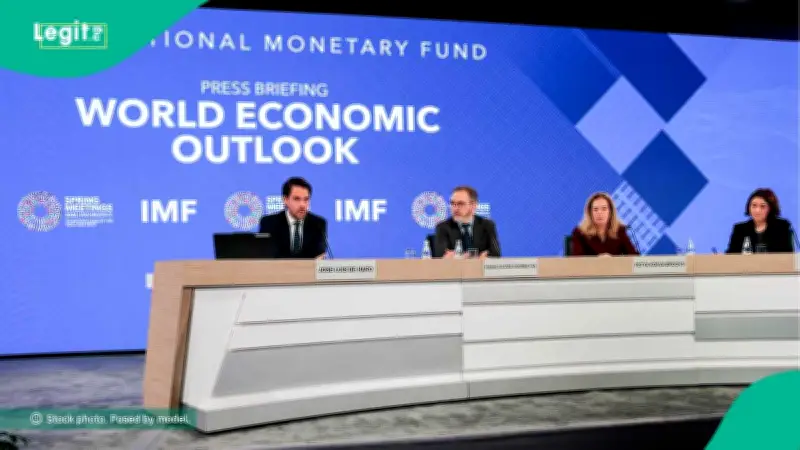
The International Monetary Fund (IMF) has kept Nigeria's economic growth forecast steady at 4.1% for 2026 and 4.3% for 2027, according to its July 2026 World Economic Outlook Update. The projections, unchanged from the April 2026 report, signal continued confidence in Nigeria's reform trajectory despite global risks.
IMF Cites Macroeconomic Stability and Oil Exports
The report, titled "Global Economy in Crosscurrents of War and Technology," attributes Nigeria's resilient outlook to improved macroeconomic stability and favorable terms of trade as an oil-exporting nation. Deniz Igan, Division Chief in the IMF's Research Department, stated during a virtual briefing: "The two largest economies in the region, Nigeria is expected to grow at 4.1%, quite stable, and this is supported by improved macroeconomic stability and favourable terms of trade, with Nigeria being an oil exporter."
Warnings on Poverty and Food Insecurity
Despite the stable growth numbers, the IMF cautioned that higher prices for essential goods could exacerbate poverty and food insecurity. The report noted: "Nigeria is supported by improved macroeconomic stability and favourable terms of trade effects, though higher prices for essentials are expected to further aggravate poverty and food insecurity." Igan added that inflationary pressure on everyday commodities remains a significant concern.
Sub-Saharan Africa and Global Outlook
For Sub-Saharan Africa, the IMF projects regional growth of 4.3% in 2026, rising to 4.5% in 2027. The 2026 figure is a 0.1 percentage point upward revision from April. Igan noted that the region saw a broad-based pickup in growth to 4.5% in 2025, but the Middle East conflict has clouded the 2026 outlook, leading to a projected softening to 4.3%. Globally, the IMF expects world economic growth to slow to 3.0% in 2026, down from 3.5% in 2025, primarily due to the economic spillover from the Middle East conflict, partly offset by momentum from AI-driven technology.
Naira Valuation Concerns
In a separate assessment, the IMF revealed that the Nigerian naira remains significantly undervalued, trading about 25.6% below its fair value based on economic fundamentals, despite recent gains following foreign exchange reforms. This underscores ongoing currency challenges amid the broader economic picture.