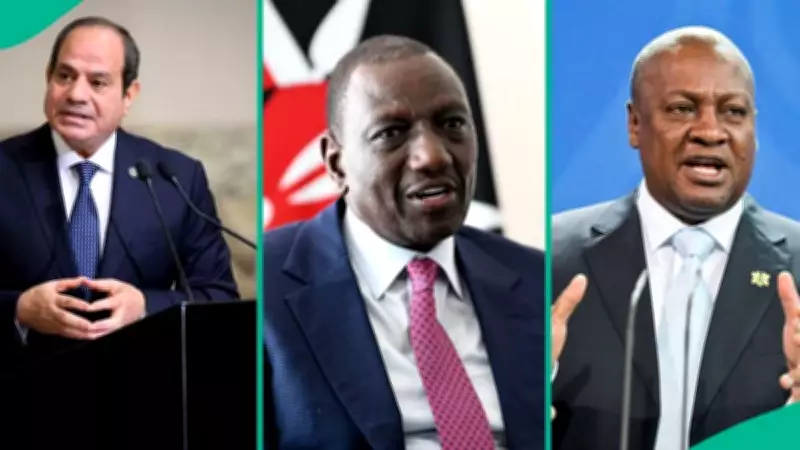
The International Monetary Fund (IMF) has released its 2026 list of African countries with the highest exposure to the lender, and Nigeria is notably absent from the top ten. Despite growing concerns over debt sustainability across the continent, the latest data reveals that several major economies, including Egypt, Kenya, and Ghana, have the largest outstanding obligations to the IMF.
Rising Dependence on IMF Support Across Africa
Across Africa, more nations are turning to IMF programmes as fiscal pressures mount. What was once seen primarily as short-term financial relief is increasingly shaping long-term economic policy, often influencing domestic reforms, spending priorities, and fiscal discipline. Countries such as Kenya, Ghana, and Senegal remain deeply engaged in ongoing IMF programmes or reviews. Others are initiating fresh talks, driven by inflation, currency instability, and external debt burdens. A notable example is the Republic of Congo, which has reportedly sought a new IMF programme shortly after completing a previous one, citing weak growth and persistent external pressures.
Guinea-Bissau Highlights the Trade-Offs
The experience of Guinea-Bissau underscores both the benefits and challenges of IMF involvement. The country recently secured an additional $3.2 million under its Extended Credit Facility, bringing total support to about $50.8 million since 2023. According to a report by Business Insider Africa, while the programme aims to stabilise public finances and drive reforms, implementation has proven difficult. Despite projected economic growth of 5.5% in 2025, largely supported by cashew exports, the IMF flagged significant slippages in fiscal and structural targets. As a result, programme conditions were adjusted, timelines extended, and waivers granted, pushing the arrangement into 2026.
Debt Burden and Development Trade-Offs
One of the biggest concerns tied to IMF exposure is the rising cost of debt servicing. As countries accumulate obligations from multiple IMF programmes, alongside bilateral and commercial loans, a growing share of government revenue is diverted toward repayment. This dynamic can limit spending on critical sectors such as infrastructure, healthcare, and education, ultimately constraining long-term development.
Africa’s Top 10 IMF Debtors
According to IMF data, the following countries have the highest outstanding debt exposure:
- Egypt — $7.41 billion
- Côte d’Ivoire — $3.60 billion
- Kenya — $2.93 billion
- Ghana — $2.74 billion
- Angola — $2.44 billion
- Democratic Republic of the Congo — $2.22 billion
- Ethiopia — $1.76 billion
- Tanzania — $1.34 billion
- Zambia — $1.27 billion
- Cameroon — Amount not specified
What Nigeria’s Absence Means
Nigeria’s absence from the list does not necessarily signal immunity from debt challenges. Rather, it reflects a different financing mix, with the country relying more on domestic borrowing and other external sources outside the IMF. Still, with rising fiscal deficits and ongoing economic reforms, analysts warn that Nigeria could yet deepen its engagement with the IMF if pressures intensify. For now, however, the country stands apart from a growing list of African economies whose financial stability is increasingly tied to IMF support, a distinction that carries both relief and caution.
Nigeria’s Debt Per Capita Rises
Legit.ng earlier reported that every Nigerian now carries a heavy debt load after the country’s total public debt climbed to N159.28 trillion by the end of December 2025. Fresh domestic and external borrowings under President Bola Tinubu pushed the figure higher, leaving citizens with a heavier financial burden amid rising living costs. Data released Tuesday, April 14, 2026, by the Debt Management Office (DMO) showed total public debt rose by N5.98 trillion (3.9 per cent) from N153.29 trillion at the end of September 2025.