
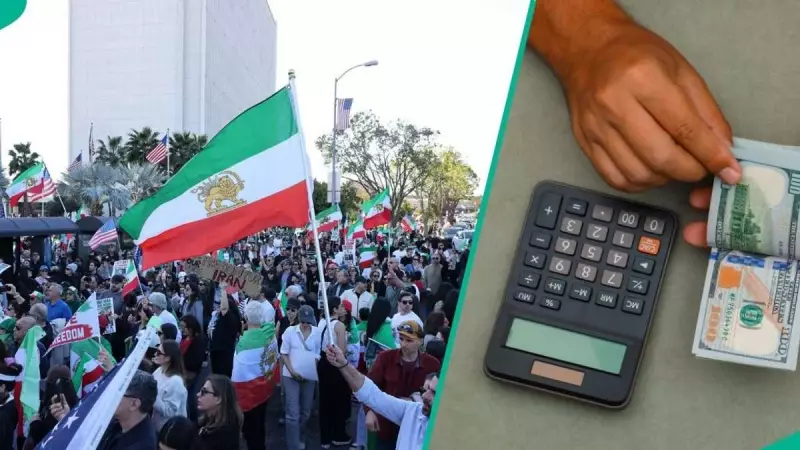
The national currency of Iran, the rial, has plunged to unprecedented depths, trading at near-zero value against major global currencies. This dramatic collapse coincides with a historic moment for the Nigerian naira, which on Monday, January 12, 2026, reached an exchange rate of 1 Nigerian Naira to 698.55 Iranian Rial—the highest level ever recorded.
Anatomy of a Currency Meltdown
The Iranian rial's free fall is the result of a perfect storm of economic pressures. Years of stringent international sanctions, poor domestic economic management, and severely limited access to foreign currency have eroded its value. On unofficial markets, reports indicate the rial is trading at more than 1.4 million to a single U.S. dollar, a stark indicator of plummeting confidence.
Officials and economists now state the real value of the rial has shrunk to almost nothing against hard currencies like the euro and dollar. In a telling comparison, other emerging market currencies, including Nigeria's naira, remain significantly stronger relative to the rial's catastrophic decline.
Soaring Inflation Fuels Public Unrest
The currency crisis has triggered a severe cost-of-living emergency within Iran. Official estimates place the annual inflation rate at 42.2% as of December, with food prices skyrocketing by approximately 72% year-on-year. This sharp rise has decimated household incomes and savings, leading to widespread public anger.
This discontent boiled over in late December when merchants in Tehran's Grand Bazaar shut their shops and took to the streets. They protested rising costs and an exchange rate that made conducting business nearly impossible. The demonstrations quickly spread, drawing in students and workers from other cities, with grievances expanding to include broader political demands against the country's leadership.
In response, security forces have reportedly used force, with rights groups documenting dozens of deaths and thousands of arrests. Iranian authorities have restricted internet access in several regions in an apparent bid to control the narrative and curb the spread of protest footage.
Leadership Shake-Up and Regional Implications
The severity of the crisis has forced changes at the highest levels. The governor of Iran's central bank resigned in late December as the rial touched record lows, and the government has shuffled key economic officials in a desperate attempt to restore some semblance of confidence.
For Nigerian observers and the business community, the direct comparison between the naira and the rial offers a stark perspective. While the naira faces its own challenges, including a widening gap between official and parallel market rates due to dollar scarcity, its position relative to the collapsed rial underscores different economic trajectories within emerging markets.
Economists warn that without profound political and economic reforms, the rial's collapse will continue to inflict severe hardship on ordinary Iranians, many of whom are already struggling to afford basic necessities.




