
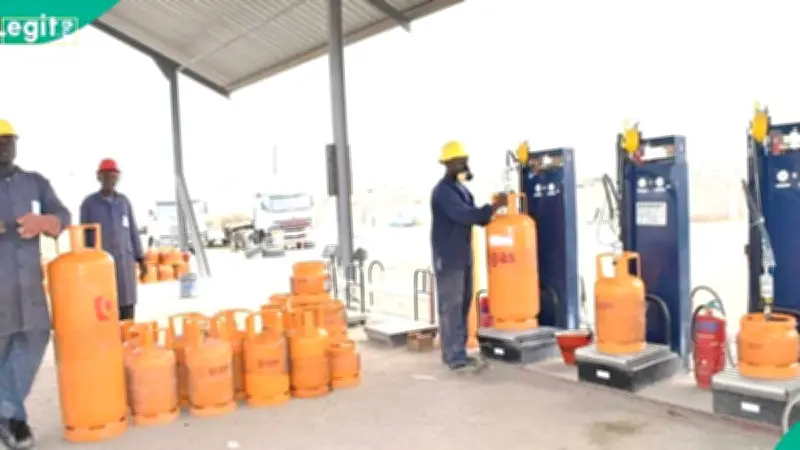
Nigeria’s cooking gas prices have surged by over 800% in the past decade, rising from approximately N250 per kilogram in 2016 to over N2,000 per kilogram in 2026, according to industry data. This dramatic increase has placed immense strain on households and small businesses, forcing many to revert to traditional fuels like firewood and charcoal.
Record Highs Amid Supply Constraints
Despite possessing Africa’s largest natural gas reserves and ranking among the top gas-holding nations globally, Nigerian consumers are facing record-high liquefied petroleum gas (LPG) prices. A 12.5kg cylinder now costs about N30,000 to fill, up from N25,000 just weeks ago. This represents an additional N5,000 burden on already struggling families.
Industry operators attribute the price hike to a combination of factors, including export commitments, irregular depot supplies, high international LPG benchmark prices, and global energy market tensions. Data from the Nigerian Upstream Petroleum Regulatory Commission reveals that more than 60% of Nigeria’s gas production was exported in the first quarter of 2026, leaving limited volumes for local consumption.
Export Dominance Drives Local Shortage
While production volumes are not the issue, the allocation of gas for domestic use remains critically low. The country’s reliance on gas exports for foreign exchange earnings has exacerbated the local shortage. Energy experts argue that without firm domestic supply obligations, the price of cooking gas will continue to rise.
Chinedu Okeke, an energy expert, stated: “If they can reserve a part of gas production for LPG and power consumption locally, the price of gas would be lower.”
Impact on Households and Environment
The soaring prices have forced many households to reconsider their cooking fuel choices. A report by BusinessDay indicates that some families have turned to firewood and charcoal, a shift that poses significant health and environmental risks. This trend undermines Nigeria’s climate targets and contributes to deforestation and indoor air pollution.
Energy analysts emphasize that while export revenues are vital for the economy, the government must implement policies to ensure that Nigerians benefit from the country’s natural resources. Domestic supply obligations could stabilize prices and improve access to affordable cooking gas.
State-by-State Price Variations
According to the National Bureau of Statistics (NBS) Cooking Gas Price Watch for April 2026, the average price of a 5kg cylinder of cooking gas rose from N7,655.73 in March to N8,706.93 in April, marking a 13.73% month-on-month increase. On a year-on-year basis, prices climbed by 10.42% compared to N7,855.60 in April 2025.
The NBS report highlights significant disparities across states, with some regions experiencing higher costs due to logistical challenges and supply chain inefficiencies. The ten states with the highest prices include Lagos, Rivers, and Abuja, while states like Yobe and Borno recorded the lowest prices.
Long-Term Outlook
The cooking gas crisis reflects broader challenges in Nigeria’s energy sector, where export priorities often overshadow domestic needs. As global energy pressures persist, stakeholders call for a balanced approach that ensures energy security for all Nigerians. Without policy interventions, the trend of rising LPG prices is likely to continue, deepening the energy poverty crisis.




