
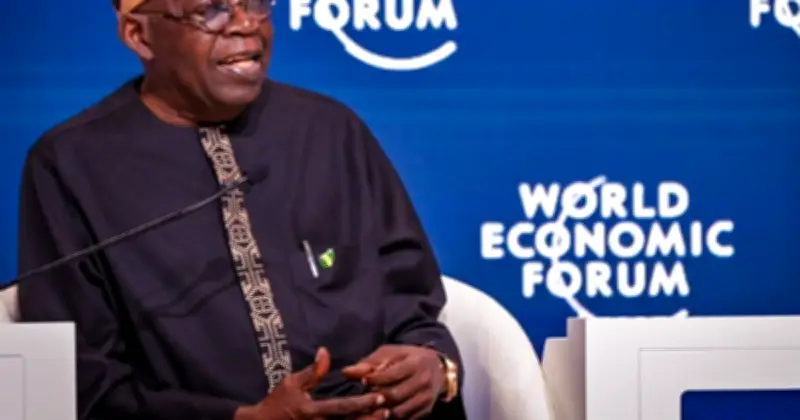
The Manufacturers Association of Nigeria says major reforms introduced under President Bola Tinubu have yet to translate into lower costs, stable energy or better conditions for manufacturers.
MAN says several industrial reforms introduced by the Tinubu administration have yet to improve conditions for manufacturers. The association cited high energy costs, expensive borrowing, foreign exchange pressures and unstable power supply. While welcoming some policies, MAN says businesses are still waiting to see real benefits on the factory floor.
Three Years of Reforms, Limited Results
When President Bola Tinubu marked his first anniversary in office, the conversation was largely about the boldness of his early economic decisions. At the two-year mark, it was about endurance. At three years, the Manufacturers Association of Nigeria has a different question entirely: where are the results?
MAN's position, as articulated by its Director General Segun Ajayi-Kadir, is not that the administration has been idle. The list of industrial and economic initiatives introduced since May 2023 is substantial. The problem, the association argues, is the distance between what has been announced and what manufacturers are actually experiencing on the factory floor.
Key Government Interventions
The administration's flagship interventions include a N200 billion Presidential Intervention Fund split across manufacturing support, MSME financing, and nano business schemes. A ten-year Nigeria Industrial Policy was unveiled targeting a significant expansion of manufacturing's contribution to GDP by 2030.
The Nigeria First policy directed government agencies to prioritise locally made goods in procurement. The 2025 Tax Reform Act introduced withholding tax exemptions, reduced company income tax obligations, and expanded VAT deductibility on fixed assets.
A Naira-for-Crude initiative was designed to ease foreign exchange pressure on domestic refineries, while a National Single Window platform was launched to cut port clearance times and logistics costs.
Persistent Challenges for Businesses
MAN has acknowledged the intent behind most of these measures. The Tax Reform Act and the local value addition legislation, which mandates minimum domestic processing before certain agricultural commodities and minerals can be exported, have been particularly welcomed.
The Naira-for-Crude arrangement has provided some relief to manufacturers downstream of the petrochemical supply chain. But the broader operating environment tells a harder story.
The naira's depreciation following foreign exchange liberalisation drove up the cost of imported machinery, raw materials and inputs almost immediately, squeezing margins and forcing price increases across industries.
Energy costs have surged. Despite electricity tariff hikes over the past three years, grid instability has continued, leaving most manufacturers dependent on diesel and gas alternatives that add significantly to production costs.
Borrowing costs climbed as the Central Bank raised interest rates repeatedly to contain inflation, making credit effectively inaccessible for many firms considering expansion.
Waiting for Promised Benefits
Ajayi-Kadir has been measured in his criticism, framing the past three years as a period of difficult but necessary transition. His argument is not that the reforms were wrong, but that stabilisation and industrial recovery are two different destinations and Nigeria has arrived at the first without yet moving toward the second.
As the administration enters its fourth year, MAN's message says the policy groundwork has been laid, but manufacturers need the environment those policies promised, lower production costs, stable energy, affordable credit, and enforcement of procurement rules, to materialise before they can deliver the industrial growth the reforms were designed to generate.




