
Elon Musk’s latest comparison between Nigerian and European birth rates has reignited a critical debate: will Africa’s population surge become an economic engine or a source of instability? The billionaire’s post on X, claiming Nigeria had four million more births than the entire European Union last year, draws attention to a global demographic shift. But the real question, as policy experts stress, is what happens to these children after birth.
A Tale of Two Fertility Fears
Musk wrote: “Nigeria alone had 4 million more births than the entire EU last year!” The statement can be interpreted in two ways. In an ageing Europe, it sounds like a warning about shrinking workforces and strained social systems. In Africa, where discourse often focuses on poverty, it may be seen as evidence of future strength. Neither reading captures the full complexity.
European statistics support the alarmist view. Eurostat recorded only 3.55 million births in the European Union in 2024, with fertility falling to 1.34 children per woman — the lowest in the series. The EU’s median age had reached 44.9 years by the start of 2025. Nigeria, by contrast, has a markedly younger population structure, and the United Nations projects Africa will host about 2.5 billion people by 2050, close to one-quarter of humanity. Nigeria alone is expected to approach 360 million under the UN’s medium projection.
The infants represented in Musk’s post will be young adults by then. Their health, education and life prospects will have been largely determined long before. Therefore, Musk’s argument extends beyond fertility rates to the quality of human development. If population size matters to civilisation, Africa’s children cannot be treated merely as future customers, data producers or migrant labour. Companies and governments anticipating gains from Africa’s demographic scale have a direct interest in the health, education, research capacity and productive systems that will shape that future.
Potential is Not a Dividend
A high birth rate does not automatically translate into a demographic dividend. Rapid population growth can increase the dependent population faster than schools, clinics, housing, sanitation and employment can expand. A dividend becomes possible only when children survive, families become smaller through informed and voluntary choices, women gain greater agency, and the working-age share of the population rises — accompanied by employment and productivity growth.
Muhammad Ali Pate, Nigeria’s Coordinating Minister of Health and Social Welfare, articulates this distinction in a published essay. He argues that a large population creates possibilities, not prosperity, and calls the health, nutrition, learning and skills built over a lifetime “grey matter infrastructure.” Human capability determines how well a society utilises every other form of capital. Population acquires economic weight only when capability meets opportunity.
Health and education alone cannot bear the burden. Power, transport, finance, industry and trade must support firms capable of employing skilled people. Otherwise, Africa may educate workers for richer economies while remaining short of the professionals it trained. The World Bank’s 2025 Human Capital Index Plus underscores this deficit: Nigeria scores 64 on education, compared with a median of 88 among lower middle-income countries. The country also faces maternal and child mortality, malnutrition, exclusion from school and learning poverty. National averages obscure wide regional, rural-urban and income disparities, meaning unequal welfare today becomes unequal productive capacity tomorrow.
Women and the Demographic Transition
Women must not be treated as instruments in a fertility contest. A sound demographic transition depends on girls staying in school, women surviving childbirth, access to reproductive healthcare, and families having the freedom to decide their size. African governments should resist Western alarm that frames African births as a threat, as well as African boasting that neglects the women who bear and raise children. The agency of women is central to transforming population growth into sustainable development.
Migration, Health Workforce and Sovereignty
Europe’s ageing creates an awkward dependence. Its health services, care systems, engineering firms and technology companies need workers, while migration has become one of its most divisive political issues. Africa, meanwhile, may spend scarce public and family resources training professionals who leave because the economies that educated them cannot offer work equal to their abilities. The issue is where skills are formed, where productive opportunity is located, and which societies receive the return on investment in human capability.
Workers must remain free to leave, but mobility should be organised fairly. Nigeria’s National Policy on Health Workforce Migration and World Health Organization guidance call for ethical recruitment, circular pathways and co-investment by destination countries in the systems from which they recruit. Where a richer country repeatedly draws from a fragile health service, it should help enlarge the training pipeline. This is the defensible meaning of a human capital royalty: the worker remains free, while the systems that produce scarce capability share the cost more fairly.
Human capital is also a matter of sovereignty. A continent that exports raw materials, data and trained labour while importing the most valuable products of knowledge will remain dependent, however large its population becomes. Institutions should be judged by results: mothers who survive, children who are nourished and learning, young people with useful skills, and firms able to employ them. Budgets are demographic documents; they reveal what governments are prepared to invest in citizens who cannot yet vote and whose adult lives will begin after many present office-holders have left public service.
Continental Strategies for Demographic Dividends
The African Union’s demographic dividend roadmap connects four areas often separated in national policy: employment and entrepreneurship; education and skills; health and wellbeing; and rights, governance and youth empowerment. Skills have little value without work, and growth remains fragile where health and rights are weak. At the African Development Bank, President Sidi Ould Tah’s Four Cardinal Points place demography within a wider economic programme: Unlock Africa’s Capital; Rebuild Africa’s Financial Sovereignty; Turn Demographics into Dividends; and Build Resilient Infrastructure and Competitive Value Chains.
African savings and institutional funds must finance productive investment. Infrastructure must support industry, and industry must create work on a scale equal to the continent’s growing labour force. The African Continental Free Trade Area belongs in the same argument. Fragmented national markets limit the scale of firms and weaken bargaining power. A connected market approaching 2.5 billion people could support regional value chains, larger investments and more specialised production.
Global technology companies already see Africa as a major market for connectivity, artificial intelligence, finance and energy. African governments should negotiate from the same fact. Foreign capital and technology remain necessary, but their terms should leave more knowledge, production and ownership within Africa. Market access and public procurement can support local suppliers, research, technical training, data infrastructure and domestic manufacturing.
The Test of Delivery
Continental plans cannot teach a child to read, keep a mother alive in childbirth or provide electricity to a small manufacturer. Delivery remains national and local. In Nigeria, primary healthcare, basic education, nutrition, water, sanitation and economic opportunity depend as much on states and local governments as on Abuja. Institutions should be judged by results, and budgets must reflect demographic priorities.
Musk’s comparison does not settle a contest of fertility. Europe is wealthier, more productive and better equipped to turn individual ability into economic value. Nigeria and Africa have time, youth and scale. Whether these become power will depend on decisions now being made in homes, clinics, classrooms, workplaces and public institutions. The figure that should concern Nigeria is how many of its children will reach adulthood healthy, educated, skilled and able to find dignified work. By 2050, numbers will have altered the world’s demographic balance, but power will depend on what societies have made of those numbers. Elon Musk has counted Nigeria’s births; history will count what Nigeria did with them.
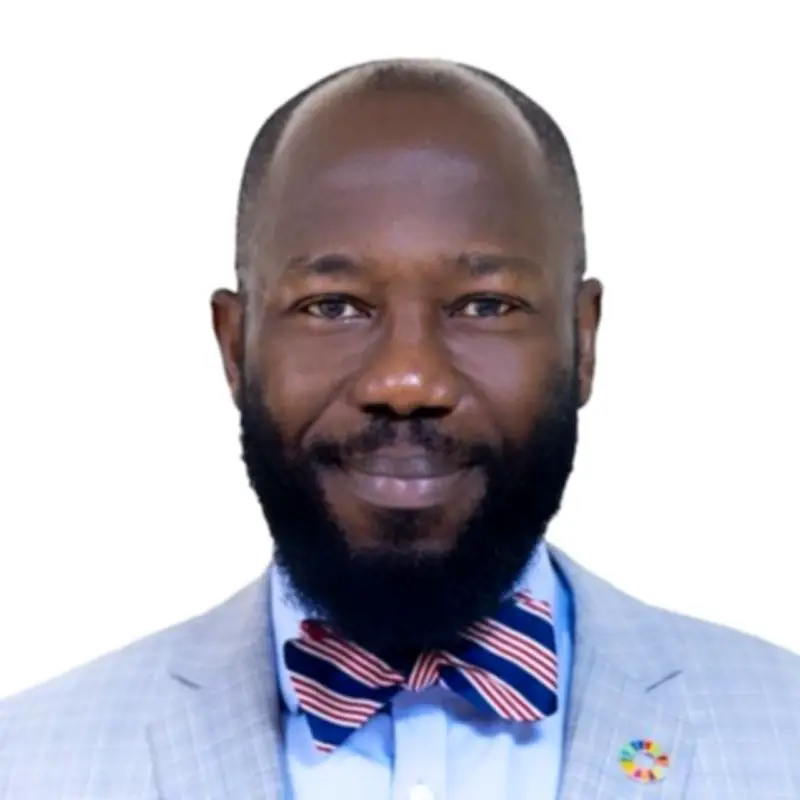
Chinedu Moghalu is a lawyer, strategic communications expert, and public policy adviser with over two decades of leadership across government, international organisations, and development institutions. He is currently senior special adviser to Nigeria’s coordinating minister of health and social welfare.




