
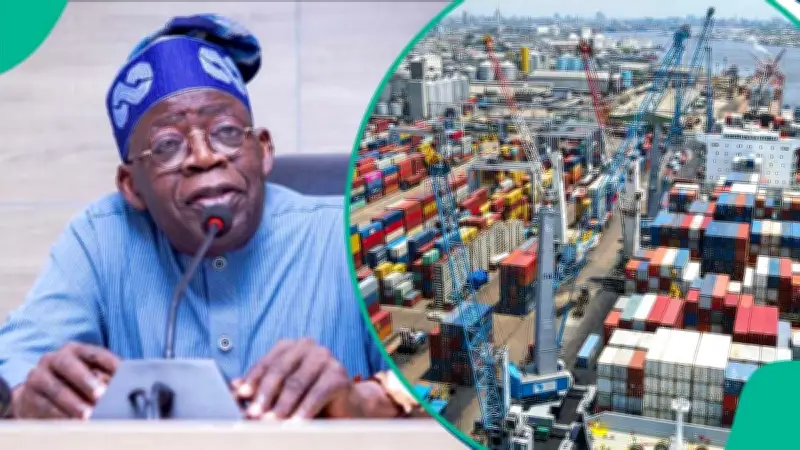
The International Monetary Fund (IMF) has released data indicating that five of Africa's largest economies—Nigeria, South Africa, Egypt, Algeria, and Ethiopia—collectively contribute approximately half of the continent's total Gross Domestic Product (GDP), with a combined value exceeding $1.4 trillion. This concentration of economic power underscores a stark disparity, as the remaining 48 African nations account for the other half of the continent's GDP.
Economic Dominance of Top Five Nations
According to the IMF's latest estimates, the combined GDP of these five nations is well over $1.5 trillion, representing a significant share of Africa's total GDP, which is now estimated to be above $3 trillion. Despite currency volatility, inflation pressures, and structural reforms across key markets, the dominance of these countries has remained largely intact. Their outsized influence on the continent's growth trajectory is evident, as they drive industrial output, trade, and investment flows.
Understanding GDP
Gross Domestic Product (GDP), as defined by Investopedia, is the total monetary or market value of all finished goods and services produced within a country's borders in a specific time period. It serves as a comprehensive scorecard of a country's economic health, measuring overall domestic production.
A Continent of Uneven Growth
The concentration of economic power among just five countries highlights a longstanding imbalance across Africa. While Nigeria, South Africa, Egypt, Algeria, and Ethiopia drive economic activity, dozens of other nations grapple with slower growth, weaker infrastructure, and limited diversification. This disparity has become more pronounced in recent years, as external shocks—including inflation, debt pressures, and fluctuating commodity prices—have disproportionately affected smaller economies.
Although the composition of the top five has remained relatively stable, their internal rankings have seen subtle shifts. Nigeria, despite facing currency depreciation challenges, continues to benefit from its large population and consumer market. Egypt has strengthened its position through infrastructure expansion and economic reforms. Algeria's oil revenues have supported its fiscal stability. South Africa maintains its role as a financial and industrial hub despite ongoing structural constraints. Ethiopia continues to post strong growth driven by manufacturing, agriculture, and state-led infrastructure development, positioning itself as a rising industrial center in East Africa.
What Drives Their Dominance
Economic analysts attribute the sustained performance of these countries to a mix of population size, natural resource endowments, and strategic economic diversification. Oil exports remain central to the economies of Nigeria and Algeria. Egypt benefits from a broad-based economy spanning tourism, manufacturing, agriculture, and its strategic position along the Suez Canal. South Africa's strength lies in its advanced financial systems, mining sector, and industrial base. Ethiopia stands out for its rapid expansion fueled by aggressive infrastructure investments, a growing manufacturing sector, and government-led industrialization policies.
Together, these nations serve as economic anchors for their respective regions, attracting foreign investment, driving intra-African trade, and shaping the continent's economic outlook.
Call for Inclusive Growth
Despite their dominance, the concentration of GDP among a handful of countries raises concerns among policymakers and development experts. There is a growing consensus that Africa's long-term stability depends on more inclusive growth across the continent. Recent World Bank insights suggest that the continent's largest economies account for a significant share of overall growth, reinforcing the urgency of supporting smaller economies through targeted investments, regional integration, and structural reforms.
As Africa navigates an increasingly complex global economic environment, the challenge remains clear: sustaining the momentum of its leading economies while ensuring that growth becomes broader, more inclusive, and more resilient.




