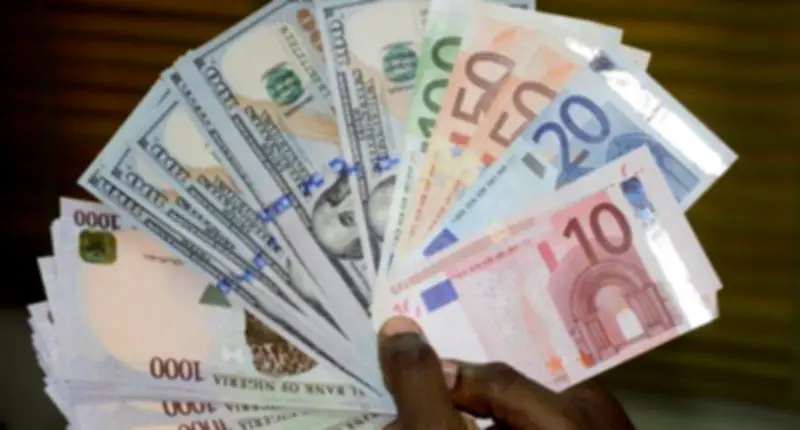
Nigeria's foreign exchange market experienced a sharp decline in turnover during the second week of July, with total transactions falling by 46.57% to $1.63 billion, according to data from the FMDQ Securities Exchange. This marks a significant drop from the $3.05 billion recorded in the first week of the month, highlighting reduced activity and liquidity constraints in the FX market.
Weekly Breakdown and Market Dynamics
The turnover for the week ending July 12, 2026, was the lowest in the past four weeks, reflecting cautious trading amid persistent dollar shortages and regulatory uncertainties. The naira also faced depreciation pressures, trading at an average rate of N1,540 per dollar in the official market, compared to N1,520 in the previous week. Analysts attribute the decline to reduced intervention by the Central Bank of Nigeria (CBN) and lower demand from importers and portfolio investors.
According to FMDQ data, the daily average turnover fell to approximately $326 million, down from $610 million in the prior week. The highest daily turnover was recorded on Tuesday, July 9, at $420 million, while the lowest was on Friday, July 12, at $280 million.
Impact on the Naira and Economic Implications
The drop in turnover has exerted additional pressure on the naira, which has been volatile in recent months. The currency depreciated by 1.3% against the dollar during the week, closing at N1,545 on Friday. Market participants expressed concerns that the reduced liquidity could exacerbate exchange rate volatility and widen the gap between the official and parallel market rates.
"The FX market is facing a liquidity crunch, and the CBN's limited intervention is not enough to meet demand," said Aminu Gwadabe, president of the Association of Bureau De Change Operators of Nigeria. "We need a more sustainable policy to attract dollar inflows and stabilize the naira."
Comparative Analysis with Previous Weeks
The second week of July's turnover of $1.63 billion is a stark contrast to the $3.05 billion recorded in the first week, representing a decline of $1.42 billion. This is also lower than the $2.1 billion average weekly turnover seen in June. The drop suggests that the FX market is still adjusting to the CBN's foreign exchange reforms, which have led to a more flexible exchange rate regime but also increased uncertainty.
In the parallel market, the naira traded at N1,580 per dollar, compared to N1,550 in the previous week, indicating a widening premium of about 2.3%. This divergence underscores the persistent demand-supply imbalance in the FX market.
Outlook and Policy Recommendations
Economists project that FX turnover may remain subdued in the coming weeks unless the CBN ramps up dollar sales or attracts significant foreign capital inflows. The central bank has been pursuing a tight monetary policy to curb inflation, which stood at 33.2% in June, but this has not yet translated into increased FX liquidity.
"The government needs to address structural issues such as export diversification and foreign investment incentives to boost dollar supply," said Dr. Muda Yusuf, CEO of the Centre for the Promotion of Private Enterprise. "Without these measures, the FX market will continue to face challenges."