
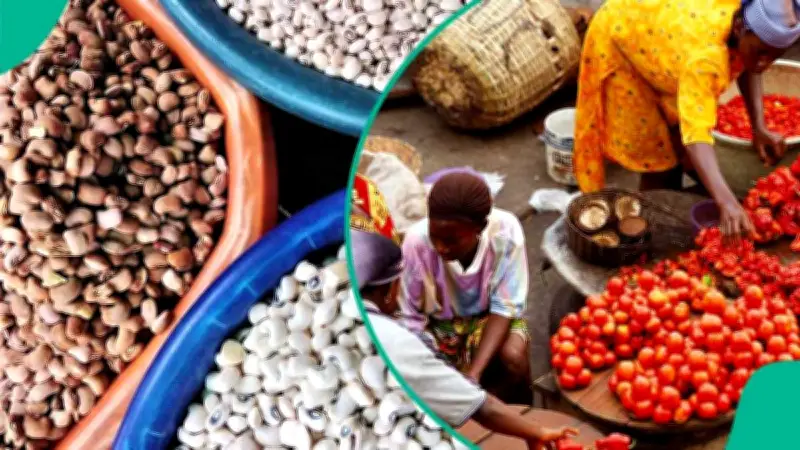
BudgIT, a civic technology group, has revealed that eating a balanced meal is now beyond the reach of many Nigerian workers as the cost of a healthy diet surged by 11.7% in the first quarter of 2026. The national average daily cost rose from N1,380 in December 2025 to N1,541 by March, wiping out the previous quarter’s temporary decline.
The findings are contained in the organisation’s latest report, “The Price of Survival: Nigeria’s Cost of a Healthy Diet Tracker, Q1 2026.” The tracker is based on monthly Cost of a Healthy Diet (CoHD) data published by the National Bureau of Statistics (NBS) in partnership with the Global Alliance for Improved Nutrition (GAIN).
Ekiti tops most-expensive list, Adamawa cheapest
Ekiti recorded the highest daily cost at N2,091 per person, making it the most expensive state for nutritious food. Imo followed closely at N2,052, Abia at N1,970, Lagos at N1,910 and Ebonyi at N1,891. The southern states dominate the high-cost list.
At the other end, Adamawa is the cheapest state at N1,004 per person per day, followed by the Federal Capital Territory at N1,113, Taraba at N1,149, Borno at N1,244 and Bauchi at N1,273.
The gap between the cheapest and most expensive states is more than N1,000 per person per day, illustrating the uneven cost of nutrition across Nigeria. BudgIT said all ten most expensive states are in the south, while eight of the ten cheapest states are in the north.
Harvest relief reversed in Q1 2026
The Q4 2025 decline of 6.4%, attributed to the harvest season, has been completely erased. BudgIT described the earlier drop as “seasonal relief, not a structural improvement,” noting that dry-season pressure and tighter supplies after the harvest pushed costs up across all food categories in the first three months of 2026.
Taraba recorded the biggest quarter-on-quarter increase, with costs jumping 49.3%. Gombe followed at 34.1%, Yobe at 29.9%, Cross River at 28.1%, Kano at 27% and Ogun at 26.7%. BudgIT, however, cautioned that percentage increases should be considered alongside actual naira values. Taraba began the period with the lowest baseline of N769 per person per day, which makes its percentage rise appear particularly large.
Yobe and Oyo both experienced major reversals after recording significant declines in the previous three months. Yobe’s cost fell 18.6% in Q4 2025 before rising 42.5% in Q1 2026, while Oyo declined 19.5% and then rebounded by 40.2%.
Eight states record lower costs
Not all states saw increases. Adamawa posted the largest decline at 26.7%, followed by Akwa Ibom at 21.6%, Ondo at 13%, Edo at 12.7%, Borno at 8.3%, the Federal Capital Territory at 6.3%, Rivers at 3.5% and Bayelsa at 0.3%.
Despite these reductions, BudgIT warned that the northern affordability advantage may be narrowing. The North-West recorded a 17.5% quarterly increase, almost three times the national average, a trend the organisation said could worsen household welfare in a region already facing multiple socioeconomic challenges.
Healthy diet consumes 89.6% of minimum wage in Ekiti
For low-income workers, the burden is most severe in Ekiti. BudgIT estimates that feeding one person a healthy diet at the reported daily cost would consume about 89.6% of the N70,000 national minimum wage. That would leave just N7,261 per month to cover housing, transport, electricity, education and healthcare.
This means a minimum-wage earner in Ekiti has almost no financial room for other necessities after meeting basic dietary needs. The report warns that healthy eating is becoming a luxury, not a routine expectation, for many households.
Policy implications and conclusion
BudgIT cautioned that national averages alone mask significant state-level differences and could lead to policies that fail to address the realities on the ground. The organisation stressed the need for state-specific approaches to food affordability and expressed concern that the persistent rise in the cost of healthy food will continue to push vulnerable families deeper into food poverty.
The tracker, based on the collaborative data from NBS and GAIN, provides a clearer picture of where intervention is needed most. As the cost gap between north and south remains wide, and with northern costs now rising faster, the report makes a strong case for targeted policy responses rather than blanket measures.
BudgIT’s report reinforces the need for urgent action to stabilise food prices and protect vulnerable households from the escalating cost of nutrition. Without such measures, the dream of affordable healthy eating will remain out of reach for millions of Nigerians.




