
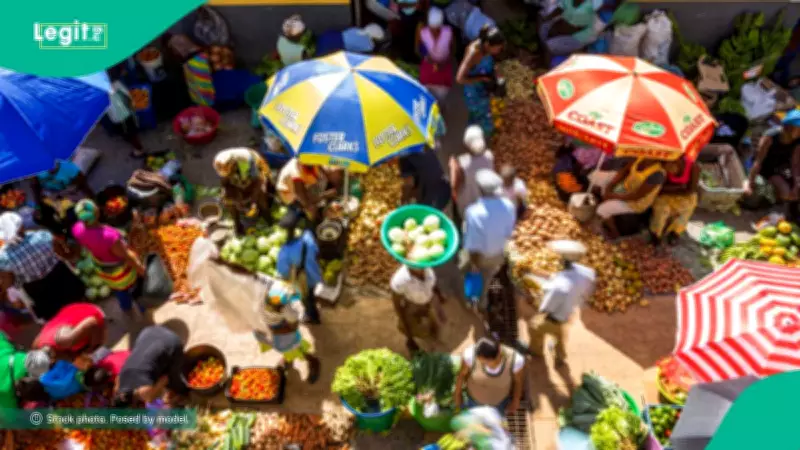
Nigeria's headline inflation rate rose to 15.69% in April 2026, up from 15.38% in March, according to the National Bureau of Statistics (NBS). The Consumer Price Index (CPI) climbed to 138.3 points, driven by increases in food, transport, hospitality, and healthcare costs. This marks the second consecutive monthly increase in inflation.
10 Key Numbers from the April Inflation Report
1. Headline Inflation Reaches 15.69%
The headline inflation rate increased by 0.31 percentage points from March 2026 to April 2026. However, it remains significantly lower than the 26.82% recorded in April 2025.
2. Month-on-Month Inflation Slows to 2.13%
On a month-on-month basis, inflation dropped sharply from 4.18% in March to 2.13% in April, indicating that while prices continued to rise, the pace of increase moderated.
3. Food Inflation Stands at 16.06%
Food inflation increased year-on-year, with prices of staples such as millet, yam flour, pepper, garri, beef, beans, crayfish, cassava, tomatoes, and soybeans rising. The figure is down from 24.68% in April 2025.
4. Food Inflation Drops 8.62 Percentage Points Year-on-Year
Despite being higher than the headline rate, food inflation in April 2026 (16.06%) was 8.62 percentage points lower than the 24.68% recorded in the same month last year.
5. Core Inflation at 15.86%
Core inflation, which excludes volatile agricultural products and energy, stood at 15.86% in April 2026, compared to 26.05% in April 2025. Month-on-month core inflation decreased to 1.03% from 4.03% in March.
6. Urban Inflation at 15.40%
Urban areas recorded an inflation rate of 15.40% in April, up from 15.34% in March. Month-on-month urban inflation was 1.86%, down from 3.16% in March.
7. Rural Inflation Higher at 16.36%
Rural inflation stood at 16.36% in April, slightly lower than the 16.78% recorded in March. Month-on-month rural inflation slowed significantly to 2.80% from 6.73% in March.
8. Sokoto State Records Highest Inflation at 25.74%
Sokoto state had the highest headline inflation rate at 25.74%, followed by Bauchi (22.52%) and Zamfara (22.03%).
9. Enugu Leads Food Inflation at 32.67%
Enugu state recorded the highest food inflation rate at 32.67%, followed by Kwara (30.77%) and Adamawa (30.14%). Borno state had the lowest food inflation at 1.67%.
10. Borno Records Lowest Food Inflation at 1.67%
Borno state experienced the least food inflation, indicating that food prices in the state rose at a much slower pace compared to other states.
Expert Analysis
Muda Yusuf, CEO of the Centre for the Promotion of Private Enterprise (CPPE), commented on the inflation figures, describing them as reflecting a fragile disinflation process amid global and domestic cost pressures. He urged the government to reduce energy costs, improve transportation infrastructure, strengthen food supply systems, and support domestic productivity. For businesses, he recommended prioritizing energy efficiency, dynamic pricing, and affordability-driven product strategies as consumers become more price-sensitive.
Food Prices Continue to Rise
In a related development, the NBS reported that average retail prices of beans and rice continue to increase across Nigeria. The South South and South West regions recorded the highest prices for rice and beans, while the North East and North West remained the cheapest markets for most food items. For instance, the South South recorded the highest price for local broken rice at N145,927.




