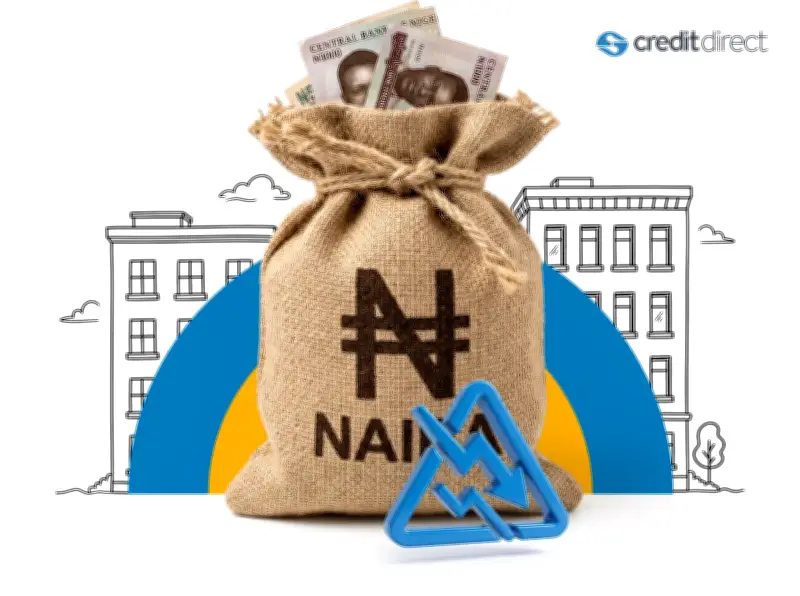
Nigeria’s mortgage market remains one of the least developed on the continent, with outstanding mortgage loans accounting for less than 1% of the country’s Gross Domestic Product (GDP), according to Credit Direct’s 2025 Nigeria Credit Landscape Report. The findings underscore the limited role of formal housing finance in a nation where home ownership remains elusive for many households.
Mortgage assets below ₦1 trillion
The report states that outstanding mortgage assets remain below ₦1 trillion. By comparison, mortgage lending accounts for more than 16% of GDP in South Africa and about 2% in Kenya, illustrating the wide gap in housing finance across Africa. The report notes that the size of Nigeria’s mortgage market falls far short of what is required to support the country’s growing demand for housing.
Structural challenges hinder mortgage growth
The report reveals that the weak mortgage market is driven by a combination of structural challenges, including high borrowing costs, limited access to long-term funding, low household incomes, cumbersome land administration processes, and inadequate property title documentation. Together, these constraints have made formal mortgage financing inaccessible to many Nigerians, even as the need for affordable housing continues to rise.
Alternative home financing methods
With conventional mortgages beyond the reach of most households, many Nigerians continue to finance home ownership through personal savings, cooperative societies, or by building their homes in stages as funds become available. While this approach allows families to eventually own homes, it often extends construction timelines and limits access to the long-term financing needed to scale housing development.
Recommended reforms
The report says addressing these challenges will require coordinated reforms across the housing finance ecosystem. It recommends expanding access to long-term funding for mortgage institutions, improving land registration and title systems, and developing financing models that better reflect the income realities of Nigerian households.
Broader economic benefits
According to Credit Direct, strengthening the mortgage market would have benefits beyond increasing home ownership. A deeper housing finance market could stimulate construction, manufacturing, financial services, and other sectors linked to real estate, while helping to create more investment and jobs and support broader economic growth.
About the report
The full Nigeria Credit Landscape Report 2025 is available for download from Credit Direct. Credit Direct is building Africa’s leading embedded finance business by integrating credit into the supply chains and payment flows of partners, unlocking financial success for individuals and businesses. The company also provides retail investment solutions, expanding its role from access to credit to broader financial growth and wealth-building. Credit Direct has served millions of customers nationwide, including those historically underserved by traditional banking. Credit Direct is a wholly owned subsidiary of First City Monument Bank (FCMB) Group Plc.