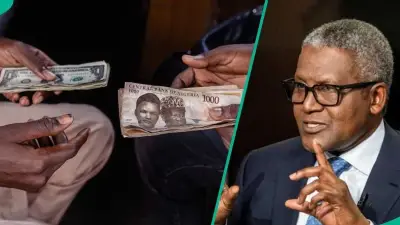
Nigeria’s path to a trillion-dollar economy may not lie in oil, foreign investment, or tech alone. According to PwC, the country holds between 300 billion and 900 billion US dollars in what economists call dead capital—property that Nigerians genuinely own and use but cannot borrow against because it lacks clear, registered title. This value rivals the nation’s measured economy of about 291 billion dollars, according to World Bank 2025 GDP figures.
Scale of Dead Capital in Nigeria
PwC Nigeria estimates that fewer than one home in twenty has a title a lender would readily accept. Most property changes hands informally, at a discount and with risk, rarely with the legal certainty that enables banks to lend against it. The dead capital figure represents a stock of assets, not yearly output, and only a fraction of any property’s value would be lent against, so the actual credit generated would be smaller, though still substantial.
Economist Hernando de Soto argued that the poor are rarely without assets; they lack the paper that turns an asset into capital. In Nigeria, the reasons for missing paperwork are ordinary and fixable.
Why Title Registration Is Slow and Costly
Under the Land Use Act of 1978, almost every property transfer requires the state governor’s consent, and the registry waits for consent fees, stamp duty, registration charges, and capital gains tax. In Lagos, government charges total roughly three percent of a property’s assessed value; with survey and legal fees, the cost of buying and perfecting a title commonly reaches ten to fifteen percent of the price. The process ranks among the most cumbersome in Africa.
Much of Nigeria’s rural land is held under customary and family arrangements that never enter a register. The wealth is real, but the paperwork is too expensive and slow to obtain.
Digital Registration Is Only Part of the Answer
Lagos began computerising land records years ago, under a system introduced when the current President was state governor. It now issues a secure electronic certificate of occupancy, with anti-forgery features, and allows online title searches and applications. However, a faster recording method does little if obtaining a title remains slow and costly, still hinging on government consent.
In May 2026, Lagos sharply raised official valuations on which perfection fees are charged, reportedly by 300 to 525 percent in many areas. The state’s reasoning was that valuations had lagged behind market prices, but analysts warn the effect will be more informal development, not less. When formalising gets more expensive, people formalise less.
Reform Efforts and the Way Forward
The playbook is not to order all 774 local governments to register everyone. It is to make a title cheap, quick, and secure enough that credit and protection outweigh the cost. This includes simplifying the consent regime, cutting fees and delays, and building on digital foundations. Customary tenure does real social work, so formalisation must avoid handing land to the well-connected or stripping it from families and women who depend on it.
In late 2025, the federal government set up land reform task teams, and there is a push for a national land commission. Reform is slow because the Land Use Act is shielded by the Constitution and can only be changed through a constitutional amendment, but progress is moving.
Turning even part of the sleeping wealth into collateral could finance homes, farms, and small businesses. For investors, dead capital is a pipeline: a clear title enables mortgages, secured lending, land equity, and title insurance. The investors who do best will build the rails for formalisation—registries, title insurance, credit products, and technology—rather than waiting for the state to finish the job.
Frank Nnamka, a private equity and impact investor writing in a personal capacity, concludes: “The task is not to conjure new wealth, but to recognise the wealth already here, and to make claiming it cheap and safe enough that people finally do.”