
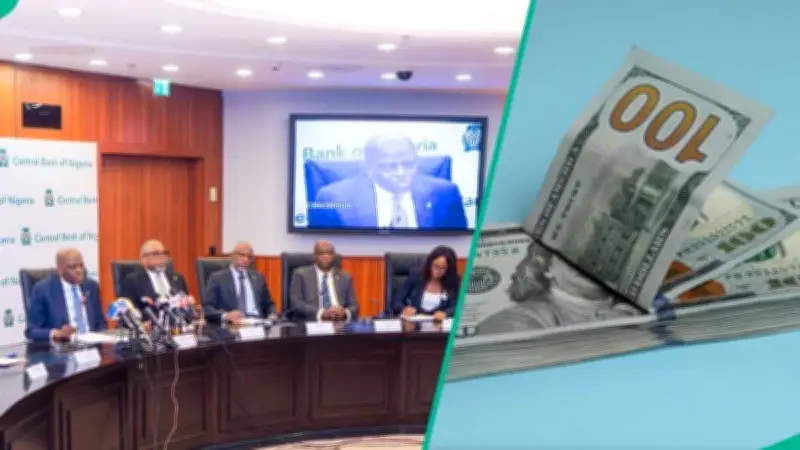
Nigeria's external reserves have increased to $51.06 billion, surpassing the Central Bank of Nigeria's (CBN) year-end target of $51.04 billion. This marks a 32.62% gain compared to $38.50 billion recorded in the same period in 2025, providing the CBN with a stronger buffer to support the naira and settle international obligations.
Naira Gains Across Official and Parallel Markets
Data from the CBN shows that the naira appreciated by N1.35 in the Nigerian Foreign Exchange Market (NFEM), closing at N1,369.11 per dollar on Monday, compared to N1,370.46 on the previous Friday. Market activity in the interbank FX market also improved significantly, with a 59.32% increase in deals executed, totaling 94 transactions, up from 59 on Friday. Interbank turnover rose by 63.47% to $65.21 million for Monday's transactions.
In the parallel market, the naira strengthened by N5, trading at N1,395 per dollar, down from N1,400 last Friday. This narrowing of the gap between the official and parallel rates has reduced the differential to N31, reflecting improved market confidence.
CBN MPC Members Express Optimism on Reserves and Naira Outlook
In their personal statements following the 304th meeting in February 2026, members of the CBN's Monetary Policy Committee (MPC) expressed optimism that rising reserves will help strengthen the naira further. Aku Pauline Odinkemelu noted: "Current Gross external reserves offer about 10 months of import cover, supported by higher oil receipts and improved investor confidence. Also noteworthy is the CBN's intense drive to diversify its gold holdings through increased locally-sourced gold refined to international standards. The implementation of the newly-introduced Executive Order 9 and sustained FX-market stability are expected to further boost reserves."
Bala Moh'd Bello added: "Nigeria's external position has strengthened markedly. This improvement reflects stronger export earnings, increased remittance inflows, and improved capital flows. The resulting stability in the foreign exchange market has significantly reduced exchange rate pass-through to domestic prices and bolstered investor confidence."
Emem Usoro stated: "The robust reserve position has supported exchange rate stability and contributed to gradual naira appreciation, helping reduce imported inflation and anchor inflation expectations." Muhammad Sani Abdullahi also commented: "Nigeria's external sector outlook remains broadly positive with external reserves providing a buffer against shocks."
CBN Attributes Naira Stability to Market Reforms
Earlier, the CBN attributed the naira's recent stability to market forces following foreign exchange reforms and improved liquidity, rather than artificial support. CBN Governor Olayemi Cardoso stated that reforms implemented over the past two years have made the FX market more transparent and driven by market conditions. He highlighted improved communication between the CBN and market participants, the adoption of the "willing buyer, willing seller" framework, and the introduction of an electronic trading platform as key measures that reduced market distortions and limited speculative activities.




