
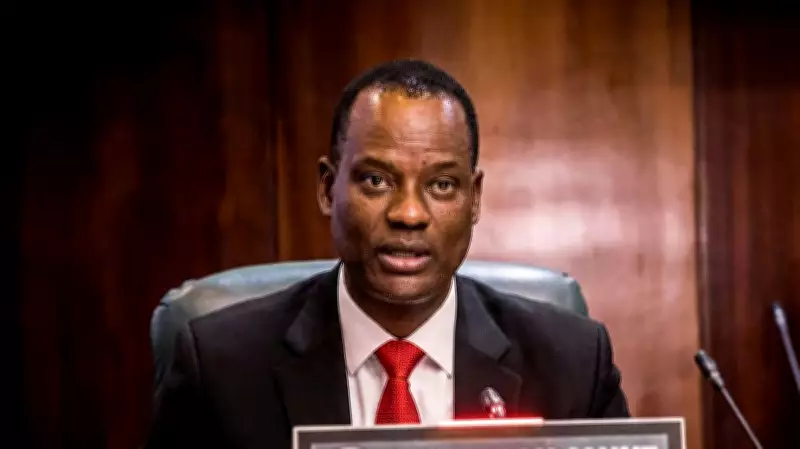
By Tanimu Yakubu
Continued from yesterday
If oversight institutions of the National Assembly are investigating claims, then intellectual honesty requires restraint pending evidentiary findings. The mere existence of an allegation does not establish factual guilt. In every serious democracy, inquiry is a process of verification, not a declaration of culpability. Yet many commentators proceed with astonishing certainty, constructing elaborate political arguments upon matters still under investigation. This betrays not confidence in evidence, but impatience with due process itself. A mature democratic culture distinguishes carefully between accusation and proof. Once societies normalise the treatment of allegations as established facts, public discourse degenerates into mob adjudication and institutional credibility collapses.
Even more troubling is the selective morality underpinning much of the outrage. Many of those now presenting themselves as guardians of accountability maintained remarkable silence during periods of far deeper fiscal opacity, systemic leakages and structurally ruinous subsidy regimes. Their newfound indignation appears less driven by principle than by political convenience.
There is also a glaring contradiction in the criticism itself. The same voices condemning current fiscal interventions routinely ignore the inherited liabilities, contingent obligations and quasi-fiscal distortions accumulated over many years before the present administration assumed office. They discuss the consequences while deliberately erasing the causes. No serious economic assessment isolates outcomes from historical context. One cannot inherit structural disequilibrium built over decades and resolve it within months without difficult transitional adjustments. To pretend otherwise is either economic illiteracy or deliberate political manipulation.
Indeed, some critics now invoke anti-corruption rhetoric as though fiscal expansion itself were evidence of misconduct. This is analytically absurd. Deficit spending is neither criminal nor abnormal. It is one of the oldest instruments of macroeconomic stabilisation known to economic theory and modern statecraft. The relevant questions are whether borrowed resources are directed toward productive stabilisation, whether distortions are being corrected, whether institutional reforms are advancing, and whether medium-term growth capacity is being restored. Those are the serious questions of economics — not headline-driven outrage masquerading as analysis.
History repeatedly shows that nations undergoing structural transition often experience intense political resistance precisely because reforms disrupt entrenched rent structures. Those benefiting from previous distortions rarely surrender quietly. They weaponise discomfort, amplify transitional pain and present necessary adjustments as evidence of failure. But serious governance cannot be reduced to the management of political optics. Statesmanship requires confronting inherited realities, not merely postponing them for applause.
And perhaps the greatest intellectual failure of all is the refusal by some commentators to recognise that economic management involves trade-offs, sequencing and temporal effects. Reforms do not mature instantly. Stabilisation precedes expansion. Correction precedes recovery. Every major economy that eventually achieved durable growth passed through periods of painful adjustment. Nigeria will not be the first country required to endure transitional difficulty in order to escape structural stagnation.
Markets, the state and economic reality
What is most disappointing is the slavish attachment to simplistic market fundamentalism. Every advanced economy in history was built through strategic state intervention. The United States used industrial policy. China used state-directed capital. South Korea relied heavily on developmental financing. Japan deployed coordinated industrial targeting. Europe continues to subsidise strategic sectors extensively. Yet some local commentators behave as though government intervention is uniquely immoral in Nigeria. That is not economics. It is colonial mimicry disguised as sophistication.
Markets are powerful allocators, but they also fail. They under invest in public goods, misprice externalities, ignore inequality and collapse under coordination failures. That is precisely why governments exist. Even the most capitalist economies abandon fiscal puritanism during crises. In 2008 governments rescued banks. During the COVID-19 pandemic, trillions of dollars were injected globally through deficit financing because real policymakers govern economies as they are, not as ideological fantasists imagine them to be.
Conclusion
History will not remember who shouted loudest on television panels or social media platforms. History will remember who understood the scale of Nigeria’s structural crisis and had the courage to confront it. Economic transformation is difficult, disruptive and politically costly. Nations are not rebuilt through selective memory, performative outrage or shallow populism. They are rebuilt through reforms grounded in macroeconomic realism, fiscal pragmatism and strategic long-term thinking.
Perhaps the greatest irony of all is that many of those condemning deficits today benefited directly from the very fiscal injections they now denounce. Their salaries, contracts, businesses, liquidity positions and consumption patterns were often sustained by the same public spending they now pretend to oppose. That is not principled opposition. It is selective amnesia.
Concluded.
Tanimu is the Director-General of the Budget Office of the Federation.




