
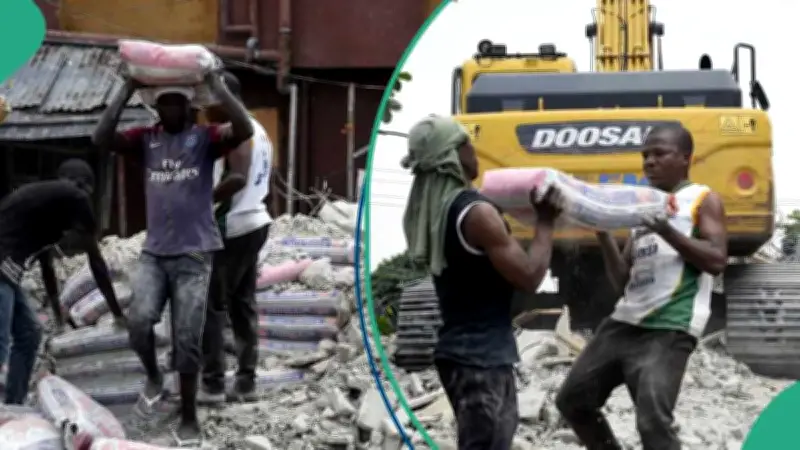
Nigeria's three largest listed cement producers – Dangote Cement, BUA Cement, and HBM Nigeria – all reported robust first-half 2026 earnings, driven by higher sales volumes, improved operational efficiency, and a more stable foreign exchange environment. The strong results underscore the resilience of the country's construction sector despite ongoing economic challenges.
Dangote Cement Leads on Scale and Profit
Dangote Cement remained the sector's largest earner, with profit attributable to shareholders rising 24.3% to N640.2 billion, up from N520.5 billion in the same period of 2025. Revenue grew 21.4% to N2.51 trillion, profit before tax climbed 34.4% to N981.4 billion, and EBITDA expanded 25.8% to N1.19 trillion.
Nigeria drove the bulk of those results, contributing over 90% of consolidated profit. Domestic revenue hit N1.81 trillion and operating profit crossed N1 trillion, while total cement and clinker sales reached 14.94 million tonnes for the period.
The Pan-African operations presented a contrasting picture. Although regional revenue grew 13.7% and operating profit rose 36.2%, net segment profit collapsed by nearly 98% to N2.8 billion. A N45 billion foreign exchange loss in the second quarter and persistent hyperinflation in Sierra Leone were the key drags on that segment.
HBM Nigeria Posts Fastest Earnings Growth
HBM Nigeria, formerly Lafarge Africa, produced one of the strongest earnings performances among the major players. The company reported revenue up 31%, operating profit increasing 51% to N291 billion, net profit rising 57% to N208 billion, and operating margin expanding to 43% from 37%.
According to HBM management, the performance was driven by double-digit volume growth, improved plant reliability, better distribution efficiency, and disciplined cost management. Unlike previous years when inflation compressed margins across manufacturers, HBM successfully expanded profitability while increasing sales volumes by 11%, suggesting that efficiency gains more than offset higher operating costs.
The company is also positioning for long-term growth through expansion. HBM has commenced engineering design work for a 3-million-tonne integrated cement plant in Calabar, which will become its third production line once completed. Management believes demand will remain supported by infrastructure projects, urbanisation and continued activity in Nigeria's construction sector.
BUA Cement Gains Most from Naira Stability
BUA Cement's results showed how improved foreign exchange conditions are beginning to reshape corporate earnings in Nigeria. The company recorded a N16.57 billion foreign exchange gain, compared with just N782.8 million during the same period last year, reversing the heavy exchange-rate losses experienced after the naira's sharp depreciation over the past two years.
The improvement helped reduce net finance costs to N3.41 billion, from N31.37 billion a year earlier. Finance income also climbed to N18.73 billion as interest income increased. Strong cash generation remained another highlight, with BUA generating N278.45 billion in operating cash flow and investing over N60.67 billion in capital expenditure.
The company's property, plant and equipment increased to N1.22 trillion, while projects under construction reached N183.86 billion, reflecting continued investment in production capacity. BUA is progressing with plans to increase installed capacity from 17 million tonnes to 20 million tonnes annually, including a new greenfield cement plant in Ososo, Edo State.
Cement Industry Trends in 2026
Several themes cut across the three companies' results. Demand remains resilient: all three producers reported higher sales volumes, indicating that cement demand remains supported by infrastructure development, housing and commercial construction despite economic headwinds. Capacity expansion continues: rather than slowing investment, manufacturers are accelerating expansion. Dangote continues investing across Nigeria and Africa, HBM is preparing a new 3-million-tonne Calabar production line, and BUA is increasing installed capacity to 20 million tonnes.
Operational efficiency is driving margins: HBM and Dangote both expanded operating margins, demonstrating that efficiency improvements are helping offset inflation, energy costs and logistics expenses. Exchange-rate stability is improving earnings: BUA was the clearest beneficiary, swinging to sizeable foreign exchange gains that sharply reduced finance costs. Dangote, however, continued to experience significant foreign exchange pressures in several African markets, highlighting the differing impact of currency movements across regions.
Outlook
The first-half results reinforce the resilience of Nigeria's cement industry despite a challenging operating environment. Dangote Cement continues to dominate in scale and profitability, HBM Nigeria posted the fastest earnings growth through operational improvements, while BUA Cement benefited most from a more stable foreign exchange environment. With all three companies expanding production capacity simultaneously, the sector appears positioned for further growth if infrastructure investment, urbanisation and construction activity remain supportive during the second half of 2026.
Earlier, the federal government urged cement manufacturers to cut down the prices of cement, warning that the prevailing price was impacting infrastructure projects and escalating demands for contract variations. According to the government, pressure has mounted on the ministry to alter existing contracts based on the increasing costs of cement.




