
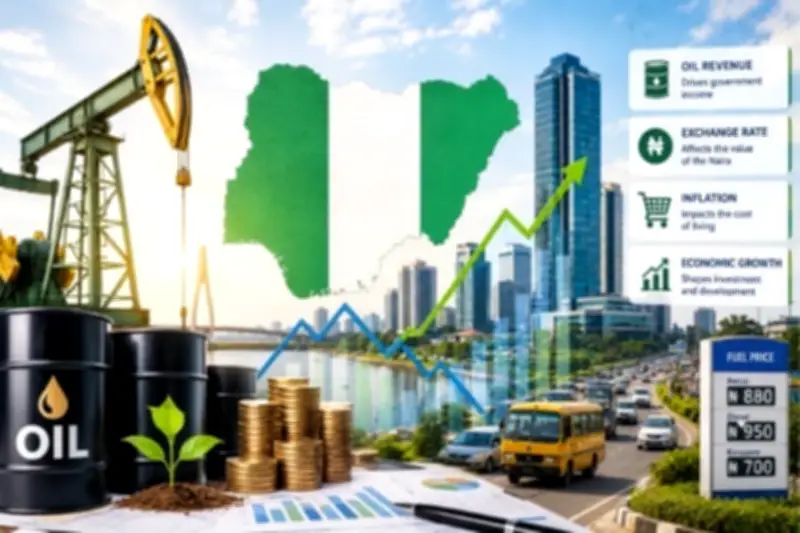
Oil Price Fluctuations Drive Nigeria's Economic Performance
Oil price volatility continues to exert a strong influence on Nigeria's economic outlook, shaping fiscal revenues, foreign exchange reserves, and overall growth prospects. The country's heavy dependence on crude oil exports makes it particularly vulnerable to global price swings, which have been exacerbated by geopolitical tensions, supply disruptions, and shifting demand patterns.
Impact on Fiscal Revenue and Government Spending
Nigeria's federal government relies on oil revenues for about 50% of its budget. When oil prices fall, as they did in 2020 during the COVID-19 pandemic, the government faces revenue shortfalls, leading to borrowing or spending cuts. In 2023, the average oil price was around $85 per barrel, but volatility has persisted. For instance, in 2024, prices dropped below $70 briefly before recovering to $80. This instability makes budget planning difficult and forces the government to adjust expenditure priorities.
Foreign Reserves and Exchange Rate Pressure
Oil exports account for over 90% of Nigeria's foreign exchange earnings. A decline in oil prices reduces dollar inflows, putting pressure on the naira. In 2023, the Central Bank of Nigeria devalued the naira twice as reserves fell. As of October 2024, foreign reserves stood at $33 billion, down from $37 billion a year earlier, partly due to lower oil revenues. Analysts warn that sustained low prices could force further devaluation, stoking inflation.
Economic Growth and Diversification Challenges
Nigeria's GDP growth has been sluggish, averaging 2–3% in recent years, well below the population growth rate. Oil price volatility hampers long-term planning for infrastructure and social programs. The government's diversification efforts, such as agricultural and tech sector initiatives, have made limited progress. According to the International Monetary Fund, Nigeria needs to grow at 6% annually to reduce poverty, but oil shocks frequently derail these targets.
Outlook and Policy Responses
To mitigate oil price volatility, Nigeria has been urged to accelerate economic diversification, improve fiscal discipline, and build up its sovereign wealth fund. The government has also sought to increase non-oil exports, such as solid minerals and agriculture, but these sectors remain small. As global energy transition gains momentum, long-term oil demand uncertainties add another layer of risk. The Nigerian Economic Summit Group emphasizes that without structural reforms, the economy will remain hostage to oil price cycles.
In conclusion, oil price volatility continues to be a dominant factor shaping Nigeria's economic trajectory, affecting everything from government budgets to household incomes. While some progress has been made in diversification, the country's fortunes remain closely tied to the global oil market.




