
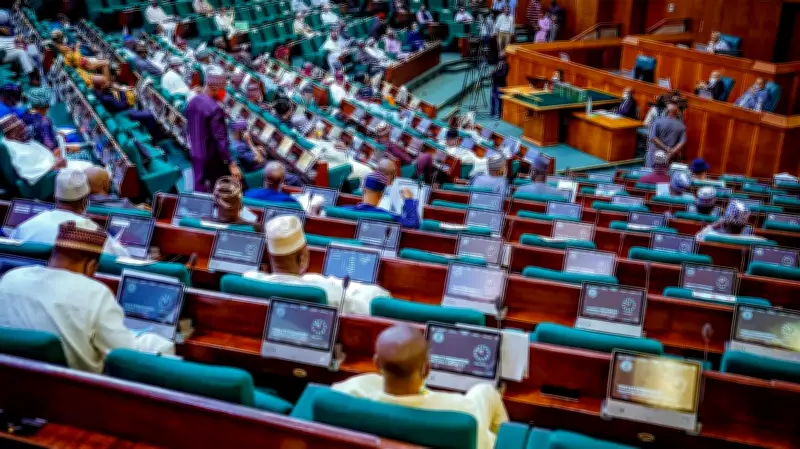
A bill seeking to establish a 50-year National Economic Plan (2026–2076) has been introduced in Nigeria's House of Representatives, aiming to enforce policy continuity and drive long-term development. The proposed legislation, sponsored by Hon. Amobi Godwin Ogah, targets one of Nigeria's most persistent economic challenges: frequent policy reversals and short-term planning cycles that have undermined sustainable growth.
Addressing Policy Instability
Leading the debate, Ogah emphasized that the bill would create a legally binding framework to guide economic development across successive administrations, insulating national planning from political transitions. He noted that Nigeria has historically demonstrated strong planning capacity but has struggled with implementation and continuity. Ogah cited past initiatives such as Vision 2010, Vision 20:2020, and the Economic Recovery and Growth Plan (ERGP), pointing out that many failed to deliver expected outcomes due to weak institutional backing and lack of legal enforceability.
“The problem has never been planning; it has been sustaining those plans,” he said.
Promoting Macroeconomic Stability
The lawmaker explained that the proposed 50-year plan would promote macroeconomic stability, reduce policy uncertainty, and boost investor confidence by providing a predictable economic direction over the long term. He added that the bill would particularly benefit capital-intensive sectors such as infrastructure, manufacturing, and energy, where long-term investments are often discouraged by inconsistent government policies.
Ogah stressed that critical infrastructure projects, including roads, railways, power, and ports, require extended planning horizons that go beyond electoral cycles.
Aligning with Global Best Practices
He further noted that the bill aligns Nigeria with global and continental best practices, pointing to countries such as China, India, and Malaysia, as well as African peers like South Africa, Rwanda, and Botswana, which have adopted long-term development frameworks. At the continental level, he referenced the African Union's Agenda 2063 as a model for sustained economic transformation.
Strengthening Institutional Coordination
The proposed legislation also seeks to strengthen institutional coordination, provide legal backing for monitoring and evaluation, and introduce compliance mechanisms for government agencies. Analysts say the bill, if passed, could mark a turning point in Nigeria's economic governance by anchoring development planning in law and ensuring continuity across administrations.
Ogah urged his colleagues to support the bill's passage for Second Reading, describing it as a critical step toward repositioning Nigeria for sustainable growth and global competitiveness. “This is not just another policy proposal; it is a structural reform to secure Nigeria's economic future,” he said.




