
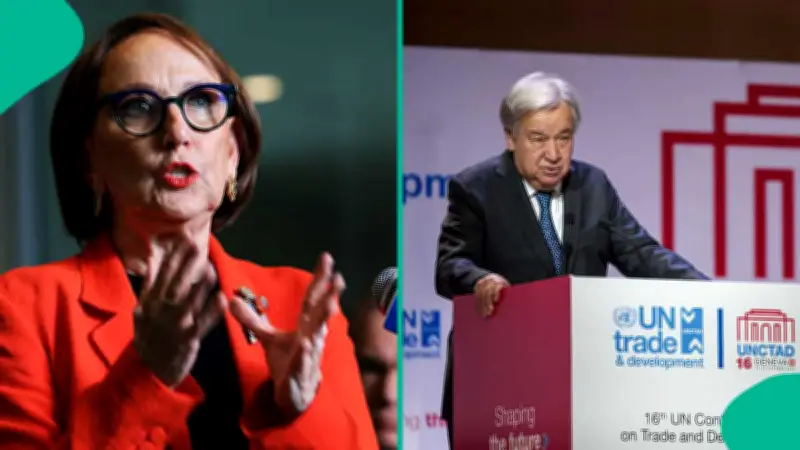
A recent report from the United Nations Conference on Trade and Development (UNCTAD) has highlighted a troubling trend: escalating debt costs are severely constraining developing nations, leaving their governments with diminished resources for critical investments in education, healthcare, infrastructure, and climate initiatives.
Fiscal Space Shrinks for 99 Countries
According to the UNCTAD report, between 2018 and 2024, 99 developing countries—home to approximately 5.5 billion people—experienced a sharp increase in interest payments. This surge has eroded fiscal space, meaning a smaller share of government revenue is available for development spending. Specifically, 73% of these nations lost fiscal capacity as debt servicing crowded out essential public investments.
The report underscores a fundamental challenge: while public debt can finance development, excessive or costly debt burdens economies, particularly in developing regions.
Massive Financing Gap for Sustainable Development Goals
In 2024, developing countries received nearly $1.5 trillion in external financial inflows, split between equity-based investment and borrowing. However, this amount falls far short of what is needed to achieve the Sustainable Development Goals (SDGs). The annual financing gap is estimated at $4.3 trillion, requiring both domestic and external financing to increase by about one-third from current levels. Closing this gap would necessitate an additional $230 billion each year in debt and equity financing.
Rising Debt Servicing Costs
Debt servicing costs are rising faster than repayment capacity. In 2024 alone, developing countries paid $384 billion in interest on external debt. Between 2014 and 2024, government interest payments surged by 102%, while revenues increased by only 39%. If 94 developing countries could borrow at the same interest rates as developed economies, they could save approximately $500 billion annually. These savings could finance 375,000 schools, 1.3 million primary health clinics, and 920 gigawatts of solar power capacity.
What is UNCTAD?
The United Nations Conference on Trade and Development (UNCTAD) is a permanent intergovernmental body established in 1964. It promotes inclusive and sustainable development by helping developing countries integrate into the global economy on fairer terms. UNCTAD provides research, policy advice, and technical assistance across trade, investment, finance, and technology. Its reports highlight global economic trends, challenges, and opportunities, with a strong focus on reducing inequality and supporting the achievement of the SDGs.
The report underscores the urgent need for reforms and stronger international support to reduce borrowing costs and close the financing gap. Without such measures, progress on climate action and other development goals will remain stalled.




