
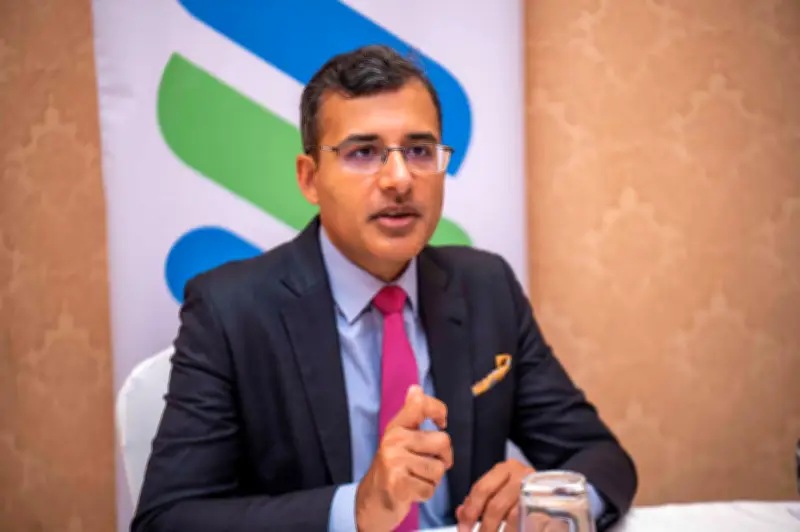
Manpreet Gill, Chief Investment Officer for Africa, Middle East and Europe at Standard Chartered Bank, affirms that disciplined investing through uncertainty paid off in the first half of 2026. In an interview, he outlines key themes for the remainder of the year, favouring global equities, emerging market bonds, and gold, while expecting a weaker US dollar over time.
First-Half Lessons: Discipline Over Emotion
Gill emphasises that the biggest lesson from the first half of 2026 is the importance of staying disciplined during market volatility. Despite heightened geopolitical tensions in the Middle East and a sharp spike in oil prices, global markets proved remarkably resilient. Global and Asian equities both delivered gains of around 10% during the period, outperforming expectations.
“The biggest lesson for investors is that reacting emotionally to short-term market events rarely produces the best outcomes,” Gill said. “Those who remained diversified, stayed invested, and focused on long-term fundamentals were ultimately rewarded.”
Three Key Investment Themes for H2 2026
Standard Chartered remains constructive on the global outlook, with three themes shaping positioning. First, the bank favours global equities because corporate earnings growth remains resilient beyond the technology sector. Gill advises viewing any market pullbacks as opportunities to add exposure rather than reasons to exit.
Second, attractive income opportunities exist in corporate bonds and emerging market dollar bonds, particularly African Eurobonds. Compared with developed market government bonds, investors are still well compensated for the risk assumed. Third, diversification remains critical, with an overweight position in gold and other alternative assets to improve portfolio resilience.
Preferred Equity Markets: US and Asia
Gill identifies the United States and Asia as offering the strongest equity opportunities. The US benefits from resilient earnings growth, with momentum broadening beyond semiconductors. In Asia, while Korea and Taiwan led the rally, opportunities are expanding to Japan and other emerging Asian markets. “As earnings growth becomes more diversified, we expect broader participation in the equity rally during the second half of the year,” he noted.
US Dollar Strength Temporary, Weakening Expected
Despite recent US dollar strength driven by geopolitical uncertainty and expectations of higher-for-longer interest rates, Gill expects the dollar to weaken over time. As inflation moderates and without new geopolitical shocks, US bond yields should ease, reducing dollar support. “Historically, periods of a weaker US dollar have encouraged stronger capital flows into emerging markets, improved investor sentiment, and supported risk assets,” he explained.
Implications for Nigeria and Emerging Markets
For emerging markets like Nigeria, prolonged dollar strength can pressure currencies, dampen capital inflows, and contribute to higher imported inflation. Conversely, a weaker or more stable dollar would create a more supportive environment for the naira and help moderate inflation. “Nigeria’s outlook will depend on the interaction between global market conditions and continued implementation of domestic reforms,” Gill said, adding that a supportive external environment combined with consistent policy execution should strengthen investor confidence.
African Eurobonds Offer Compelling Risk-Reward
A weaker dollar generally benefits emerging market assets. Gill highlights African Eurobonds as one of the most attractive segments within emerging market fixed income, with yields remaining attractive relative to underlying risks. “Many African asset classes have already performed strongly this year, so investors should become increasingly selective. At current valuations, emerging market dollar bonds continue to offer one of the most compelling risk-reward opportunities available,” he stated.
Market Resilience Despite Geopolitical Shocks
Markets have shown remarkable resilience despite a succession of geopolitical shocks. Traditionally, a sharp oil price increase would have pressured growth and equities, but global equities recovered quickly. “With oil prices now largely returning to pre-conflict levels, one of the biggest risks to global growth has eased considerably,” Gill noted, reinforcing confidence in the broader investment outlook.
Gold: Patience Required, Conviction Maintained
Gold underperformed expectations in the first half, with elevated investor positioning lasting longer than anticipated. However, Standard Chartered maintains its overweight position. Central banks, especially in emerging markets, continue to accumulate gold, providing strong structural demand. Gold also serves as an effective hedge against geopolitical uncertainty and an anchor for diversified portfolios.
Biggest Risk: US Labour Market
The most important variable for H2 2026 is the US labour market. Currently healthy and neither overheating nor deteriorating, it supports expectations of a stable Federal Reserve policy. However, if employment strengthens unexpectedly, inflationary pressures could re-emerge, forcing interest rates higher for longer. “That would likely strengthen the US dollar and create a more challenging backdrop for emerging market assets, including those across Africa,” Gill warned.
Overall Message: Stay Disciplined
Gill’s message to investors is to remain diversified, stay invested, and maintain a long-term perspective. “History consistently shows that investors who focus on long-term fundamentals rather than reacting to short-term market noise are generally best positioned to achieve sustainable returns,” he concluded. “That discipline will continue to be one of the strongest drivers of investment success in the second half of 2026 and beyond.”




