
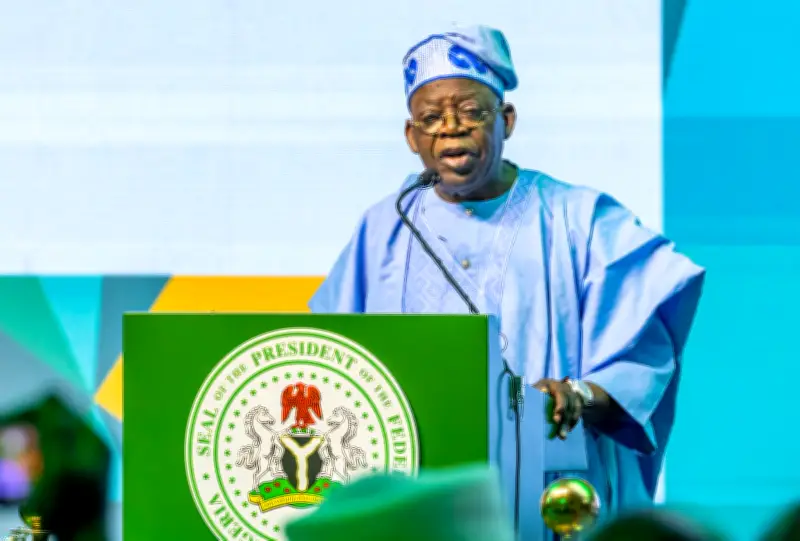
President Tinubu Launches $3.05 Billion Poverty Reduction and Human Capital Development Programmes
President Bola Tinubu has unveiled a comprehensive set of programmes valued at $3.05 billion aimed at reducing poverty and enhancing human capital across Nigeria. The initiatives were announced during a high-level meeting with state governors and development partners at the Presidential Villa in Abuja.
Programme Components and Target Beneficiaries
The $3.05 billion package comprises three main components: a health and nutrition programme, an education and skills development programme, and a social protection scheme. According to a statement by the Special Adviser to the President on Media and Publicity, Ajuri Ngelale, the programmes are designed to reach over 20 million Nigerians directly, with a focus on vulnerable populations including women, children, and persons with disabilities.
The health and nutrition component, valued at $1.2 billion, will provide free maternal and child health services, nutritional supplements, and access to primary healthcare centres in underserved areas. The education and skills development component, worth $1.1 billion, aims to improve school enrolment and retention, and provide vocational training for youths. The social protection scheme, with a budget of $750 million, will offer cash transfers and livelihood support to the poorest households.
Funding and Implementation Strategy
The funding for these programmes will come from a combination of federal government allocations, loans from international financial institutions, and grants from development partners. The World Bank has pledged $1.5 billion, while the African Development Bank has committed $800 million. The remaining funds will be sourced from the government's budget and other bilateral donors.
Implementation will be overseen by a newly established Presidential Committee on Poverty Reduction and Human Capital Development, chaired by Vice President Kashim Shettima. The committee includes representatives from relevant ministries, state governments, and civil society organizations.
State-Level Coordination and Monitoring
Governors have been tasked with setting up similar committees at the state level to ensure effective coordination and monitoring. President Tinubu emphasized the importance of transparency and accountability, warning that any diversion of funds would be met with severe consequences. He stated, "These programmes are not just another government initiative; they are a lifeline for millions of Nigerians. We must ensure that every kobo reaches those who need it most."
The National Bureau of Statistics will conduct quarterly evaluations to track progress and measure the impact of the programmes on poverty reduction indicators. The government aims to reduce the national poverty rate from the current 40% to 25% by 2030.
Reactions and Expectations
Reactions from stakeholders have been largely positive. The Nigeria Labour Congress (NLC) commended the initiative but called for the inclusion of labour representatives in the implementation committees. The Governor of Kaduna State, Uba Sani, expressed support, noting that "the programmes align with our state's development agenda and will complement existing efforts."
Development partners have also welcomed the announcement. World Bank Country Director for Nigeria, Shubham Chaudhuri, said, "We are pleased to support Nigeria in this ambitious endeavour. The focus on human capital is critical for sustainable economic growth."
The launch of these programmes comes amid ongoing economic challenges, including high inflation and unemployment. President Tinubu assured Nigerians that the government remains committed to improving living standards and creating opportunities for all.




