
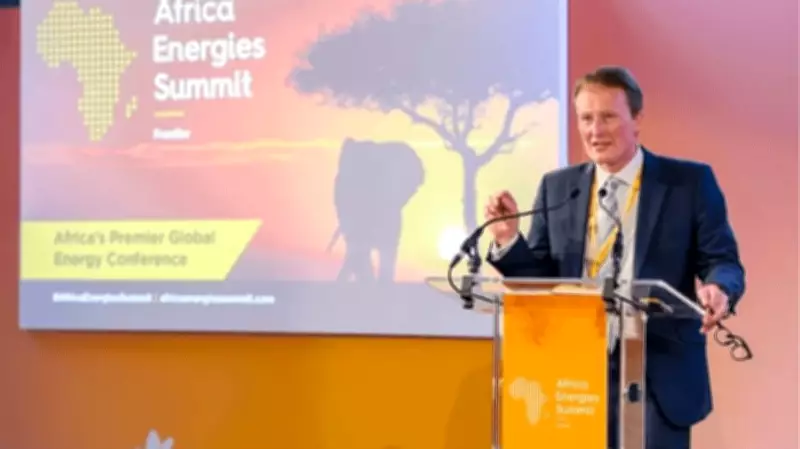
African Energy Chamber Escalates Boycott of London Summit Over Representation
The African Energy Chamber (AEC) has significantly intensified its opposition to the upcoming Africa Energies Summit in London, firmly declaring that its boycott will persist until the event's organizers implement what it describes as credible and measurable changes regarding local content, representation, and hiring practices. What initially began as a dispute over participation has now evolved into a broader confrontation concerning the legitimacy of Africa-focused energy platforms.
From Protest to Principle: A Shift in Focus
For the AEC, the central issue is no longer merely whether the organizers are willing to listen, but whether an Africa-centric platform can continue to assert authority while African professionals, particularly Black Africans, remain underrepresented in leadership and decision-making roles. The Chamber argues that this goes to the core of how Africa is perceived and treated within global energy forums.
A summit built around African resources, markets, and investment opportunities cannot continue to derive influence from the continent while failing to reflect it in its own internal power structure, the AEC contends. This contradiction, according to the Chamber, has transformed the matter from a policy disagreement into a critical test of institutional integrity.
Local Content Must Be Tangible, Not Just Rhetorical
The AEC has emphasized that its position is grounded in a larger principle: local content must extend beyond speeches, sponsorship language, and conference branding to include visible inclusion in corporate governance, recruitment, and executive responsibility.
"Our position remains the same: if you benefit from Africa's resources and its development agenda, then you must reflect Africa in your leadership, hiring, and decision-making. Local content can no longer be smoke and mirrors – it must be a tangible commitment to inclusion, opportunity, and ownership. We cannot accept a situation where Africa is central to the conversation, but Africans are absent from leadership," said NJ Ayuk, Executive Chairman of the AEC.
This statement encapsulates the Chamber's broader argument. It is not simply accusing organizers of poor optics; it is challenging a pervasive pattern where Africa supplies the opportunity, market, and political relevance, while influence remains concentrated elsewhere. For the AEC, this imbalance undermines the moral standing of any platform claiming to speak for the future of African energy.
Withdrawals from Mozambique and Ghana Deepen the Dispute
The boycott has gained substantial momentum as it is no longer being advanced as a solitary institutional grievance. According to the Chamber, resistance to the summit is now spreading across the African energy ecosystem, with both public- and private-sector actors beginning to withdraw support.
In March 2026, Mozambique's oil and gas sector pulled out of the summit, with the Mozambique Energy Chamber stating that its members would not participate. In April, Ghana followed with similar concerns, citing not only questions around local content but also discriminatory hiring practices that allegedly sidelined African professionals.
These withdrawals have imbued the boycott with greater political and symbolic force. They indicate that the dispute has moved beyond a narrow quarrel between one organizer and one advocacy body. Instead, it is beginning to reflect a wider discomfort within the industry over the repeated gap between what Africa-focused events profess about inclusion and what their own structures demonstrate.
The emerging message from the Chamber and its allies is that Africa is becoming increasingly unwilling to endorse platforms that promote access to the continent while offering Africans limited access to authority within those same platforms.
Linking the Boycott to Broader Energy Future Debates
The Chamber has also clarified that it does not view the summit controversy as isolated from larger debates in the energy sector. Rather, it sees the row as part of a wider struggle over who defines the continent's energy priorities, who benefits from that influence, and whose interests shape the sector's future.
At ARDA Week 2026, Ayuk used his keynote address to urge downstream stakeholders to embrace what he described as a stronger African-led industrial agenda. Repeating his now familiar call to "refine, baby refine," he argued that the continent must build more of its own infrastructure, retain more value domestically, and confront energy poverty through practical investment rather than rhetorical commitment.
In making this case, he pointed to projects such as the Dangote Refinery, with its 650,000 barrels-per-day capacity, as well as the role of indigenous firms like Sahara Group. The larger point was clear: Africa cannot credibly speak of energy security, industrialisation, and sovereign value creation while tolerating exclusion in the institutions and gatherings that shape policy narratives and investment flows.
Thus, the Chamber has framed the boycott not as a side battle over conference attendance, but as part of a deeper argument about economic ownership and strategic self-respect. In its interpretation, the question is not only who attends the summit, but who is permitted to define the terms of Africa's energy conversation.
Namibia Conference Reinforces Inclusion Message
The same argument resurfaced at the Namibia International Energy Conference in Windhoek, where local content, women's participation, and the country's emerging oil and gas opportunities featured prominently in discussions. The AEC stated that the conference reinforced its belief that inclusive leadership and strong participation frameworks are not optional add-ons, but central conditions for transforming energy development into broad-based growth.
From the Chamber's perspective, countries such as Namibia, Mozambique, and Ghana are entering decisive phases in their energy evolution. At such critical moments, platforms that influence investor thinking, elite networking, and sector priorities carry significant weight. That is why the AEC considers exclusionary hiring or weak African representation more than a reputational problem; it sees them as risks that can distort how opportunity, power, and long-term benefit are distributed.
The Chamber argues that if Africa's next energy boom is to produce jobs, industrial expansion, and stronger domestic institutions, then the organizations helping to frame that boom must themselves embody the values they promote. Otherwise, local content becomes a slogan emptied of substance.
Pressure Campaign Broadens to Firms Backing the Summit
Ayuk sharpened the Chamber's position with one of its strongest warnings yet, indicating that the boycott campaign may now extend beyond the summit and its organizers to companies that continue to support the event.
"It will be incredibly dangerous to have the vision of Daniel Davidson and Frontier Energy Network guide how the continent deals with energy poverty, investments, and the development of fields in Namibia, Mozambique, and across Africa. Over the coming weeks we will intensify our campaign to boycott the summit. But the industry must do more: seismic companies that continue enabling these horrible policies will also be targeted. They are aiding and abetting anti-African policies. Multi-client data does not work with discrimination," he said.
This threat marks a significant shift. It suggests the Chamber intends to test not only the resolve of the organizers but also the willingness of the wider value chain to continue associating with a platform under sustained criticism. In practical terms, the boycott is being repositioned from a refusal to participate into a campaign of reputational escalation.
This matters because it raises the cost of silence. Support companies, data firms, and commercial partners may now face pressure to clarify their positions. In that sense, the Chamber is attempting to transform the dispute into a wider industry reckoning, one in which neutrality becomes increasingly difficult to sustain.
A Fight Over Legitimacy, Not Simply Attendance
The AEC has sought to present its position as a demand for fairness rather than an attempt to exclude others. Its case is that Africa-focused industry platforms must meet at least a minimum threshold of representation, mutual respect, and institutional consistency if they are to be taken seriously by the constituencies they claim to serve. Until that happens, the Chamber asserts, the boycott will remain in force.
Beyond the immediate dispute, the row has opened up a more consequential question for the African energy sector: who gets to convene Africa's future, who gets rewarded for speaking on behalf of the continent, and how long African stakeholders will continue to tolerate the separation of African opportunity from African authority.
That is why the controversy surrounding the Africa Energies Summit now carries significance far beyond a single event in London. It has become a proxy battle over power, access, and ownership in the business of African energy. And in that battle, the language of local content is being pushed away from conference rhetoric toward something more challenging, more measurable, and more political: representation where it matters most.




