
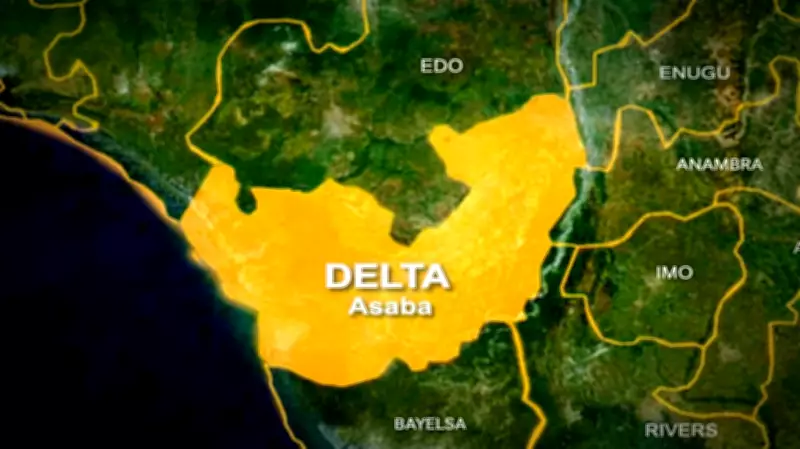
Delta State Residents Protest 20 Years of Electricity Blackout at Government House
Hundreds of protesters from Ndokwa Nation on Wednesday barricaded the entrance to the Delta State Government House for approximately one hour, demanding an immediate end to what they described as more than two decades of crippling electricity blackout across their communities.
Symbolic Demonstration of Prolonged Hardship
The demonstrators, comprising women, youths, community leaders, and traditional masquerades, converged on the seat of government in Asaba carrying old lanterns and worn-out lamps as powerful symbols of their prolonged suffering. They displayed placards bearing sharp messages including "Governor Sheriff, No Light No Vote," "20 Years of Darkness," "We Are Suffering," "Over 150 Ndokwa Communities in Darkness for Over 20 Years," and "Oil Everywhere, Light Nowhere."
Growing Anger in Oil-Rich Region
The protest underscored escalating anger in the oil-rich Ndokwa area, where residents say the paradox of producing enormous energy resources while living without electricity has become completely unbearable. Leading the peaceful demonstration, President General of Ndokwa Nation, Comrade Nkem Stanley Adoh, accused successive governments of neglecting the region and failing to address a crisis that has stunted economic growth and worsened poverty.
According to Adoh, for more than twenty years, families in Ndokwa have been denied access to a basic necessity that many Nigerians consider routine. "This is not just an inconvenience; it is a wound on the development and dignity of our communities," Adoh declared forcefully.
Devastating Impact on Daily Life
The protest leaders detailed the devastating consequences of the prolonged blackout:
- Students are forced to study by candlelight, compromising their education
- Small businesses that should create jobs and support livelihoods have collapsed under the weight of high generator costs and unreliable alternatives
- Hospitals and clinics struggle to function effectively when electricity-dependent equipment fails, placing lives at serious risk
Demands for Immediate Action
In a strongly worded address, the protesters declared that the prolonged blackout was no longer merely a technical problem but a comprehensive failure of policy, governance, and implementation. They presented specific demands to the state government:
- A clear, time-bound action plan detailing what would be done, who would execute it, the projected cost, and when electricity would be restored to all affected communities
- An immediate independent technical audit of power infrastructure in Ndokwa
- Emergency interventions including generator support, community charging centers, and backup electricity for health facilities pending permanent solutions
Government Response and Commitments
Responding to the protest, Governor Sheriff Oborevwori said his administration was committed to electrifying the state and had already commenced processes required by the Transmission Company of Nigeria regulatory framework to make expanded electricity supply possible. Represented by Chief of Staff Johnson Erijo, the governor stated that the Ndokwa generating point had the capacity to supply power to the entire state, with additional support expected from Ughelli and Ogorode facilities.
He assured the protesters that Ndokwa communities would soon be connected, adding that consultants had been engaged to complete the technical and regulatory groundwork needed to restore power. Observers note that the protest reflects mounting frustration in a region that hosts several oil and gas assets yet remains significantly underdeveloped, with communities surrounded by energy wealth continuing to live in darkness.




