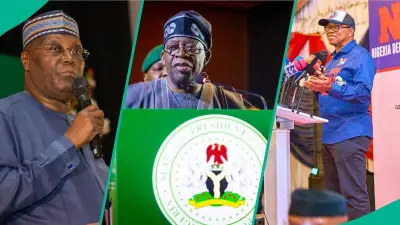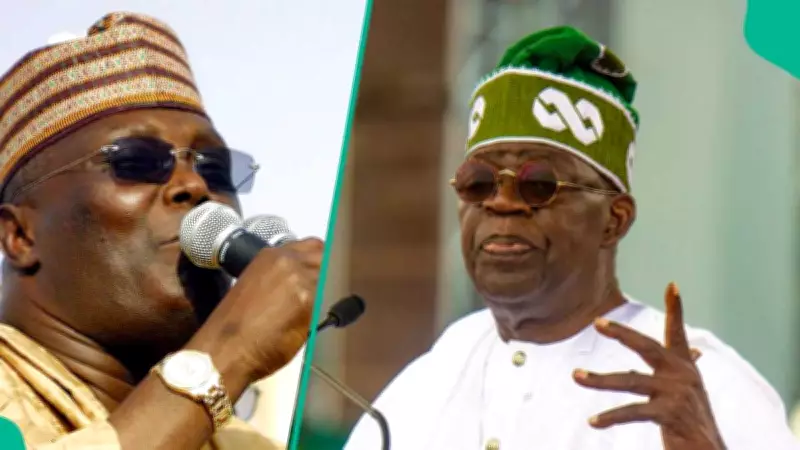
Atiku Abubakar Calls for Urgent Electoral Act Reforms to Protect 2027 Elections
Former Vice President Atiku Abubakar has issued a strong call for immediate amendments to Nigeria's Electoral Act, expressing grave concerns that existing provisions could severely undermine the credibility of future elections, particularly the upcoming 2027 polls. In a statement released through his Senior Special Assistant on Public Communication, Phrank Shaibu, Atiku highlighted specific issues within the current legal framework that he believes pose a direct threat to democratic processes.
Concerns Over Section 63 and Discretionary Ballot Validation
Atiku raised alarm over what he described as ambiguity in Section 63 of the Electoral Act, which grants returning officers discretionary powers in the validation of ballot papers. He argued that this flexibility creates a serious risk to electoral integrity, potentially opening the door to manipulation and disputes. "This is not a minor technical issue; it is a direct threat to electoral integrity," Atiku stated, emphasizing that electoral rules must be clear and leave no room for subjective interpretation.
He elaborated further, noting that while the provision may have been intended to prevent voter disenfranchisement, its current wording remains too open-ended and risky for Nigeria's democracy. Atiku pointed out that this clause has persisted through previous amendments without adequate safeguards, describing it as a long-standing weakness in the electoral framework that requires urgent attention.
Demands for Legislative and Executive Action
Atiku has urged the National Assembly to take swift action by revising the Electoral Act to remove discretionary powers in ballot validation and replace them with strict, uniform standards. He criticized lawmakers for failing to address what he termed a persistent flaw in the law, despite multiple opportunities for reform over the years.
Additionally, he called on President Bola Ahmed Tinubu to ensure that all electoral legislation undergoes thorough scrutiny before assent, stressing that leadership demands vigilance in upholding democratic principles. "The document he assented to ought to have passed the most stringent integrity test," Atiku remarked, highlighting the need for stronger executive responsibility in the legislative process.
Appeals to INEC and International Observers
The former Vice President also appealed to the Independent National Electoral Commission (INEC) to tighten its operational guidelines to prevent electoral officers from making subjective decisions during elections. He emphasized that operational clarity is crucial to maintaining trust in the electoral system.
Furthermore, Atiku called on international observers and democratic partners to closely monitor Nigeria's electoral reforms, noting that legal frameworks are as important as the electoral processes themselves. "The world is watching. Nigeria must not send a signal that its electoral system can be bent by interpretation," he cautioned, underscoring the global implications of domestic electoral integrity.
Emphasis on Certainty and Transparency
Atiku concluded by stressing that fixing this identified gap is essential to restoring public confidence in Nigeria's democratic process. He maintained that electoral reforms should focus on certainty, transparency, and consistency rather than discretion. "This loophole must be corrected. Democracy thrives on certainty, not discretion—and Nigeria cannot afford anything less," he asserted, calling for decisive action to strengthen safeguards ahead of the 2027 elections.