
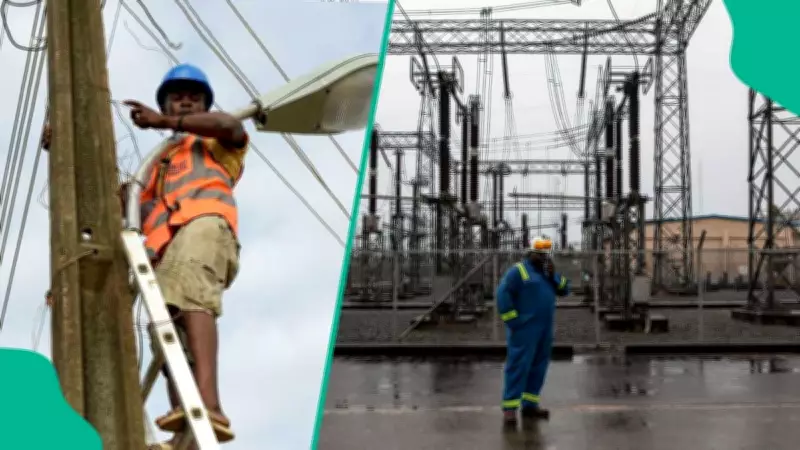
Nigeria's Power Generation Falls Far Below Installed Capacity, NERC Report Exposes
A recent report from the Nigerian Electricity Regulatory Commission (NERC) has unveiled a stark reality: the country's grid-connected power plants are operating significantly below their installed capacity. This revelation comes amid persistent blackouts affecting households and businesses across Nigeria, underscoring deep-seated challenges in the energy sector.
Alarming Figures from January 2026
According to the latest NERC data, power plants with a combined installed capacity of 13,625 megawatts generated an average of only about 4,421 megawatts in January 2026. This translates to a plant availability rate of just 36%, meaning nearly two-thirds of Nigeria's power generation infrastructure was non-operational during that month. The total available capacity reached a mere 4,901MW, less than half of what could be produced if all plants were functioning optimally.
Key Factors Behind the Underperformance
Experts attribute this gap to several critical issues. Gas supply disruptions, equipment maintenance problems, and transmission constraints are cited as primary factors limiting electricity generation. Chinedu Okafor, a Lagos-based energy analyst, emphasized that the disparity between installed and available capacity highlights long-standing inefficiencies. He pointed out that Nigeria's immediate priority should be repairing existing plants rather than constructing new ones.
Varied Performance Across Major Plants
The performance of power plants varied widely in January 2026. For instance, Ihovbor_2 achieved a 100% plant availability factor, fully utilizing its available capacity, though its installed capacity is relatively small at 461MW. In contrast, Egbin_1, Nigeria's largest thermal power plant with an installed capacity of 1,320MW, operated at just 51% availability, despite a 95% load factor when active.
Several major plants produced little or no power during the month. Afam_1, with an installed capacity of 726MW, recorded only 7% availability, while Alaoji_1 (500MW) and Ibom Power_1 (190MW) generated no electricity at all. Collectively, these underperforming plants represent nearly 1,500MW of unused capacity, according to the NERC data.
Economic Impact and Gas Supply Challenges
The weak power generation has significant economic repercussions. Unreliable electricity supply forces businesses and households to rely heavily on diesel generators, increasing operating costs. The World Bank estimates that Nigeria loses approximately $29 billion annually due to poor electricity supply, equivalent to about 2% of the country's gross domestic product.
Gas supply challenges remain the biggest constraint for thermal power plants, which constitute most of Nigeria's generation capacity. Despite possessing Africa's largest natural gas reserves, issues such as pipeline vandalism, commercial disputes, and inadequate gas infrastructure have hindered reliable supply to power plants. Amina Bello, a former adviser to the Ministry of Power, noted that the gas-to-power value chain is a major bottleneck, as plants cannot operate without consistent fuel.
Transmission Limitations and Government Response
Transmission limitations further restrict power delivery. The Transmission Company of Nigeria (TCN) has acknowledged that the national grid can currently transmit only about 5,500MW, limiting electricity distribution even when generation capacity is available. This comes as pressure mounts on the federal government to address Nigeria's electricity crisis. President Bola Tinubu's administration has pledged to raise power generation to 10,000MW by 2025, a target that seems increasingly challenging given current utilization levels.
Recent reforms include steps toward decentralizing electricity regulation, granting states greater control over power generation and distribution. However, challenges related to financing, gas supply, and transmission infrastructure persist. NERC's January data suggests that modest improvements could yield meaningful gains. Analysts note that increasing plant availability to 60%—still below global benchmarks—could add about 3,000MW to the national grid without constructing new power plants.
Future Prospects and Strategic Initiatives
The Tinubu administration has unveiled a $2.5 billion strategy to stabilize Nigeria's power supply. This initiative aims to settle power sector debts and fund major upgrades to electricity transmission and distribution. The program is expected to stabilize supply for approximately 12 million customers while unlocking 4,484 megawatts of capacity. Government representatives have stated that this effort will reset the electricity market by improving revenue collection and modernizing the grid, among other benefits.
As Nigeria grapples with these energy challenges, the NERC data serves as a critical reminder of the urgent need for operational improvements and strategic investments to harness the country's full power potential.




