
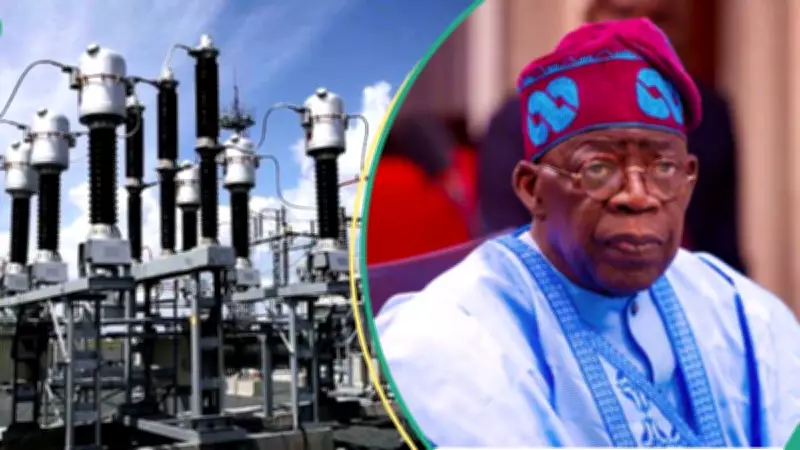
Fresh Confusion Over Electricity Debt as Tinubu and Power Generators Disagree on Figures
The Nigerian electricity sector faces renewed uncertainty as the Association of Power Generation Companies (APGC) has firmly rejected claims that N2.8 trillion represents the final and verified settlement for legacy debts owed to power generators. This development creates fresh confusion in an industry already struggling with financial instability and operational challenges.
APGC Rejects N2.8 Trillion Figure as Final Settlement
In a strongly worded statement released on Monday in Abuja, APGC Chief Executive Officer Joy Ogaji described reports suggesting N2.8 trillion as the newly verified and final debt settlement as "inaccurate and misleading." Ogaji emphasized that this amount did not emerge from any officially completed reconciliation process and challenged those making the claim to provide transparent explanations for how they arrived at this specific figure.
"We completely reject the reports suggesting that N2.8 trillion is a newly verified and final settlement of GenCos' legacy debts," Ogaji stated unequivocally. "The report is inaccurate and should be treated as fake news."
Background of the Disagreement
This controversy follows earlier reports indicating that President Bola Tinubu had approved N2.8 trillion as the Federal Government's verified debt to power generation companies for electricity subsidies dating back to 2010. According to those reports, the President declined a N6 trillion claim from operators and insisted on paying only what had been properly audited through established verification processes.
However, Ogaji provided crucial context about how these debts were originally calculated, explaining that they stem from formal business agreements within the Nigerian Electricity Supply Industry framework. She stressed that the money owed is not based on random estimates but on clear, documented processes that include:
- Proper metering of electricity generated by GenCos
- Accurate recording of megawatts sent to the national grid under established market rules
- Invoices issued based on these verified records
- Settlement reports prepared by Nigerian Bulk Electricity Trading Plc (NBET)
Previous Reconciliation Efforts and Approvals
Ogaji revealed important details about previous reconciliation efforts, noting that as of December 2025, no new reconciliation meeting had occurred following the tripartite meeting held in March 2025. She recalled that in July 2025, after a joint reconciliation involving multiple stakeholders including GenCos, NBET, the Ministry of Finance, and the Office of the Special Adviser on Energy, President Tinubu had approved N4 trillion as verified legacy debt.
"This approval followed due process and formal discussions," Ogaji emphasized, highlighting that generation companies had participated in good faith and subsequently engaged with banks, gas suppliers, and investors based on this N4 trillion approval.
Concerns Over Investor Confidence and Sector Stability
The APGC CEO expressed serious concerns about how changing agreed figures outside official processes could damage trust in Nigeria's power market and weaken existing contractual agreements. She warned that such actions could particularly harm investor confidence at a critical time when the power sector urgently requires fresh funding and stable policy frameworks to overcome its numerous challenges.
Despite the current disagreement over figures, Ogaji maintained that APGC continues to have confidence in President Tinubu's administration and expects that any further discussions will be conducted transparently and guided by existing agreements and established market rules.
Structural Challenges in Nigeria's Power Sector
Ogaji pointed out that the ongoing financial crisis in Nigeria's power sector results from deeper structural problems rather than unfair demands from generation companies. Since the industry's privatization in 2013, generation companies have consistently struggled with delayed payments from NBET and electricity distribution companies, creating cascading financial difficulties that affect their ability to pay gas suppliers and service loans.
Other significant challenges plaguing the sector include:
- Electricity tariffs that do not fully reflect actual production costs
- Foreign exchange instability affecting import-dependent operations
- Persistent payment shortfalls throughout the electricity value chain
- Inadequate infrastructure investment and maintenance
Government Efforts to Address Electricity Debt
In related developments, the federal government recently raised N501 billion through bond issuances specifically aimed at addressing historic debts within the electricity sector. This bond issuance represents a strategic effort to restore confidence and unlock much-needed investments in Nigeria's troubled power market. The settlement program associated with these bonds could potentially improve electricity service delivery for over 12 million customers across the country if implemented effectively alongside broader sector reforms.
The current disagreement between the presidency and power generators highlights the complex financial dynamics and reconciliation challenges facing Nigeria's electricity sector as stakeholders work toward sustainable solutions for the nation's persistent power problems.




