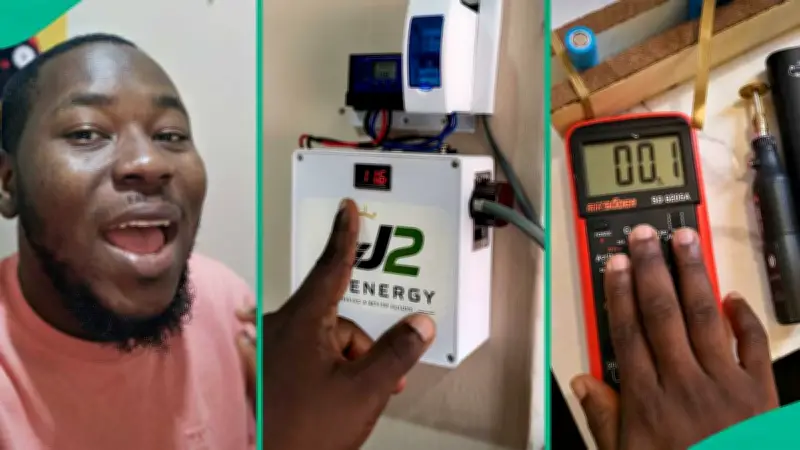
A Nigerian solar expert known as @jamesjacob__ on TikTok has demonstrated how ordinary people can build solar generators with lithium batteries and sell electricity to communities, a model he says mirrors the operations of electricity distribution companies but relies on free sunlight.
In a video posted on 29 August, the creator explained the basic components of a solar system—panels, an inverter, and battery backup—and outlined a step-by-step business approach for remote villages lacking reliable grid power. He also revealed that his own training cost him over 200,000 naira and that he is now willing to teach others the same skill.
Solar Business Model: From Panels to Prepaid Meters
The central idea, as presented in the video, is straightforward: instead of waiting for the national grid, a trained individual can purchase solar panels and battery systems, install them in an underserved community, wire individual homes, and deploy prepaid meters to collect payments based on usage. The creator likened this directly to how electricity distribution companies operate, arguing that the only difference is the energy source.
“The sun wey dey shine dey free,” he said in the video, emphasizing that solar panels convert sunlight into electricity at a cost far below what traditional generation infrastructure would require. He disclosed that his own training cost him “over 200 and something thousand naira,” covering everything from basic inverter and battery systems to lithium battery assembly.
The expert also referenced Nigeria’s plan to remove electricity subsidies by 2027, framing the timing as an added incentive to act now. He was clear that the opportunity is not limited to young people, noting that even someone aged 60 could build a profitable business around solar installation and supply.
Public Reactions: Enthusiasm and Caution
The video drew a range of responses from viewers, from enthusiasm to caution. Some expressed interest in learning, while others raised concerns about regulatory and technical issues.
- @DacoVibez said: “One Chinese company is doing that already, their target na villages”
- @Mofofunoluwa said: “I want to learn.”
- @TCA said: “Both kilowatt (kW) and megawatt (MW) are legal and officially recognized units in Nigeria. They measure the same power, just at different scales. NERC's current 2026 regulations cover interconnected mini-grids up to 10 MW of installed generation capacity, so a 1 MW project falls within the current mini-grid framework. In essence, you're correct....”
- @kamsi said: “The charge controller is still pwm.”
- @Jthree said: “Government go clamp U. no worry. when U can sell it's when it's on a small scale. Go start am na, make Ur investment vanish”
- @Alonso said: “Boss I want to learn.”
- @oga_bright3 said: “Bro I want to learn.”
Broader Context: Solar Power Sales in Nigeria
The video is part of a growing trend of Nigerians turning to solar energy as a business. In a related report by Legit.ng, a young man who installed a 7.5kVA solar inverter shared on X the amount of money he made in a month after selling solar power to his neighbours. He also mentioned the total amount he spent on the system and gave a breakdown of the power his neighbours had used.
The solar expert’s pitch comes at a time when Nigeria is grappling with unreliable grid electricity, making off-grid solutions increasingly attractive. With the 2027 subsidy removal plan, the economic case for solar investments is expected to strengthen, as more households and businesses seek alternatives to the national grid.
The creator’s offer to teach others the skill could lower the barrier to entry for many, but as commenters noted, regulatory frameworks and technical details—such as the type of charge controller—remain important considerations for anyone looking to start such a venture.