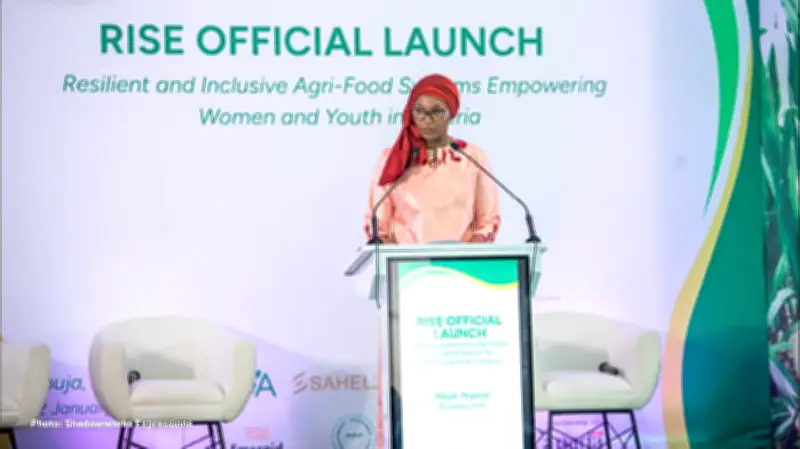
The Country Project Manager of RISE Project Nigeria, Maxwell Olitsa, has reaffirmed the project's commitment to engaging and supporting agribusinesses across Northern Nigeria. The Resilient and Inclusive Agri-Food Systems Empowering Women and Youth in Nigeria (RISE) project is a five-year initiative supported by Global Affairs Canada and implemented by MEDA in partnership with Sahel Consulting, Development Exchange Centre, Emeraid Capital, Extension Africa, Women in Business Forum, and the Federation of Muslim Women’s Associations in Nigeria. The initiative aims to create 8,000 decent jobs while strengthening key agri-food value chains across Northern Nigeria.
Focus on Key Value Chains
Olitsa noted that the project is designed to strengthen agri-food systems in Bauchi, Kaduna, and Kano states by addressing key constraints across the rice, maize, soybean, and groundnut value chains, while promoting inclusive economic growth. As part of this next phase, the programme is launching its Expression of Interest (EOI) process, inviting women and youth-led micro, small, and medium enterprises (MSMEs) to apply for targeted financial and technical support. The objective is to scale businesses, create decent jobs, and build more resilient and climate-smart agri-food systems.
Smart Incentive Awards
Olitsa said, “Northern Nigeria has no shortage of hardworking agripreneurs; what has been missing is a funding model that meets them where they are. RISE is not offering a loan with conditions attached; it is offering a genuine partnership, and we are looking for women and youth agribusinesses that are ready to grow.” He explained that the initiative targets women, youth aged 18-35, and male-owned businesses where at least 30% of staff or leadership are women, or the business directly serves women and youth. These agribusinesses in Bauchi, Kaduna, and Kano can apply for non-repayable financial and technical support under a new smart incentive scheme. The Matching Award helps MSMEs by covering up to 50% of investment costs, with the business covering the rest. The Circular Economy Award rewards businesses that adopt sustainable practices such as reducing emissions and recycling waste, through performance-based support.
Eligibility Criteria
Olitsa emphasized that the programme prioritizes women-owned or women-led MSMEs and youth-owned or youth-led MSMEs, with youth defined as individuals between 18 and 35 years old. “All applicants must be registered businesses or cooperatives with a minimum of two years in operation, at least two employees, and a demonstrated commitment to climate-smart practices and gender inclusion. Applications are reviewed on a rolling basis and registration is free,” he added.