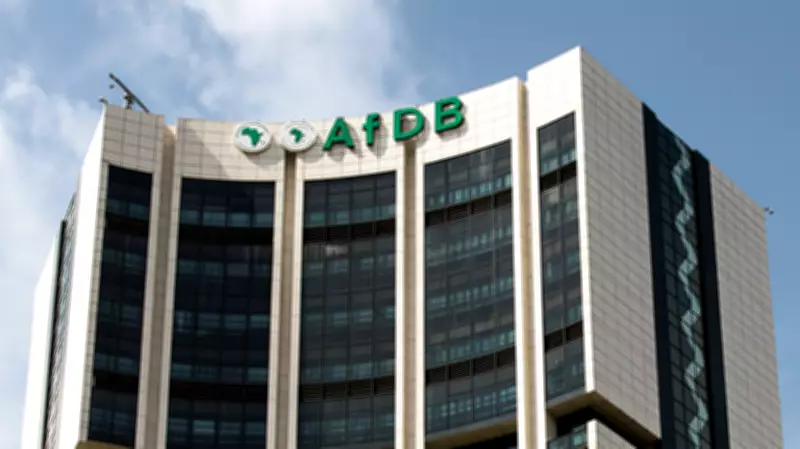
The African Development Bank (AfDB) has issued a warning that Africa's trade finance gap could expand to $86.6 billion by 2027. This projection is driven by escalating geopolitical tensions in the Middle East, which are increasing energy prices and tightening global credit conditions.
Keyamo Appointed to Lead Aviation Transformation
In a related development, the AfDB has appointed Nigeria's Minister of Aviation and Aerospace Development, Festus Keyamo, to spearhead its $7 billion Integrated Aviation Transformation Programme for Africa. The appointment was announced in a statement by his Special Adviser on Media and Communications, Tunde Moshood.
The programme aims to modernize Africa's aviation sector, enhance infrastructure, and attract private and institutional investment. The bank cited Nigeria's leadership and reform efforts in aviation as the basis for Keyamo's selection.
Trade Finance Report Highlights
According to the AfDB's 2025 Trade Finance Report, disruptions to critical shipping routes, such as the Strait of Hormuz, are creating new risks for African economies already facing limited access to finance. Rising geopolitical instability has increased import costs, weakened African currencies, and heightened lending risks across the continent.
The report states: "The conflict has driven a sharp rise in oil and fertiliser prices and elevated insurance and freight costs, which have in turn inflated shipping costs for Africa's predominantly net oil-importing economies."
At least 29 African currencies have depreciated since the outbreak of the conflict, adding pressure on foreign exchange reserves and import financing.
Projected Scenarios
Under a moderate risk scenario, the trade finance gap is projected to rise to $86.59 billion by 2027, a 17.66% increase from $73.59 billion in 2024. In a more severe scenario involving prolonged Strait of Hormuz disruption and tighter global credit, the gap could widen to $95.59 billion. However, under a baseline scenario without major disruptions, the gap could gradually narrow to around $65 billion.
The bank warned that weakening currencies and rising import bills could lead to stricter lending conditions by international correspondent banks, limiting access to trade finance. Inflation across Africa could average 10.4% in 2026, nearly one percentage point above earlier forecasts.
Nigeria's Portfolio Review
The AfDB's 2025 Country Portfolio Performance Review for Nigeria revealed that the North-East region is the largest beneficiary of AfDB-backed projects, while South-East infrastructure projects lag in disbursement. The bank's Nigeria portfolio has grown to $6.2 billion across 53 operations covering all 36 states and the Federal Capital Territory.
The North-East-linked Inclusive Basic Service Delivery and Livelihood Empowerment Programme, valued at $259.5 million, covers Borno, Adamawa, Bauchi, Gombe, and Taraba states. It has delivered water, sanitation, health, education, nutrition, and livelihood interventions. Key achievements include 45 out of 60 health facilities completed or at advanced stages, over 18,000 pupils receiving school supplies, and support for 1,105 MSME start-ups, 1,507 women-led agribusiness groups, and 3,268 vulnerable individuals.
In contrast, clearly identifiable South-East projects have combined approvals of about $171.3 million, but only $30.93 million disbursed as of December 2025. The Ebonyi State Ring Road Project disbursed $29.6 million of its $54.6 million approval, while the $115 million Abia State Integrated Infrastructure Project disbursed only $0.13 million.
The overall disbursement rate for AfDB's Nigeria portfolio stood at 53% as of December 2025, with flagged operations declining from 42% in January 2025 to 25% in December 2025. The bank attributed this improvement to closer monitoring by AfDB, the Federal Ministry of Finance, and project executing agencies, despite implementation delays in some projects, particularly in the South-East. Major bottlenecks include start-up delays, counterpart funding constraints, procurement issues, and disbursement challenges.