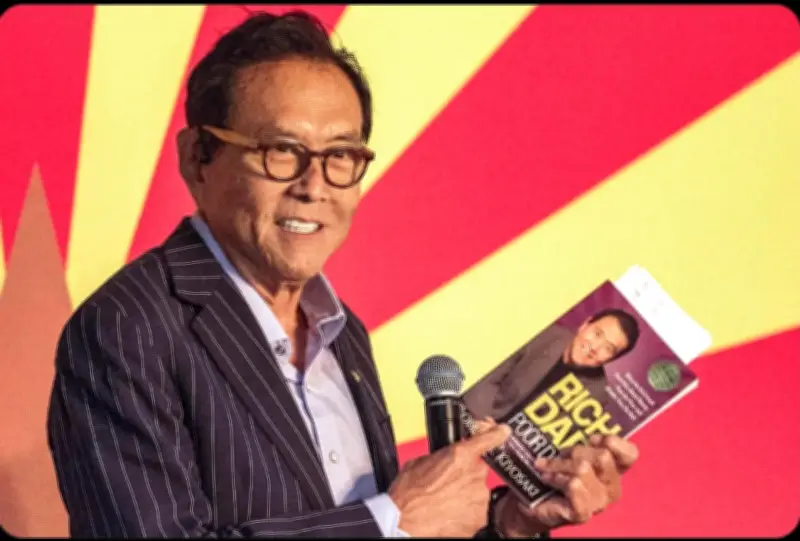
Robert Kiyosaki, the 79-year-old author of the best-selling personal finance book “Rich Dad Poor Dad,” has disclosed that he is carrying approximately $1.2 billion in debt, a figure accumulated largely through his real estate investments. The revelation, made during an appearance on the “Get Rich Education” podcast, has sparked widespread discussion about the use of leverage in wealth-building, particularly as Kiyosaki has built a career teaching others how to achieve financial success.
Debt as a Tool for Wealth Building
Kiyosaki stated plainly on the podcast, “So, I’m a billion two in debt.” He has repeatedly defended the practice of borrowing money to acquire income-producing assets, arguing that debt can be a powerful tool when used correctly. However, he also cautioned listeners against blindly copying his approach, emphasizing that individuals must fully understand how debt works before employing it to build wealth. His comments come as part of a broader narrative in which he positions debt as a strategic advantage for the wealthy, rather than a burden.
The scale of the debt has drawn attention because Kiyosaki’s financial philosophy, outlined in his 1997 book “Rich Dad Poor Dad,” encourages readers to use debt to purchase assets that generate cash flow. Yet, the $1.2 billion figure has raised questions about the risks involved, especially in volatile property markets.
Kim Kiyosaki Clarifies the Debt Structure
Kim Kiyosaki, Robert’s ex-wife and business partner, later provided crucial context to the revelation. She explained that the $1.2 billion figure does not represent Robert’s personal debt, but rather the total debt tied to the couple’s real estate portfolio. That portfolio includes approximately 1,500 apartment units, held in partnership with business associates. “So technically, yes, we have all this debt,” Kim said, adding that Robert’s personal share of the debt is “much smaller” than the headline number suggests.
The clarification underscores a key aspect of Kiyosaki’s investment strategy: the use of limited liability companies (LLCs) and partnerships to isolate risk. According to Kim, the debt is distributed across multiple legal entities, which protects individual assets if one business faces financial trouble. Robert echoed this sentiment on the podcast, saying, “If it all comes to hell, you can talk to my attorney,” and describing the structure as “the way the rich play the game.”
Estimated Personal Share and Investment Approach
Vanity Fair, which analyzed Kiyosaki’s financial disclosures, estimated that his personal portion of the debt could range between $30 million and $60 million. This estimate is based on his reported income and the structure of his investments. The wide range reflects the complexity of his holdings and the difficulty of determining an exact figure without full financial transparency.
Kiyosaki’s approach to managing his properties involves borrowing against the increased equity in his assets rather than selling them. This allows him to access cash for new investments while continuing to hold the original properties, a tactic that can amplify returns when property values rise. However, it also exposes him to significant risk if property values decline or rental income falls short of expectations.
Expert Reactions and Potential Risks
Financial experts have offered mixed assessments of Kiyosaki’s debt strategy. Some describe it as a legitimate use of leverage, pointing out that borrowing against income-producing real estate is a common practice among wealthy investors. Others, however, warn that carrying such a massive amount of debt can become dangerous if market conditions deteriorate. A decline in property values or a drop in cash flow could trigger difficulties in servicing the debt, potentially leading to forced sales or losses.
The debate highlights a broader tension in personal finance: while debt can accelerate wealth creation, it also introduces volatility. Kiyosaki’s own advice to his audience is to understand these risks thoroughly before adopting similar strategies. As he noted, the key is not to avoid debt but to use it wisely, with a clear understanding of the mechanics involved.
For now, Kiyosaki remains committed to his approach, leveraging his real estate portfolio to maintain liquidity and expand his holdings. The full impact of his strategy, however, will depend on the future performance of the property market and his ability to manage the substantial obligations he has taken on.