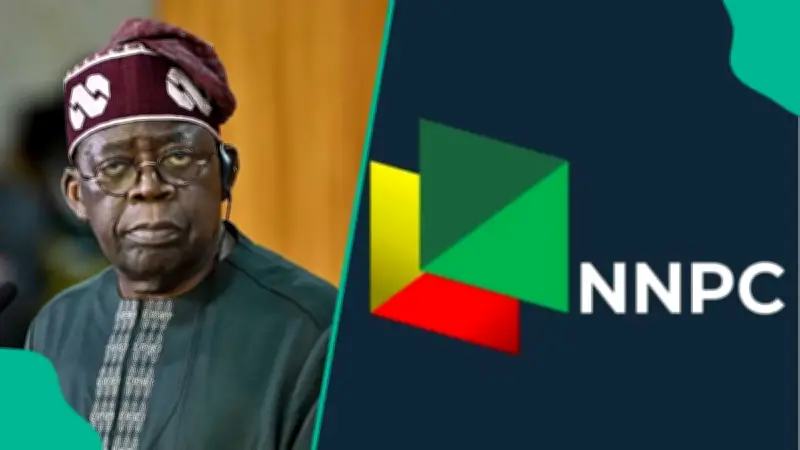
President Bola Tinubu has confirmed that the Nigerian National Petroleum Company (NNPC) Limited will undergo reforms and be listed on the Nigerian capital market, signalling a significant shift in the future of Nigeria's state oil company. The announcement was made on Friday during a meeting at the State House with the board and management of the Nigerian Exchange Group (NGX), led by NGX Group Chairman Umaru Kwairanga and Group Managing Director and CEO Temi Popoola.
Presidential Directive on NNPC Listing
"The NNPC will be reformed and listed in the capital market," Tinubu said at the meeting, adding that feedback from economic experts and positive economic indicators point to a more promising future for Nigerians. This move is expected to open up the oil giant to public ownership, allowing Nigerians to buy shares in the company.
The president's remarks align with a position the NNPC's own leadership had already outlined. On July 12, NNPC Group CEO Bayo Ojulari said the company was working towards a stock exchange listing by 2028, describing the planned transition as a transformation of the national oil company into a fully structured limited liability company.
NNPC's Roadmap to 2028 Listing
"With collaborations of our industry players, we will be the catalyst in the transformation of the national oil company to a limited liability company," Ojulari said. "We have a roadmap to be listed by 2028." Ojulari also said the company had made "considerable progress" in building a stable and secure business environment in Nigeria.
The listing is part of broader reforms under the Petroleum Industry Act, which transformed NNPC into a commercial entity. The move is seen as a way to improve transparency, attract investment, and boost the company's performance.
Subsidy Removal Cited as Foundation for Change
Also present at the meeting, Zacch Adedeji, executive chairman of the Nigeria Revenue Service (NRS), said the removal of the petrol subsidy marked a turning point for the country's economy, correcting distortions that had persisted for roughly four decades. Adedeji said Tinubu's decision to scrap the subsidy within the first hour of taking the oath of office "is the bedrock, background, and fundamental of the changes we are seeing."
The subsidy removal, announced at Tinubu's inauguration in May 2023, triggered a sharp rise in fuel prices across Nigeria but was defended by the administration as a necessary step to free up government revenue and attract investment. The reform has been a cornerstone of Tinubu's economic policy, aimed at redirecting funds to infrastructure and social programs.
Impact on Nigerian Economy and Investors
The planned NNPC listing is expected to deepen Nigeria's capital market, providing a significant new listing that could attract both local and international investors. Analysts believe it could also enhance corporate governance and operational efficiency within NNPC, which has historically been opaque.
For ordinary Nigerians, the share sale offers an opportunity to participate in the oil sector's profits, aligning with the administration's promise of economic inclusion. However, details on the share pricing, structure, and timeline are yet to be released, with stakeholders awaiting further announcements from the NNPC and the NGX.
The development comes amid ongoing economic reforms that have seen the naira float and the removal of fuel subsidies, which have had mixed effects on the population. The government maintains these measures are necessary for long-term stability and growth.