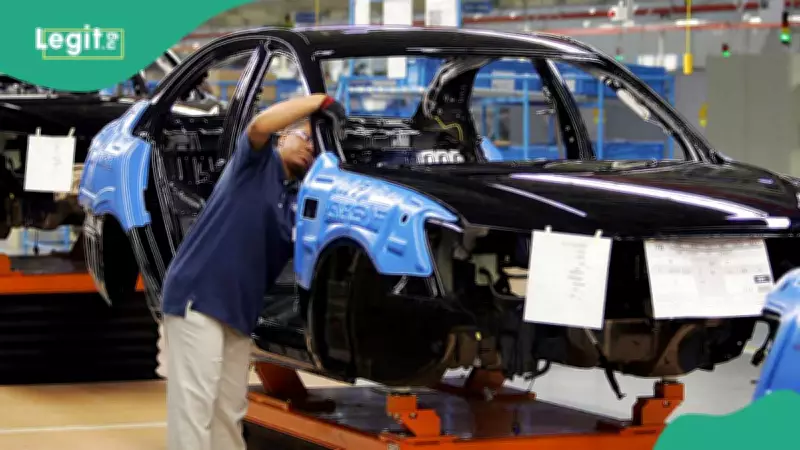
Igbo Transport Billionaires Launch Vehicle Assembly Plants, Challenging Innoson's Dominance
Nigeria's indigenous automotive manufacturing sector is experiencing a significant upheaval as several prominent Igbo billionaires aggressively enter the vehicle assembly arena, setting the stage for intensified competition with industry trailblazer Innoson Vehicle Manufacturing. This strategic shift is driven by declining passenger traffic and evolving dynamics within the transport industry, prompting leading transport magnates to diversify their investments to maintain profitability.
Transport Leaders Transition to Manufacturing
In recent years, at least four major transport operators have either established or expanded vehicle assembly operations, marking a pivotal change in Nigeria's transportation landscape. Among these industry veterans are Frank Nneji of ABC Transport Plc, Chidi Anyaegbu of Chisco Transport, Chidi Ajaere of God is Good Motors, and Godwin Ubaka Okeke of GUO Transport, who also acquired ANAMMCO.
These seasoned operators are now leveraging decades of hands-on experience to design and assemble vehicles specifically tailored to Nigeria's unique road conditions and business environment. Their primary focus remains on commercial vehicles, including buses, trucks, and pickups, which form the essential backbone of Nigeria's logistics and mass transit ecosystem.
Strategic Investments Fueling Market Growth
Each transport mogul is adopting a slightly different approach to vehicle assembly. Frank Nneji's Transit Support Services Limited is assembling Shacman trucks, while Chidi Anyaegbu's Chisco Motors has launched a local assembly line for Yutong buses and Sinotruk trucks. Meanwhile, Chidi Ajaere's Jet Systems is producing eco-friendly compressed natural gas-powered minibuses and pickups, aligning with Nigeria's push toward cleaner energy alternatives.
Godwin Ubaka Okeke's GUO Transport is investing in durable pickup trucks, further expanding the range of locally assembled commercial vehicles available in the market. These strategic investments are already reshaping the automotive landscape, making locally assembled vehicles more affordable and readily accessible, providing transporters, logistics firms, and construction companies with viable alternatives to imported brands.
Chinese Brands Overtake European Rivals
One notable outcome of this industry shift is the rising dominance of Chinese vehicle brands in Nigeria. Yutong buses, for instance, have become the preferred choice for many transport operators, surpassing traditional European brands like Mercedes-Benz and Volvo in popularity. The success of these Chinese brands is largely attributed to local assembly, which significantly reduces costs and improves maintenance support—critical factors for operators navigating a challenging economic environment.
Major corporations, including the Dangote Group, are increasingly adopting these locally assembled trucks for logistics and industrial operations, further boosting market demand and validating the quality and reliability of these vehicles.
Innovation and Job Creation at the Core
Beyond profitability, these ventures are creating substantial opportunities for employment and innovation. Chisco Motors, for example, recently launched its Drive-To-Own franchise model, enabling trained drivers, referred to as captains, to operate newly assembled vehicles. This initiative is expected to deploy dozens of buses and trucks across major routes, including connections between southeastern and northern Nigeria, as well as the Lagos-Accra corridor.
The vehicles themselves are designed with modern features such as onboard entertainment, charging ports, and improved driver comfort, reflecting a broader shift toward enhanced service delivery and safety standards within the transport sector.
Catalyst for Industry Transformation
The emergence of these new assembly plants signals a broader transformation within Nigeria's transport and automotive sectors. With facilities like the Chisco Auto Assembly Plant in Lagos attracting significant interest from logistics operators, the trend toward local manufacturing appears to be gaining substantial momentum.
As competition intensifies, industry observers believe this wave of investments could accelerate innovation, reduce reliance on imports, and position Nigeria as a stronger player in Africa's automotive value chain. For Innoson, long regarded as the face of indigenous vehicle manufacturing, the rise of these new entrants may mark the beginning of a more competitive and dynamic era in Nigeria's auto industry.
Electric Vehicle Assembly Enters the Fray
Adding to the competitive landscape, EF Motors Limited, a subsidiary of EF Network Limited, has announced plans to assemble electric vehicles locally, creating new competition for Innoson Motors. The company disclosed that its assembly plant, in partnership with Chinese firm Zhejiang Pukao New Energy Vehicle Co., Ltd., will create 5,000 direct jobs and over 20,000 indirect employment opportunities.
Located on a 30-hectare site in Imo state, the plant aims to produce more than 40,000 hybrid electric vehicles annually during its first phase, with output projected to rise to 100,000 units by 2028, further diversifying Nigeria's automotive manufacturing capabilities.