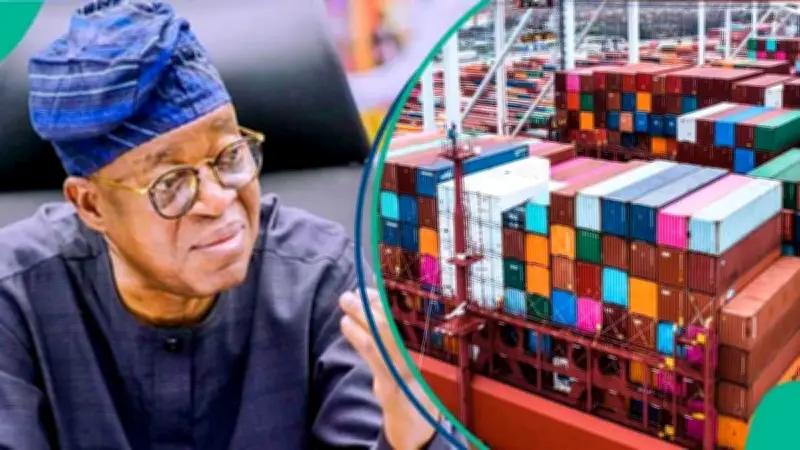
The Federal Government has approved the full modernisation and upgrade of four major ports — Onne, Rivers, Delta and Calabar — as part of a broader push to strengthen Nigeria's maritime sector. Minister of Marine and Blue Economy, Dr. Adegboyega Oyetola, announced the approval on September 27, 2026, noting that it builds on an earlier decision to modernise Apapa and Tin Can Island ports in Lagos.
Why the Government Is Acting Now
Oyetola said the decision to expand the programme beyond Lagos was deliberate. By improving infrastructure at ports in other regions, the government aims to ease the heavy concentration of cargo traffic around Lagos and open up more entry points for international trade.
"This approval marks another important step in our determination to transform Nigeria's maritime infrastructure and unlock the enormous economic potential of our ports," he said. "Modern, efficient and competitive ports are critical to achieving these objectives because they facilitate trade, support industry, attract investment and create jobs."
The minister said better facilities at the four ports would cut vessel turnaround times, improve how cargo is handled, and make it cheaper and more predictable for businesses to move goods across the country.
Deep Seaports Also in the Pipeline
Beyond upgrading existing facilities, the government has also approved six new deep seaports. These include the Ibom Deep Seaport in Akwa Ibom State, Bakassi Deep Seaport in Cross River State, Agge Deep Seaport in Bayelsa State, Gateway Deep Seaport in Ogun State, Ondo Deep Seaport in Ondo State, and Bonny Deep Seaport in Rivers State.
Oyetola said the two tracks — upgrading old ports and building new ones — would work together to significantly grow Nigeria's capacity to handle trade volumes.
"Our approach is comprehensive. We are modernising existing ports while facilitating the development of new deep seaports. This will give Nigeria greater capacity to handle increasing volumes of trade, attract investment and position our country as a major maritime and logistics hub in Africa," he said.
Long-Term Vision for Integrated Transport
The minister also outlined a longer-term vision in which ports would be connected to roads, rail, inland waterways and other transport links to allow goods to move without disruption across the country.
"Our ambition is to build a port system that is efficient, transparent and globally competitive. We want Nigerian businesses to spend less time and resources moving their goods, while creating an environment that encourages investment and supports job creation," Oyetola added.
He said the Ministry would continue working with state governments, terminal operators, investors and shipping companies to ensure the projects deliver real results for Nigeria's marine and blue economy.