How strong inter-agency coordination can aid port efficiency
Lack of coordination, rivalry and power struggle among agencies operating in the maritime environment have continued to create administrative bottlenecks, double taxation, delay in cargo clearance, corruption and inefficiencies that impede the growth and financial gains of the sector. A unified framework that brings all the agencies together will enhance the country’s trade competitiveness.
About 18 regulatory agencies and institutions operate in Nigeria’s maritime environment. This has led to power struggles, multiple inspections that cause delays and increase costs, poor information sharing that weakens enforcement and a lack of unified command resulting in conflicting directives. It also breeds inter-agency rivalry, poor coordination, overlapping challenges, supremacy war and competition for relevance. It has also created bureaucratic bottlenecks that hinder cargo release, encouraged corruption and informal fees, poor collaboration and technology duplication and data. Also, it increases physical congestion, contributing to inefficiency and safety risks.
The regulatory agencies include the Nigerian Maritime Administration and Safety Agency (NIMASA), Nigerian Ports Authority (NPA), Nigerian Shippers Council (NSC), Nigerian Inland Authority (NIWA), Council for the Regulation of Freight Forwarding in Nigeria (CRFFN), Nigeria Customs Service (NCS), National Agency for Food and Drug Administration and Control (NAFDAC), Standard Organisation of Nigeria (SON), National Drug Law Enforcement Agency (NDLEA), National Environmental Standards and Regulations Enforcement Agency (NESREA) and the Nigeria Agricultural Quarantine Service (NAQS). Other agencies operating within the port system include the Department of State Services (DSS), which provides intelligence and counter-terrorism support within port facilities, the Nigeria Police Force (NPF), including the Ports Authority Police Command (PAPC) and Marine Police units, Nigerian Immigration Service (NIS) and the Port Health Authority (PHA). Other institutions operating in the maritime space are the Maritime Academy of Nigeria (MAN), Nigerian Institute of Oceanography and Marine Research (NIOMR) and the National Institute for Freshwater Fisheries Research (NIFFR), New Bussa.
The Federal Government’s mandates for the regulatory agencies include regulating maritime safety, security and environmental standards; managing vessel registration, seafarer certification and port state control operations across Nigeria’s territorial waters and overseeing the management of seaports and port facilities, including infrastructure development and cargo handling to facilitate international maritime trade. The agencies are also responsible for regulating shipping services, providing data on port performance and freight rates, monitoring port efficiency and ensuring fair practices in cargo handling. Also, they develop and maintain navigable waterways for the movement of passengers and cargo, while protecting the interests of cargo owners.
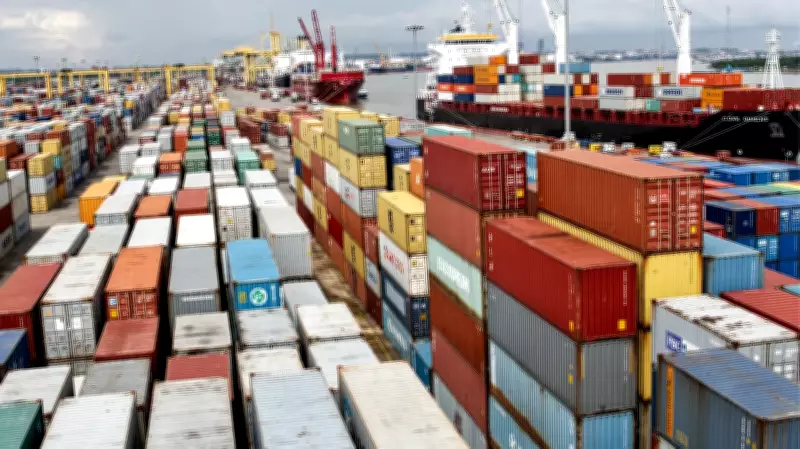
Unfortunately, Nigeria’s maritime governance structure encourages overlapping mandates, leading to intense rivalry and poor collaboration among regulatory agencies, which creates an administrative bottleneck, increases operational costs, doubles taxation, delays cargo clearance and delivery, leads to corruption, conflicting directives, and inefficiencies that impede the development goals in the maritime industry. This has also frustrated reforms to ensure smooth trade facilitation, such as the roll-out of the National Single Window (NSW) platform designed to reduce bottlenecks, curb corruption, inefficiencies and fast-track clearance by reducing cargo dwell time from 21 days to about 48 hours at the ports. Weak digital integration from the agencies has slowed down the effectiveness of the NSW, causing chaos at the port with over 20,000 cargoes trapped at the port. According to industry data, port-related delays cost Nigeria between $7 billion and $10 billion yearly.
Head of Research, Sea Empowerment and Research Centre (SEREC), Dr Eugene Nweke, stressed that overlapping regulatory mandates and poor coordination have created systemic loopholes, encouraged rent-seeking behaviour and enabled insider advantages. He said the environment of uncertainty has evolved into a tool for exploitation rather than governance. Nweke said the most worrisome is a systemic shift in Nigeria’s maritime governance environment whereby regulatory and technical agencies are increasingly evaluated and driven by revenue-generation benchmarks rather than statutory mandates. He said the trend has now extended beyond core maritime institutions to include standards, product control, freight regulation, and environmental enforcement bodies operating within the port corridor. Nweke said this has contributed to tariff increment, multiple agency checkpoints, duplication of documentation aiding double handling, rising container deposit and demurrage costs, cargo diversion to Cotonou, Lomé and Tema, as well as investor hesitation toward Nigerian port corridors.
Chairman of Starzs Investments Company Limited, Greg Ogbeifun, stressed that the fragmented roles of key ministries and agencies continue to hinder progress in developing a viable national shipping framework, despite the country’s vast cargo potential. According to him, international shipping transactions inherently cut across multiple government bodies, making coordination essential for effective policy execution and industry growth. He said stronger inter-agency collaboration among government institutions is a critical step toward restoring the country’s participation in international shipping, noting that without proper coordination, implementation of policies becomes difficult. The shipowner identified the Federal Ministry of Marine and Blue Economy as the lead driver of maritime policy but noted that its objectives cannot be achieved in isolation, as other critical institutions must align their mandates to support a unified national shipping agenda. Beyond maritime-focused agencies, Ogbeifun called attention to the roles of economic and trade institutions, including the Federal Ministry of Industry, Trade and Investment and the Central Bank of Nigeria (CBN). He said these bodies are vital in facilitating export growth, providing financial support mechanisms, and creating an enabling environment for shipping investments. Ogbeifun argued that the lack of synergy among these institutions has contributed to Nigeria’s continued dependence on foreign shipping lines, resulting in significant capital flight.
What inter-agency coordination success looks like
Delivery Manager, Office of the Special Adviser to the President on Policy and Coordination, Central Results Delivery Coordination Unit (CRDCU), Ismail Okunola, gave a practical example of successful collaboration with the $214 million Integrated National Security and Waterways Protection Infrastructure, also known as the Deep Blue Project. The Gulf of Guinea and the Nigerian territorial waters were seen by the global community as a hotspot for piracy and other criminal activities. The international maritime community placed Nigeria on the red list of dangerous zones, triggering the Federal Government’s measures to address the issues as foreign liners and insurers increase freight cost and war risk premiums on Nigerian-bound cargo. Late President Muhammadu Buhari launched the project in 2021 and it was deployed to tackle maritime crime. The project, funded through the NIMASA, integrates assets and personnel from multiple agencies, including the Nigerian Navy, Nigerian Air Force, Nigerian Army, Nigerian Police Force, Department of State Services (DSS) and the Office of the National Security Adviser (ONSA). The project comprised special mission vessels, helicopters, interceptor boats, aircraft, armoured vehicles and unmanned aerial vehicles, all coordinated by the agencies through a central command, control, communication, computer and intelligence (C4I) centre located in Lagos for data gathering and collection to provide a comprehensive security architecture on land, sea and air to secure the Exclusive Economic Zone (EEZ) up to the Gulf of Guinea. According to Okunola, the coordinated deployment of the assets led to a significant decline in piracy incidents in Nigeria’s waters since 2021. The International Maritime Bureau (IMB) removed Nigeria from the list of piracy-prone nations and high-risk maritime areas in 2022 following a drastic decline in incidents, while the International Bargaining Forum (IBF), in 2023, subsequently removed Nigeria from the list of dangerous and unsafe waters. Okunola said the success of the Deep Blue Project demonstrated the effectiveness of multi-agency collaboration, adding that when agencies work together under a unified framework, tangible results can be achieved.
Blue economy gains
According to experts, inter-agency collaboration is a central driver for unlocking Nigeria’s marine and blue economy potential, highlighting wide-ranging benefits across all sections. The CRDCU official said improved synergy among relevant government institutions is essential for achieving sustainable development outcomes and eliminating long-standing inefficiencies in the sector. Okunola explained that in the area of maritime security, enhanced collaboration through joint patrols, intelligence sharing and coordinated enforcement operations would significantly reduce piracy, oil theft, smuggling activities and illegal fishing. On port operations efficiency, he noted that closer collaboration among key agencies such as the NPA, NCS, NIMASA, and others would accelerate cargo clearance processes, reduce bottlenecks and improve the country’s overall trade competitiveness. Okunola further stressed that inter-agency coordination is vital for sustainable fisheries management and environmental protection, adding that agencies’ joint monitoring of fishing activities, enforcement of environmental laws and protection of marine biodiversity would help protect the marine ecosystems. In terms of fiscal benefits, Okunola stated this would also increase revenue generation by reducing leakages and improving tariff collection mechanisms across the maritime value chain. He also linked effective coordination to the broader growth of blue economy sectors, noting that harmonised policies would stimulate growth in tourism, aquaculture, shipping, renewable energy and coastal infrastructure development. According to Okunola, improved data sharing and research collaboration among agencies and research institutions would strengthen marine data systems, resource mapping, and climate risk assessments. Okunola added that a unified national approach would also strengthen Nigeria’s international partnerships, attract foreign investment, ensure compliance with global maritime conventions, and enhance the country’s global maritime standing. He further noted that stronger collaboration across the sector would drive job creation and skills development through expanded blue economy activities and joint training programmes aimed at building human capacity within the maritime ecosystem.
Strengthening collaboration across the marine and blue economy ecosystem, according to stakeholders, would accelerate national development, enhance maritime security, and position the sector as a key driver of Nigeria’s long-term economic growth. They outlined a comprehensive framework to strengthen inter-agency collaboration across the marine and blue economy sector, as part of efforts to eliminate operational overlaps, improve policy implementation and boost national productivity. Okunola highlighted a central coordinating body through the establishment of a unified council or committee to harmonise mandates, reduce duplication of responsibilities and align national blue-economy priorities. He also pushed for robust information-sharing and data integration mechanisms through the creation of interoperable digital platforms for real-time data exchange on vessel tracking, port operations, security alerts and environmental monitoring. The CRDCU official also called for the institutionalisation of joint operations and task forces, including conducting multi-agency patrols, anti-smuggling operations and coordinated environmental response missions. On human capital development, Okunola advocated cross-agency training and exchange programmes to improve understanding of roles and strengthen technical skills, while also proposing the adoption of performance metrics and accountability systems, including setting measurable joint targets, conducting periodic reviews and the use of dashboards to track inter-agency progress. To sustain collaboration, Okunola emphasised the importance of regular inter-agency dialogue through periodic coordination meetings, yearly blue economy summits, and the establishment of conflict resolution mechanisms. Ogbeifun, on his part, noted that fiscal authorities must align policies to remove structural barriers, particularly high import duties and taxes on vessels, which discourage local participation in global shipping. He urged the government to adopt a whole-of-government approach that integrates regulatory, financial and operational frameworks, ensuring that all relevant agencies work toward a common objective of rebuilding Nigeria’s international shipping capacity. The shipowner further added that improved inter-agency collaboration would not only enhance policy implementation but also position Nigeria to capture greater value within the global shipping value chain.