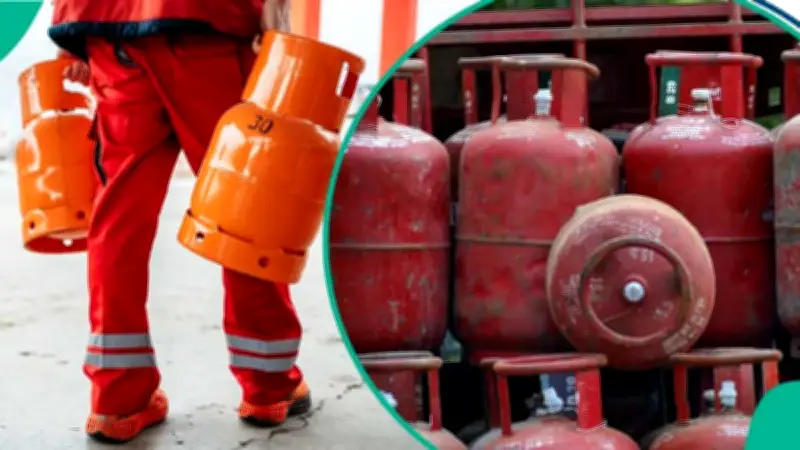
The Nigeria Liquefied and Compressed Gases Association (NLCGA) has confirmed that cooking gas prices across Nigeria have dropped by up to 40% from their June peak, offering relief to households and small businesses that had been grappling with high energy costs. The decline follows improved domestic supply and coordinated interventions by the Federal Government, terminal operators, off-takers, marketers, and industry regulators.
Price Trends: From February to June
According to the NLCGA, the national average price of refilling a 12.5kg cylinder stood at about N1,360 per kilogram in February. By June, however, the price had climbed above N2,000 per kilogram, reaching as high as N2,300 in some locations.
At the peak, refilling a 6kg cylinder could cost about N13,800, while consumers requiring a 12.5kg cylinder faced bills of up to N28,750, as reported by The Nation. The surge was driven by supply constraints, higher logistics costs, and broader market pressures, placing additional financial strain on households and businesses dependent on LPG for cooking and commercial activities.

Stakeholders Move to Restore Supply
NLCGA Executive Secretary and Chief Executive Officer, Lanrewaju Baiyewu, said sustained engagement among government agencies, local producers, terminal operators, off-takers, marketers, and regulators had helped address constraints affecting domestic LPG supply. He stated that the latest price decline showed the impact of improved availability but warned that long-term stability would require stronger implementation of the Petroleum Industry Act (PIA).
According to Baiyewu, consistent implementation of the PIA remains critical to preventing recurring supply shortages that often trigger sudden price increases.
Global Prices Still a Risk
Despite the improvement, domestic LPG prices remain exposed to international market conditions. Baiyewu noted that the international pricing benchmark to which domestic gas prices are aligned makes consumers vulnerable to movements in foreign exchange rates, global energy prices, and logistics costs.
Industry players are therefore investing in storage, transportation, cylinder production, and distribution infrastructure to strengthen the domestic supply chain and reduce the impact of future disruptions.
Push to Expand Gas Consumption
The NLCGA is targeting domestic cooking gas consumption of five million metric tonnes by 2030 under its new leadership. The association is also promoting compressed natural gas (CNG) as a preferred fuel for mobility under the government's gas-for-mobility initiative.
With road transport accounting for a major share of the movement of people and goods in Nigeria, industry stakeholders believe wider adoption of gas-powered buses and haulage vehicles could eventually help reduce transportation costs.
For households, however, the immediate priority remains sustaining the LPG price decline and ensuring that improved supply translates into more predictable prices nationwide.