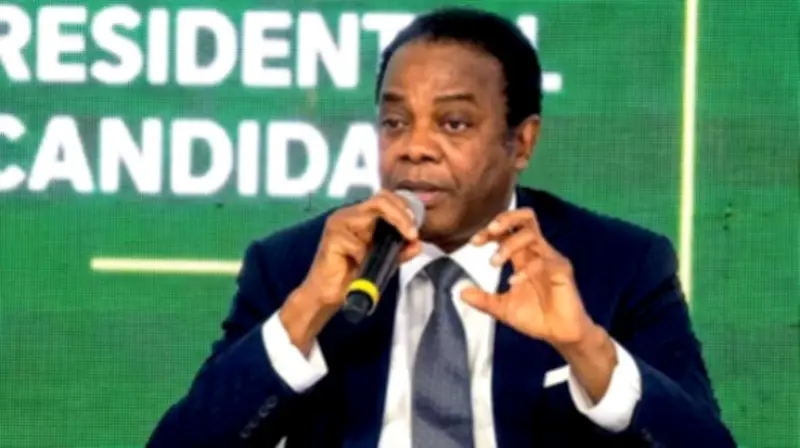
Peoples Redemption Party (PRP) presidential candidate Donald Duke has asserted that Nigerians were economically better off in 1999 than they are today, despite more than two decades of uninterrupted constitutional democracy. Speaking on the Policy Without Politics podcast, the former Cross River State governor argued that the country has failed to achieve meaningful economic progress despite population growth and rising budgetary figures.
Democracy a Facade, Says Duke
Duke, who governed Cross River State from 1999 to 2007, claimed that Nigeria's democratic system is not genuine. “We’re really not in a democracy. It’s a facade. And with each cycle, we get poorer,” he said. He contrasted the economic conditions of 1999—when Nigeria returned to civilian rule under former President Olusegun Obasanjo after years of military government—with the present day.
“I can say to you very clearly that in 1999, the people were better off than they are today, in 2026. They were much better off. The country was more affordable,” Duke stated. His remarks come as Nigeria continues to grapple with inflation, currency devaluation, and widespread poverty.
Budget Stagnation Despite Population Growth
Duke compared Nigeria's current fiscal position with that of the late former President Shehu Shagari's administration in the early 1980s. He noted that Nigeria's annual budget during that period averaged about $25 billion, with a population of roughly 70 million. Today, he said, the population is estimated between 200 and 250 million, yet the budget remains around $25 billion.
“We call it trillions because of the devaluation and all that. At that time, the naira was N1 to $1. Today, it's around N1,400 to a dollar. So, we have not grown,” Duke explained. The stark comparison highlights the stagnation in real terms, despite nominal increases in budget figures.
Security Challenges Tied to Economic Hardship
The PRP candidate linked Nigeria's security crises—including insurgency, banditry, and kidnapping—to economic conditions. “Boko Haram, they are not religious fanatics. They're just economic banditry. Then you have the bandits and the kidnappers,” he said. Duke argued that the central responsibility of government is to create conditions for citizens to become productive.
“The essence of having a government in place is to ensure the optimal productivity of citizens within a safe and orderly environment,” he added. He maintained that economic deprivation fuels criminal activities, making poverty alleviation a security imperative.
Rethink Economic Metrics, Says Duke
Duke criticised the reliance on foreign reserves as a key measure of economic performance, advocating for employment and productivity as better indicators. “Let's stop measuring the progress of our economy by the amount of dollars or foreign currency we have in our reserves because that only means that you want to import more things all the time,” he said. “Let's measure the value of our economy by the number of people who are working.”
He also stressed that government policies, including education, should aim to enhance citizens' productivity. “Everything, whether it's schooling, education or whatever you are doing, should be geared towards the productivity of our citizens. I think that is the kernel of government,” Duke said. His comments call for a fundamental shift in how Nigeria assesses economic success, prioritising human development over reserve accumulation.