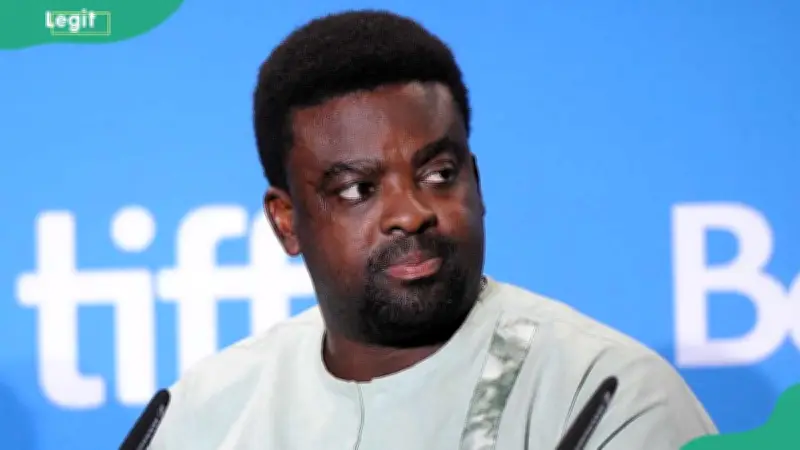
Kunle Afolayan, one of Nigeria's most respected filmmakers, has publicly warned that Nollywood creators could abandon YouTube distribution entirely if the naira strengthens significantly against the US dollar. Speaking on the Nidacity podcast in September 2026, Afolayan explained that exchange-rate economics, not creative strategy, is currently driving the platform's popularity among local producers, a claim that has sparked sharp debate across the Nigerian film industry.
Exchange Rate as the Driving Force
During a conversation with former Minister of Finance Kemi Adeosun on the Nidacity podcast, published on YouTube on Tuesday, 8 September 2026, Afolayan said Nollywood producers may leave YouTube as a distribution platform if the naira strengthens significantly against the dollar. He pointed out that reaching 1 million views on the platform can generate around $10,000, a figure that translates to a considerable sum in local currency given current exchange rates.
"So the attraction right now is the exchange rate because that's what's making it more profitable than it possibly is. So, if dollar comes to, say, N200 to $1, people will leave," Afolayan stated.
YouTube as a Starting Point
Afolayan admitted that YouTube offers an entry point for filmmakers who lack the resources, industry ties, or bargaining power needed to get distribution deals with major streaming services or theatrical releases. "Nollywood producers rushing to YouTube is not the way to go. YouTube can never give you what Netflix and Prime would give you. However, it is the most flexible. It is for everyone. It is like a starting point. If you don't have the strength to negotiate or access to the big players, you open an account and put your movie there. If people watch, you get your money," he said.
Profile and Family Legacy
Kunle Afolayan was born on 30 September 1975 in Ebute Metta, Lagos, Nigeria. He is of Igbomina-Yoruba descent, from Kwara State, and is the son of the famous theatre and film director and producer Ade Love, born in 1940 and died in 1996. Afolayan is the CEO of Golden Effects Pictures, founded in 2005, and also runs KAP Productions. He majored in economics and started working in a bank while doing casual acting before moving into full-time filmmaking and taking a course at the New York Film Academy.
His brother Gabriel Afolayan, born 1 March 1985 and also known by his musical stage name G-Fresh, is a Nigerian actor and singer. Gabriel won the Best Supporting Actor award for playing "Tavier Jambari" in Hoodrush (2012). Aremu Afolayan, born 2 August 1980, is also a Nigerian film actor and Kunle's brother. Moji Afolayan, born 5 February 1968, is a Nigerian actress, filmmaker, producer, and director, and Kunle's sister.
Career Highlights and Key Films
Afolayan's directing credits include the Aníkúlápó franchise, The Figurine, Phone Swap, October 1, and Citation. The Figurine received ten nominations and won five awards at the 6th Africa Movie Academy Awards, including Best Picture, Achievement in Visual Effects, Heart of African Award for Best Film from Nigeria, Achievement in Cinematography, and Best Performance by an Actor in a Leading Role. Ijogbon is a 2023 coming-of-age adventure film produced by Kunle Afolayan and distributed by Netflix, one of three films he agreed to produce with Netflix.
His filmography includes Irapada (2006), The Figurine: Araromire (2009), Phone Swap (2012), October 1 (2014), Citation (2021), Aníkúlápó (2022), and Ijogbon (2023), all as Director and Producer, with acting roles in some.
Personal Life and Dispute with Funke Akindele
Kunle Afolayan married Tolu Afolayan in 2007, but the couple separated and divorced around 2019. They have four children together, two sons and two daughters. Since their separation, he has not publicly announced a new relationship.
In early 2026, Afolayan and actress-producer Funke Akindele publicly disagreed over his remarks about film promotion methods in Nollywood. The controversy began when Afolayan spoke at the Lagos Business of Film summit and described the relentless content creation required to market films as "unsustainable", citing the pressure to constantly create promotional content as a main reason he stepped back from producing cinema releases.
Afolayan said Akindele personally contacted him after media reports interpreted his comments as criticism of colleagues who promote their movies through dance-driven campaigns. Recounting the conversation in a February 2026 interview on ARISE TV, he said: "She called, and she said, 'I know you don't like me, but don't mention my name in your interviews,' she was yelling, and she dropped the phone after that." He added: "It was weird, and I'm like, where is this coming from. She's like a sister to me."
Afolayan clarified that he had actually praised Akindele's promotional approach, citing her career growth as an example others could follow. "I clearly said to them that if you want to adopt a model that I think will work for you now, then follow Funke Akindele's model. Funke started at a younger age… Look at her brand now. It's consistent growth," he said. He stressed that he had no problem with her methods but found the process personally draining: "I never said anything was wrong with it. For me, it's draining. I have absolutely nothing against it. I'm just saying what I will not do."
Net Worth and Business Ventures
Estimates of Kunle Afolayan's net worth vary considerably across sources. Sources such as Nairaland report his net worth as between $800,000 and $4 million. Some aggregator sites place the figure higher, but these are unverified. His income streams include film production and direction through Golden Effects Pictures and KAP Productions, Netflix distribution deals including Aníkúlápó and Ijogbon, KAP Film Village & Resort launched in 2021, and corporate endorsements and partnerships. He also operates a resort, a cultural centre in Lagos, and a film academy that trains industry professionals.
Afolayan's remarks have sparked debate inside Nollywood about the best long-term distribution models for films in a growing digital entertainment market. The outcome of this debate will likely shape how Nigerian filmmakers approach platform distribution in the coming years.