
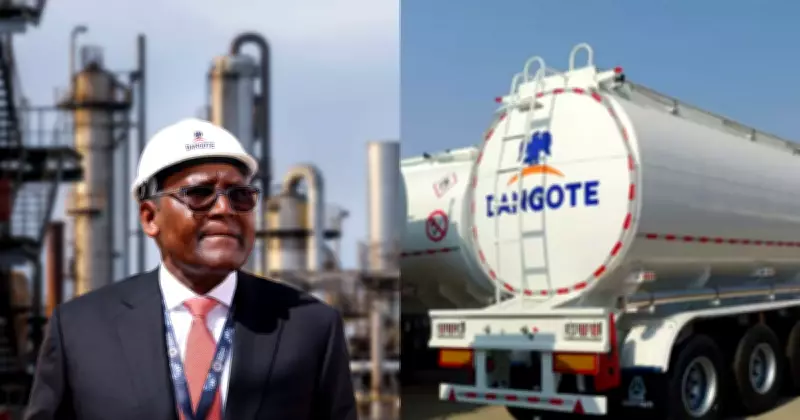
Dangote Refinery Announces Significant Fuel Price Reductions
In a major development for Nigeria's energy sector, the Dangote Petroleum Refinery has implemented substantial price cuts for both petrol and diesel. This marks the first reduction after a series of recent price increases, potentially signaling a shift in market dynamics.
New Pricing Structure Revealed
According to the refinery's updated pricing list released on March 10, 2026, Premium Motor Spirit (PMS), commonly known as petrol, has been reduced by ₦100 per litre at the gantry. The new price stands at ₦1,075 per litre, down from the previous rate of ₦1,175 per litre.
For coastal deliveries, the refinery has set petrol prices at ₦1,050 per litre, reflecting slightly higher costs associated with marine transportation compared to direct gantry loading.
Automotive Gas Oil (AGO), or diesel, has seen an even more significant reduction. The gantry price for diesel now stands at ₦1,430 per litre, representing a substantial decrease of ₦190 from the earlier price of ₦1,620 per litre.
Global Market Influence
The refinery attributes these price adjustments to recent declines in global crude oil prices. International petroleum markets have experienced reduced financial pressure as crude oil prices have fallen, creating ripple effects in local fuel markets across producing nations like Nigeria.
Industry experts note that this price reduction could provide temporary relief to fuel distributors and large-scale buyers who have been grappling with rapidly escalating loading costs in recent weeks. The timing coincides with reports indicating crude oil prices have dropped approximately 8%, currently trading around $83 per barrel after previous surges related to Middle East tensions.
Regulatory Considerations
It's important to note that the announced gantry prices do not include mandatory fees established by the Nigerian Midstream and Downstream Petroleum Regulatory Authority (NMDPRA). These regulatory charges will be applied separately and may affect final consumer prices.
Market participants are now closely monitoring how quickly these revised depot prices will translate through the distribution chain to retail fuel stations nationwide. The speed of this transmission will determine when ordinary consumers begin to experience relief at the pump.
The refinery's pricing decision represents a significant development in Nigeria's ongoing efforts to stabilize fuel costs and reduce dependence on imported petroleum products. As Africa's largest single-train refinery continues to ramp up operations, its pricing strategies are increasingly influential in shaping domestic energy economics.




