
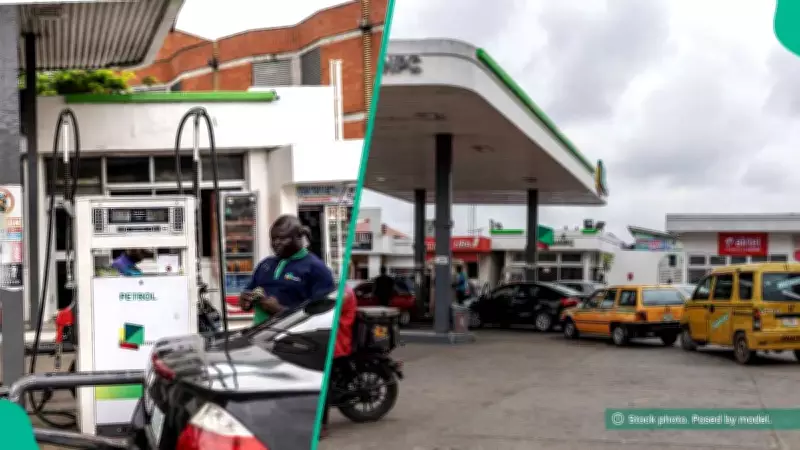
The Nigerian National Petroleum Company Limited (NNPC) has revised petrol pump prices across its filling stations nationwide, revealing significant variations between states. Lagos now sells petrol at N1,320 per litre, while Abuja residents pay N1,364. Northern states recorded the highest prices, with Yobe at N1,395, Borno at N1,390, and Adamawa at N1,385.
State-by-State Breakdown of New Petrol Prices
Based on data from NNPC retail outlets, the following are the new pump prices per litre across selected states:
- Lagos: N1,320
- Abuja (FCT): N1,364
- Adamawa: N1,385
- Akwa Ibom: N1,345
- Bauchi: N1,375
- Bayelsa: N1,340
- Borno: N1,390
- Cross River: N1,335
- Delta: N1,340
- Edo: N1,345
- Gombe: N1,375
- Imo: N1,369
- Kaduna: N1,365
- Kogi: N1,360
- Katsina: N1,377
- Kebbi: N1,365
- Kano: N1,370
- Kwara: N875
- Nasarawa: N1,370
- Ogun: N1,320
- Ondo: N1,330
- Osun: N1,325
- Oyo: N1,320
- Plateau: N1,375
- Rivers: N1,340
- Sokoto: N1,378
- Taraba: N1,372
- Yobe: N1,395
- Zamfara: N1,370
Regional Price Trends
Northern states generally recorded higher petrol prices, with many exceeding N1,370 per litre. In contrast, South-West states maintained relatively lower prices, mostly between N1,320 and N1,330. South-South states fell in the mid-range, largely from N1,335 to N1,345 per litre.
Dangote Refinery Increases Ex-Depot Price
The Dangote Refinery has raised its petrol ex-depot price by N75, from N1,200 to N1,275 per litre, while the coastal price now stands at N1,215. Other marketers like Ardova and MRS have also adjusted pump prices above N1,300 to reflect market dynamics.
Rising Crude Oil Prices Fuel Petrol Cost Hike
Petrol prices across Nigeria are approaching N1,400 per litre amid tensions between the United States and Iran, with no ceasefire agreement to reopen the Strait of Hormuz. The Middle East crisis has disrupted global oil supply, pushing crude prices upward. Additionally, the United Arab Emirates recently exited OPEC, further unsettling the oil market.
These adjustments reflect ongoing fluctuations in Nigeria's downstream petroleum sector, driven by global crude oil price movements and domestic market forces.




