
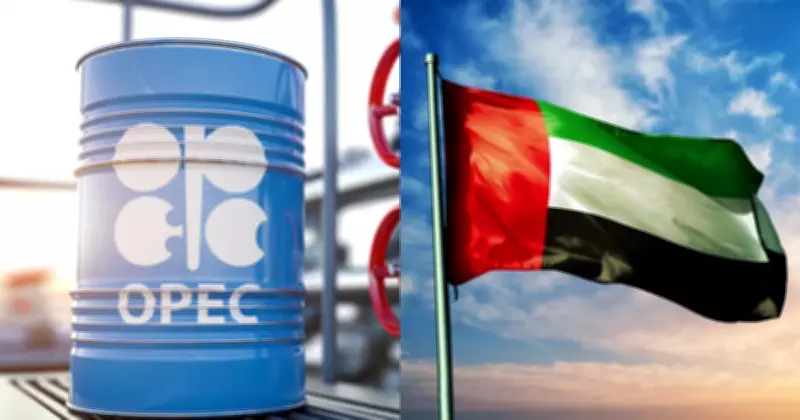
The United Arab Emirates has announced it will leave OPEC and the wider OPEC+ alliance next month, ending almost six decades of membership. The decision, which takes effect May 1, 2026, is being framed by officials as a strategic shift rather than a sudden break. According to the UAE, it wants more control over its oil production and long-term energy plans, especially as global demand continues to rise. In a statement, the country said: “The time has come to focus our efforts on what our national interest dictates and our commitment to our investors, customers, partners and global energy markets.”
Why the UAE is leaving OPEC
The UAE joined OPEC in 1967; its exit on May 1, 2026, ends 59 years of cooperation and fundamentally reshapes the oil cartel. At the centre of this decision is flexibility. For years, OPEC has operated on production quotas, basically limits on how much oil each member can pump. But the UAE has been investing heavily in boosting its production capacity and wants the freedom to produce more without restrictions. Analysts say this tension has been building for a while. Dr Carole Nakhle noted that the move “has been a long time in the making,” adding that Abu Dhabi had ambitious plans but often felt held back by group quotas and uneven compliance from other members. There are also geopolitical factors. The ongoing Middle East conflict, especially disruptions around the Strait of Hormuz, has put pressure on oil supply and exposed cracks within the alliance.
A big blow to OPEC
With a 5 million barrel-per-day capacity, the UAE no longer wants its multi-billion-dollar energy investments limited by international quotas. The exit is not just symbolic; it carries weight. The UAE is one of OPEC’s largest producers, and its departure weakens the group’s ability to control global oil supply and prices. Energy analyst Saul Kavonic described the move as “the beginning of the end of Opec.” He added: “With the UAE leaving, Opec loses about 15% of its capacity and one of its most compliant members.” That is a serious hit for a group that has long relied on unity to influence global markets.
What this means for oil prices
In the short term, there may not be an immediate impact on supply, largely because the Strait of Hormuz, a key oil route, is still facing disruptions due to conflict. But over time, things could shift. Economists say the UAE will likely increase production once it is no longer tied to OPEC limits. That could push prices down, but also make the market more unpredictable. David Oxley of Capital Economics said the move could mean lower prices overall, but with higher volatility in the long run.
Could other countries follow?
The decision comes amid the 2026 Iran War, highlighting deep divisions within the Gulf over how to protect energy supply routes. That is the bigger question now. If more countries decide to leave, or if major producers like Saudi Arabia and Russia start acting independently, it could reshape the entire global oil system. Kavonic warned: “Saudi Arabia will struggle to keep the rest of Opec together… This presents a fundamental geopolitical reshaping of the Middle East and oil markets.” OPEC was founded in 1960 to coordinate oil production and stabilise prices. Over the years, it has grown and adapted, but this moment feels different. The UAE joined in 1967. Now, nearly 60 years later, it is stepping away to chart its own path, one focused on scale, speed, and control. Whether this is just one country making a strategic move or the start of a wider shift remains to be seen.




