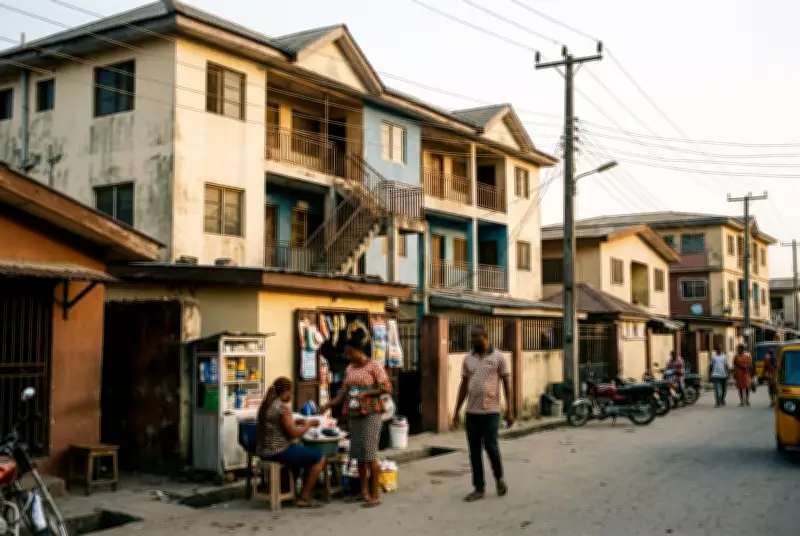
What Kind of House Do Most Nigerians Live In? By: Segun Dukeh Date: 27 May 2026 11:29pm WAT Follow Us on Google Discover Welcome, friend. What you are about to read is the result of months of careful research into Nigerian housing patterns and years of personally observing, visiting, and writing about how people actually live across this extraordinary country. I have walked through compounds in Ogun State, squeezed past generators outside rented flats in Port Harcourt, and sat in well-tiled Abuja sitting rooms where the landlord still lives two doors away. The question of what kind of house do most Nigerians live in is one that gets asked all the time, yet the honest answer is rarely simple. Nigeria is a country of astonishing contrasts, and those contrasts show up nowhere more clearly than in the homes people call their own. Let us get into it properly.
What Type of House Do Nigerians Live In?
The first thing to understand is that Nigerian housing is not one thing. It is a spectrum, and where a person sits on that spectrum depends enormously on geography, income, ethnicity, and generation. That said, the dominant housing type for most ordinary Nigerians is the tenement building or “face-me-I-face-you” arrangement, particularly in urban areas. This is a long, rectangular structure divided into single rooms or small self-contained units that open onto a shared corridor. Families of three, four, or even six people may share one of those rooms, with a communal kitchen and bathroom at the end of the block. It is cramped, often noisy, and yet it is home to an enormous proportion of urban Nigerians. I grew up knowing families who raised children entirely in such spaces and managed to keep them clean, loved, and full of dignity.
The origin of the face-me-I-face-you goes back to colonial Lagos, where rapid urbanisation outpaced formal housing supply. According to the Federal Housing Authority of Nigeria, the country’s housing deficit has historically grown faster than formal housing delivery can address, meaning the tenement model filled the gap that government and private developers left open.
Outside the cities, the picture changes. Rural Nigeria still has significant numbers of mud-brick or clay homes, particularly across the North and parts of the Middle Belt. These structures are built from locally available materials, often with thatched or zinc roofing, and can be surprisingly comfortable given the climate. They are not simply poor housing by default. Many are well-maintained, generationally loved, and architecturally suited to their environment in ways that imported concrete designs frankly are not.
Then there are the bungalows. The three-bedroom bungalow became the aspirational standard for Nigerian middle-class housing from roughly the 1970s onwards. Government estates across Lagos, Ibadan, Kaduna, and Port Harcourt were built around this model, and many Nigerians of a certain generation still consider the detached bungalow on its own plot the benchmark of having “made it.” If your father owned land and built a bungalow in the 1980s or 1990s, you came from a family that had done well. Rising above that are duplexes and storey buildings, which have become the mark of genuine prosperity and are now the most common form of new construction in middle-income urban estates. And at the very top sit the gated-estate houses of Ikoyi, Maitama, and GRA Port Harcourt, which represent a tiny fraction of the overall housing stock but attract a disproportionate share of public attention.
Which City Never Sleeps in Nigeria?
Ask anyone and they will tell you: Lagos. Specifically, the Lagos Island axis, Surulere, and the Mainland neighbourhoods that bleed into each other across the Third Mainland Bridge. Lagos earns the “city that never sleeps” title not through marketing but through sheer density of activity at any hour you care to check. I have been in Lagos at 2am when Buka stalls are still serving, when generators are still humming, when yellow danfos are still somehow finding passengers. The city does not switch off. The Lagos State Government has even grappled with the consequences of this: noise ordinances exist but are enforced with a kind of gentle theatrical reluctance.
This has direct implications for housing. In Lagos, the pressure on living space is unlike anywhere else in Nigeria. According to a 2025 Guardian Nigeria report, rental prices for two-bedroom flats in Lagos can now reach N2.5 million per year, a figure that was unthinkable just a decade ago. This has driven the co-living trend that The Guardian has reported extensively on, where three-bedroom flats originally designed for a single family are now routinely divided and sublet among multiple tenants.
Abuja runs a close second in the “city that never rests” conversation, though its energy is different. It is a city of policy and politics, of late-night ministerial meetings and diplomatic receptions that go on until the small hours. Nightclubs along Wuse II and Jabi stay busy on weeknights in ways that would surprise anyone who only knew Abuja by reputation. Port Harcourt, the oil capital, is the third city where daylight hours are optional for commerce and entertainment. The city’s oil-sector wealth means discretionary spending on food, music, and accommodation runs well past midnight with cheerful regularity.
What Is a Standard House in Nigeria?
This question gets to something important: there is no single standard, but there is a widely accepted reference point. For most practical purposes, the three-bedroom bungalow or flat remains the Nigerian standard. Three bedrooms allow the common family structure to be accommodated comfortably, with a master bedroom, a children’s room, and a spare room that doubles as a guest room or home office. A standard living room, a dining area (often combined with the sitting room), one kitchen, and at least one bathroom round out the minimum expectation.
The Federal Housing Authority, established to address Nigeria’s national housing needs, has historically used the two- and three-bedroom unit as its baseline for mass housing projects. This gives you a good sense of what the government itself considers “standard” for the average Nigerian family. In practice, what you call standard depends heavily on location. Here is a rough guide to the reference points Nigerians use by region:
- Lagos: A self-contained one-bedroom or two-bedroom flat in a block of flats, often in a compound with shared security. Standard Lagos housing is vertical and dense.
- Abuja: A two- or three-bedroom flat or a small terrace house in an estate. Abuja development tends toward planned estates with gates and estate management.
- Ibadan: A bungalow or one-storey building, often owner-occupied, with a compound. Space is more generously available than Lagos.
- Kano: Traditionally, a compound house with multiple units built around a central courtyard, often housing an extended family across generations.
- Port Harcourt: A self-contained flat or bungalow, frequently with a generator set as standard due to irregular power supply.
- Enugu and the South East: A family compound with a storey building or bungalow on ancestral land. Home ownership is culturally central in Igbo communities.
- Rural Nigeria broadly: A bungalow of local or block construction, possibly on family land, with a separate kitchen structure and outdoor shared toilet facilities in less-developed areas.
Housing Types in Nigeria: Key Characteristics at a Glance
The table below summarises the most common housing types found across Nigeria, their typical size, materials, and the population segment most likely to inhabit them. The data reflects broad national patterns rather than individual exceptions.
- Face-me-I-face-you tenement: Typical Size: Single room to 2 rooms; Common Materials: Sandcrete blocks, zinc roofing; Primary Occupant Profile: Low-income urban renters; Estimated % of Urban Stock: 35 to 45%.
- Self-contained flat (1-2 bed): Typical Size: 40 to 70 sqm; Common Materials: Sandcrete blocks, plaster finish; Primary Occupant Profile: Young professionals, low-middle income; Estimated % of Urban Stock: 20 to 25%.
- 3-bedroom bungalow: Typical Size: 100 to 140 sqm; Common Materials: Sandcrete blocks, ceramic tiles; Primary Occupant Profile: Middle-income families; Estimated % of Urban Stock: 15 to 20%.
- Storey building / duplex: Typical Size: 150 to 300 sqm; Common Materials: Reinforced concrete, tiles; Primary Occupant Profile: Upper-middle income families; Estimated % of Urban Stock: 8 to 12%.
- Traditional compound (mud/clay): Typical Size: Variable; Common Materials: Adobe clay, thatch or zinc roof; Primary Occupant Profile: Rural families, Northern states; Estimated % of Urban Stock: Predominantly rural.
- Gated estate house: Typical Size: 200 sqm and above; Common Materials: Reinforced concrete, imported finishes; Primary Occupant Profile: High income, expatriate; Estimated % of Urban Stock: Under 5%.
The table confirms what anyone familiar with Nigerian cities already suspects: the majority of urban Nigerians live in either tenement-style housing or modest self-contained flats, with full bungalow ownership representing an aspirational step that many families are still working toward. According to the National Bureau of Statistics General Household Survey Wave 5 (2023/24), housing conditions and household characteristics vary significantly between urban and rural areas, with urban households facing greater pressure on space and affordability even as rural households contend with infrastructure deficits.
What Are the 4 Types of Houses in Nigeria?
When housing professionals in Nigeria speak of dwelling types, they typically work with four broad categories. These are worth understanding properly because they shape everything from rental pricing to neighbourhood identity to long-term family wealth.
The compound house is the oldest and most culturally embedded housing type. In Yoruba, Igbo, and Hausa-Fulani traditions alike, the compound represents family territory, shared ancestry, and generational continuity. A compound may hold a single large family or multiple related families, all organised around a shared open space. Decisions about the compound are collective. Building on the compound without family consultation is the kind of thing that triggers years of dispute. The compound house is not simply an architectural choice; it is a statement of identity.
The bungalow arrived with colonial administration and became the aspirational middle-class standard from the mid-twentieth century onwards. A bungalow in Nigeria typically means a single-storey detached house with its own plot. Three bedrooms remains the classic configuration, though two-bedroom bungalows exist in areas where land was more constrained. The bungalow represents independent ownership and personal achievement in a way that renting never quite does, which is why Nigerian parents who bought land and built a bungalow in the 1980s still speak about it with undisguised pride.
The flat or apartment has become the dominant housing type for urban Nigeria’s growing middle class. A flat is any self-contained unit within a larger building, whether a converted house or a purpose-built block. The self-contained flat (one room with its own kitchen and bathroom) is the entry point; the two- or three-bedroom flat represents genuine comfort. In Lagos, Abuja, and Port Harcourt, flats now make up the majority of new housing completions. Developers are increasingly targeting the middle-income segment with compact flats priced between N50 million and N100 million in new estate developments around Lagos, reflecting both the demand and the limited land availability.
The storey building or duplex is what many aspirational Nigerian families aim for. A full duplex, with living areas downstairs and bedrooms upstairs, represents serious housing investment. In the language of Nigerian estate agents, “a four-bedroom duplex with BQ (boys’ quarters)” is the ultimate benchmark. The BQ, a small service apartment attached to or near the main house, is a uniquely Nigerian addition that speaks to both domestic staffing culture and the occasional practical need for a relative or caretaker to be on the premises.
The diversity of Nigeria’s housing stock reflects the country’s extraordinary socioeconomic range. As Guardian Nigeria has reported, experts consistently argue that Nigeria’s housing challenge is not simply about building more homes but about matching housing types to the real incomes and spatial needs of ordinary Nigerians.
What Kind of House Do Most Nigerians Live In? Here Is the Direct Answer
After months of research into this question, the honest answer is: most Nigerians, particularly in urban areas, live in rented accommodation, either a room in a tenement building (face-me-I-face-you) or a modest self-contained flat. Outside the cities, mud-brick or clay-and-block compound houses on family land remain the norm. The key entities that define Nigerian housing reality include the following: the face-me-I-face-you tenement (dominant in Lagos, Ibadan, Port Harcourt, and Kano); the self-contained flat (the fastest-growing urban segment); the family compound (foundational in rural areas and all geopolitical zones); the three-bedroom bungalow (the middle-class aspiration that millions are working toward); and the duplex or storey building (the mark of financial achievement for upper-middle-income Nigerians).
Roughly 60 to 70 per cent of urban Nigerian households are renters rather than owners, a figure that has been rising steadily as property costs outpace wage growth. Home ownership remains the deepest aspiration of the majority of Nigerians. Conversations about this are everywhere: in church announcements celebrating a member who has “just got keys,” in market conversations about saving for a plot of land in the hometown, in the WhatsApp groups of Nigerian professionals abroad pooling funds for a property investment back home. The desire to own is profound and culturally embedded. The reality, for now, is that most Nigerians are still on that journey.
How to Improve Your Nigerian Housing Situation: A Practical Guide
Whatever your current housing situation, here are practical steps drawn from real Nigerian experience that can move you forward:
- Assess your actual needs versus your current payment: Many Nigerians overpay for location prestige while sacrificing space. Calculate cost per bedroom rather than just monthly rent.
- Investigate family land: If you have ancestral land in your state of origin, even a modest bungalow built on owned land is worth more long-term than renting in Lagos indefinitely.
- Explore the Federal Mortgage Bank of Nigeria (FMBN): Government workers and contributors to the National Housing Fund may qualify for subsidised mortgage financing that most Nigerians never apply for because they do not know it exists.
- Consider peri-urban locations: The Epe-Ikorodu axis in Lagos, Lugbe and Karu in the Abuja satellite towns, and Rumuola in Port Harcourt outskirts offer significant space and value compared to city-centre rents.
- Plan your BQ strategy: If you are building, always include a BQ unit from the start. It provides rental income, housing for a caretaker, or accommodation for relatives, and adds substantial resale value.
- Understand your tenancy rights: The Tenancy Law of Lagos State 2011, for instance, protects tenants against sudden eviction and limits advance rent demands. Know your state’s equivalent.
- Build incrementally if needed: Many successful Nigerian homeowners built in stages over five to ten years, completing one floor before adding the next. This is a legitimate, proven strategy for those without lump-sum financing.
Related Articles
If you have found this piece useful, I think you will also enjoy two earlier pieces I wrote that speak directly to how Nigerians experience their homes and living conditions. In What Are Nigerian Homes Like?, I explored the interior life of Nigerian households in detail, from the generator culture to the design choices that reflect our values and aspirations. And in What Is Nigeria’s Quality of Life?, I examined the broader picture of how ordinary Nigerians experience comfort, infrastructure, and daily wellbeing, which provides important context for understanding why housing pressures feel so acute right now.
Key Takeaways
Most urban Nigerians live in rented tenement housing or self-contained flats, with home ownership remaining an aspiration rather than a reality for the majority. The three-bedroom bungalow or flat is the recognised Nigerian standard for family housing, though actual living arrangements are frequently more cramped than this ideal. Lagos, Abuja, and Port Harcourt are the cities with the greatest housing pressure, and Lagos holds the title of Nigeria’s city that never sleeps, driving rental costs to record levels across all housing types.
Frequently Asked Questions About What Kind of House Do Most Nigerians Live In
What kind of house do most Nigerians live in?
Most Nigerians, particularly in urban areas, live in rented rooms within tenement buildings or in modest self-contained flats. In rural areas, compound houses built from clay blocks or sandcrete on family land remain the most common dwelling type.
What is a face-me-I-face-you house in Nigeria?
A face-me-I-face-you is a long, rectangular tenement building divided into single rooms that open onto a shared corridor, with communal kitchen and bathroom facilities. It is the dominant housing form in urban areas like Lagos, Ibadan, and Kano, accommodating large numbers of low-income renters at relatively low cost.
Do most Nigerians own or rent their homes?
Research consistently indicates that the majority of urban Nigerians are renters, with home ownership rates in major cities estimated at below 40 per cent. Rural Nigerians have higher ownership rates because many live on inherited family land where the cost of building is lower than purchasing.
What is the most common building material used for houses in Nigeria?
Sandcrete blocks, which are made from a mixture of sand and cement, are by far the most common construction material for modern Nigerian housing in both urban and rural areas. In Northern Nigeria and parts of the Middle Belt, traditional mud-brick construction remains common for older and rural dwellings.
How many rooms does an average Nigerian house have?
The average Nigerian family home has between two and four rooms, with the three-bedroom configuration being the most widely accepted standard. Many low-income families, however, share a single room or two-room unit within a tenement building.
What is a BQ in Nigerian housing?
BQ stands for “boys’ quarters,” a small self-contained unit attached to or located within the compound of a main house. Originally designed to accommodate domestic staff, BQs are now commonly rented out separately or used to house extended family members, and they represent a significant practical feature of Nigerian housing design.
Which city in Nigeria has the most expensive housing?
Lagos consistently has the most expensive housing in Nigeria, with annual rents for two-bedroom flats in sought-after areas reaching N2.5 million or more as of 2025. Abuja is a close second, particularly in the Maitama, Asokoro, and Wuse II districts where embassy proximity and government sector salaries drive premium pricing.
What is the housing deficit in Nigeria?
Nigeria’s housing deficit has been estimated at various figures depending on the methodology used, but government sources have cited shortfalls in the millions of units nationally. The Federal Ministry of Housing and Urban Development has disclosed that approximately 15.2 million existing housing units across the country are structurally inadequate, which adds a qualitative dimension to the deficit beyond raw numbers.
How does urban housing in Nigeria differ from rural housing?
Urban Nigerian housing is predominantly rented, vertically built, and located in dense neighbourhoods with limited green space. Rural housing is typically owner-occupied or family-inherited, built on larger plots, and constructed in lower-rise compound styles, though rural areas often face more significant deficiencies in water supply, sanitation, and road access.
What type of house does the Nigerian middle class typically live in?
The Nigerian middle class typically aspires to and, when financially able, occupies a three-bedroom flat in a managed estate or a three-bedroom bungalow in a residential neighbourhood. Terrace houses and four-bedroom duplexes represent the upper end of middle-class housing expectations in major cities.
Is it better to rent or buy a house in Nigeria?
Given the high cost of property purchase and the relatively underdeveloped mortgage market, many Nigerians find renting more practical in the short to medium term. However, building on owned land, particularly in hometown areas, tends to be the most financially prudent long-term option for those with access to family land or the capital to purchase a plot.
Why is housing so expensive in Nigeria?
Housing costs in Nigeria are driven by several compounding factors: scarce affordable land in cities, high construction material costs (many of which are imported and subject to exchange rate pressures), inadequate mortgage financing, speculative land-holding, and insufficient government-subsidised supply. The naira’s weakness has particularly inflated the cost of cement, steel, and tiles, pushing new construction costs well beyond the reach of average-income families.
Tags: Colourful housesNigerian home design