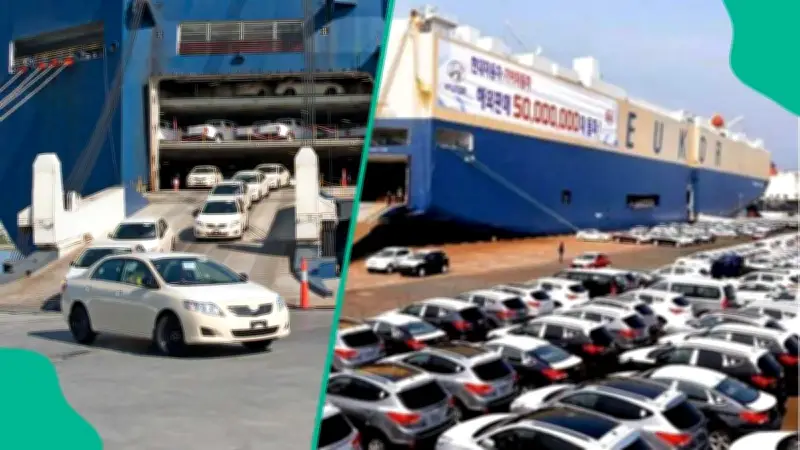
Importing a foreign-used vehicle, commonly called a Tokunbo, into Nigeria involves more than just the purchase price. Importers must budget for shipping, Customs duty, taxes, terminal charges, documentation, and clearing-agent fees before the car can leave the port. Small, fuel-efficient models such as the Kia Picanto and Hyundai i10 can help reduce the overall clearing bill.
How Customs Determines Clearing Costs
The Nigeria Customs Service (NCS) uses the vehicle's identification details, including its Vehicle Identification Number (VIN), as part of its valuation process for imported vehicles. The VIN contains information that helps identify the vehicle's make, model, engine, and other specifications. This means the amount paid for a car at an overseas auction or dealership may not be the only figure Customs considers when determining the final bill.
For buyers looking to reduce their overall costs, choosing a vehicle with a smaller engine, reasonable customs value, and relatively low purchase price can make a significant difference. Engine size, vehicle value, and age all affect the final amount an importer pays.
2026 Import Duties and Levies
Under Nigeria's current 2026 import framework, passenger vehicles attract a 20% import duty, while the National Automotive Council (NAC) levy is 5%. Imported vehicles are also subject to 7.5% VAT, alongside other applicable customs and port-related charges. Because several of these charges are calculated from the vehicle's customs-assessed value, buying a cheaper car with a smaller engine can help keep the overall clearing bill lower.
Age also matters. Nigeria has restrictions on the importation of older used vehicles, so buyers should confirm that a vehicle meets the current age requirement before paying for it or shipping it into the country. For someone importing a vehicle in 2026, it is therefore important to verify the manufacture year, VIN, and Customs valuation before committing money to a particular car.
Seven Models With Lower Clearing Costs
Here are seven models that can be considered by buyers looking for relatively affordable foreign-used cars:
- Suzuki Alto – 660cc–1.0L engine; very small engine and excellent fuel economy.
- Kia Picanto – 1.0L engine; compact, economical, and relatively easy to maintain.
- Hyundai i10 – 1.0L–1.2L engine; small size and low fuel consumption.
- Toyota Vitz/Yaris – 1.0L–1.3L engine; strong resale value and widespread spare parts.
- Nissan March/Micra – 1.0L–1.2L engine; economical and suitable for city driving.
- Chevrolet Spark – 1.0L engine; relatively affordable and compact.
- Honda Fit/Jazz – 1.3L engine; spacious interior and good fuel economy.
Market Prices and Estimated Clearing Budget
Prices vary considerably depending on the vehicle's year, mileage, condition, country of purchase, and shipping costs. Current Nigerian market listings show that older Tokunbo Kia Picanto models can start from around ₦5 million, while Hyundai i10 models from older production years can start from about ₦3 million. A Tokunbo Honda Fit, for example, has been listed around ₦9.9 million for a 2010 model.
However, these are market prices and should not be confused with the cost of importing a particular vehicle directly. The final landed cost will depend on the overseas purchase price, freight, insurance, Customs valuation, taxes, and port charges. For a relatively inexpensive small car, buyers should consider budgeting roughly ₦1.5 million to ₦3.5 million for Customs, taxes, terminal charges, and clearing-related expenses, depending on the vehicle's assessed value and other costs. Larger or more expensive vehicles can attract substantially higher bills. Current 2026 clearing estimates show that terminal and agent charges alone can run into hundreds of thousands of naira.
Verify the VIN Before Payment
Two vehicles from the same model can attract very different costs because of differences in engine size, year, trim, condition, and Customs valuation. For example, a 1.0-litre Kia Picanto will generally be cheaper to run and may have a lower customs value than a larger 1.2-litre or 1.4-litre version. The same principle applies to the Hyundai i10, Toyota Yaris/Vitz, and Nissan March.
Importers should therefore obtain the VIN before paying for a vehicle and use the Nigeria Customs Service's VIN valuation process to establish the vehicle's customs value. The NCS introduced its VIN Valuation system to automate the valuation of imported new and used vehicles and improve transparency in the process. Doing this before shipping the car can help prevent a situation where an apparently cheap vehicle attracts an unexpectedly high Customs bill after arriving at the port.
For buyers focused on keeping costs down, the Suzuki Alto, 1.0-litre Kia Picanto, Hyundai i10, and Toyota Vitz/Yaris remain attractive options because of their small engines, fuel economy, and relatively affordable purchase prices. However, Nigerians should look beyond the clearing cost when choosing a Tokunbo car. Spare-parts availability, fuel consumption, resale value, reliability, and the vehicle's accident and mechanical history should all be considered before making a purchase.