
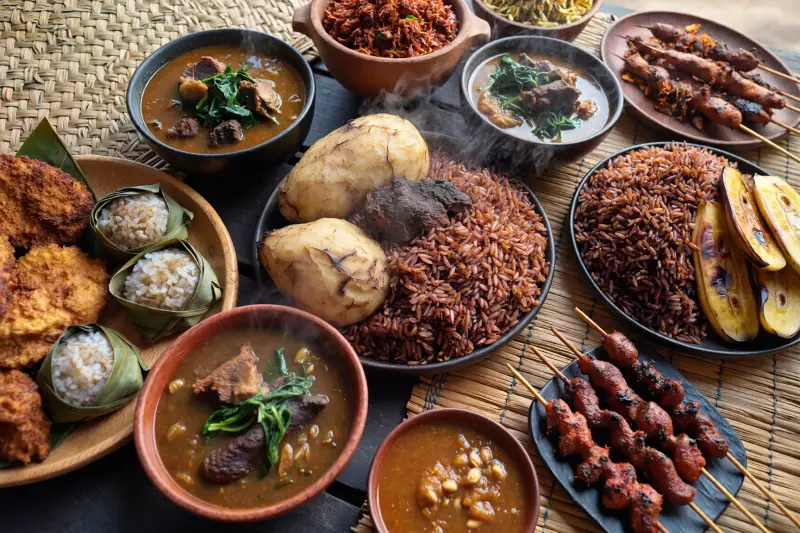
Nigeria's food tradition is far more than a means to satisfy hunger. It is a vibrant tapestry woven from the histories, identities, and communal spirits of its 371 distinct ethnic groups. This culinary heritage, officially recognised by the Federal Ministry of Arts, Culture and Creative Economy as part of the national heritage, transforms every meal into an act of cultural expression, memory, and community bonding.
The Heartbeat of Nigerian Cuisine: Community and Technique
At its core, Nigerian food tradition lives in the hands of its people, not in written cookbooks. Knowledge about seasonal ingredients, optimal cooking times, and complex flavour combinations is passed down orally and through practical demonstration across generations. The process is as important as the final dish.
Community preparation is a defining characteristic. Cooking is rarely a solitary act. When a pot of egusi soup is prepared, it often becomes a communal project where neighbours and family members gather to pound seeds, debate spice ratios, and share in the labour. This collective effort turns the meal into shared property long before it is served, strengthening social bonds.
The techniques themselves are foundational and labour-intensive. Mastering the rhythmic pounding of yam in a wooden mortar and pestle to achieve the perfect, stretchy consistency for pounded yam is a skill that separates authentic cooking from approximations. Similarly, grinding peppers and spices on a stone slab or the traditional fermentation of ingredients like locust beans (iru) and ogiri are practices that impart unique, irreplicable flavours.
Seven Essential Steps to Understanding Nigerian Food Traditions
Based on extensive research across multiple states and ethnic groups, truly grasping Nigerian culinary practices requires following seven key steps.
First, start with market research. Visit bustling traditional markets like Oshodi in Lagos, Ariaria in Aba, or Kurmi in Kano. Observe the premium placed on ingredients like stockfish, dried prawns, and quality palm oil. Building relationships with vendors can teach more about Nigerian food than any recipe book.
Second, learn the foundational techniques. Embrace the physical effort of pounding, grinding, and fermenting. These methods are not about inefficiency but about achieving specific textures and flavours that machines cannot replicate.
Third, understand the cultural context. Dishes carry deep meanings. Pounded yam signifies hospitality due to the labour involved. Jollof rice marks celebrations because rice was historically a prized commodity. Food is never just food.
Fourth, respect regional variations. As highlighted by the Nigeria Tourism Development Corporation, Nigeria's regions offer distinct flavours. The North features grain-based dishes like tuwo and dairy products influenced by Islamic dietary laws. The South emphasises soups, seafood, and palm oil. The Middle Belt blends these influences.
Fifth, practice the swallow-and-soup format. This is a quintessential Nigerian dining experience. It involves using a starchy "swallow" like eba, amala, or fufu to scoop up flavourful soups like egusi or ogbono, a technique that is an art form in itself.
Sixth, master seasoning balance. Nigerian cuisine is built on layered flavours. The heat from peppers, the richness of palm oil, the umami from stock cubes, and the complexity from fermented ingredients must work in harmony.
Seventh, embrace the time investment. Authentic Nigerian cooking is not fast food. Preparing a proper soup from scratch can take hours. This time is a crucial part of the tradition, demonstrating care and respect for the culinary craft.
A Tapestry of Ethnic Flavours
Nigerian food tradition is a collection of hundreds of interwoven culinary practices. Each major ethnic group brings its own staples, signature dishes, and ceremonial foods to the national table, creating a stunning diversity.
The Yoruba people cherish pounded yam, amala, and eba, often served with a hierarchy of soups like egusi, ewedu, and gbegiri, using iru (locust beans) for fermentation. The Igbo have an extensive repertoire of soups, notably valuing the sophisticated bitterness of ofe onugbu (bitter leaf soup), and use ugba (oil bean seed) as a key ingredient.
The Hausa-Fulani cuisine of the North is defined by grain-based swallows like tuwo and soups like miyan kuka (baobab leaf), with dairy products such as fura da nono playing a key role. The Efik-Ibibio are renowned for nutrient-rich, leafy vegetable soups like Edikang Ikong, which are considered high-status dishes.
This rich variety means that a single dish like jollof rice can taste completely different when prepared by a Yoruba, Igbo, or Hausa cook, yet proudly claim the same name—a beautiful paradox that defines the nation's food culture.
Food as Identity and Modern Challenges
In Nigerian society, food operates as a powerful form of social currency and cultural identity. Refusing an offer of food can be seen as disrespectful, as sharing a meal is an offer of relationship and welcome. The quality and effort put into a meal directly impact one's social reputation.
However, traditional practices face modern pressures. Urbanisation, time constraints, and economic factors make lengthy, from-scratch cooking difficult for many. The generational transmission of knowledge is at risk as younger Nigerians may lack exposure to techniques like proper yam pounding.
Despite these challenges, there is hope. The Nigerian diaspora maintains traditions with dedication, and young chefs are innovating while respecting heritage. Social media and video platforms are creating new archives of traditional methods, and government recognition helps validate these practices as vital national heritage.
Ultimately, Nigerian food tradition is a living, evolving testament to the nation's history and communal values. It invites everyone to approach it with humility, curiosity, and a readiness to invest not just in cooking, but in understanding the stories, people, and culture served on every plate.