Navigating the complex social fabric of Nigeria requires a deep understanding of the cultural taboos that govern daily life. These are not mere superstitions but living traditions that command respect across generational and educational divides, shaping everything from family interactions to business dealings.
The Living Power of Taboo in Nigerian Society
The power of these cultural prohibitions was vividly demonstrated to researcher Segun Dukeh during a visit to a village in Enugu State. An educated man from Lagos accidentally stepped into a sacred grove reserved for women's ceremonies, triggering an immediate community response. Elders were summoned, and purification rituals were arranged. Despite his modern life, the man submitted completely to traditional protocols. This incident underscores a crucial reality: these taboos are active forces, respected across divides, and recognized by institutions like the National Council for Arts and Culture as fundamental to Nigerian identity.
These prohibitions serve essential social functions, maintaining community harmony, protecting sacred spaces, and transmitting values. They emerge from a blend of ethnic customs, religious teachings, and social conventions, each violation carrying its own weight of consequence.
Major Categories of Nigerian Taboos
Nigerian taboos span a vast range of human activity. Some are nearly universal, while others are specific to particular communities among the nation's 371 ethnic groups.
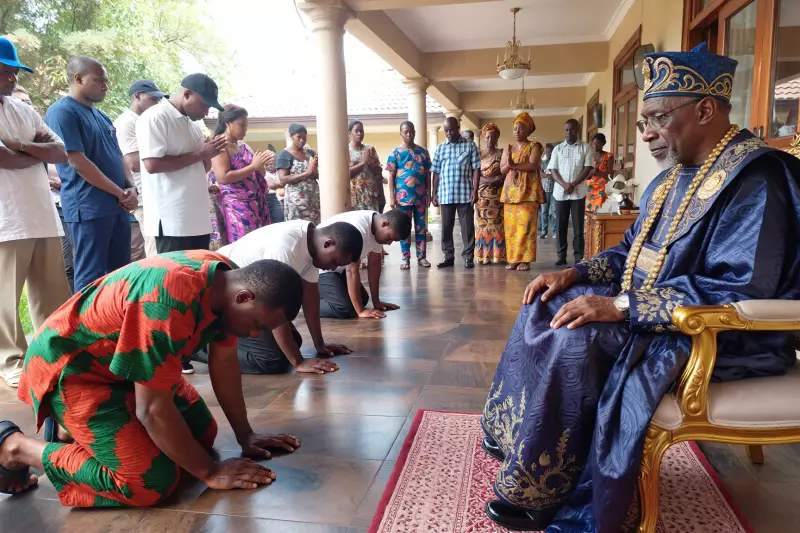
Respect hierarchies form a cornerstone. Disrespecting elders is a serious transgression nationwide, with consequences ranging from ostracism to ritual punishment. Proper titles like Uncle, Auntie, Chief, Alhaji, or Pastor are mandatory.
Sexual taboos carry immense weight. Adultery, especially by women, remains deeply taboo. Public displays of affection are frowned upon, particularly in Northern Nigeria under Islamic influence. Homosexuality is both a criminal offence and a severe social and religious taboo.
Food restrictions vary dramatically. Muslims follow Islamic dietary laws, avoiding pork and alcohol. Many traditional practitioners avoid animals sacred to deities, such as the python in some Igbo communities. Family-specific food taboos related to totems are also common.
Marriage prohibitions are complex. Marrying within one's clan or lineage is strictly forbidden, with genealogical checks conducted before unions. The Federal Ministry of Information and National Orientation notes these restrictions serve both genetic and social purposes. Inter-religious marriages remain taboo in conservative families.
Sacred space taboos protect forests, rivers, and mountains dedicated to deities. Entering or using these areas without ritual preparation is forbidden, a rule enforced swiftly by communities.
Specific Examples from Major Ethnic Groups
Concrete examples illustrate how these taboos operate. Among the Yoruba, a pregnant woman must not kill a snake, believed to cause childbirth complications. The concept of eewo (prohibition) is central, governing behaviour from respecting crossroads to avoiding pointing at rainbows, considered the path of the deity Oshumare.
In Igbo culture, the Osu caste system remains a persistent and painful taboo. Descendants of those historically dedicated to deities face social ostracization and marriage restrictions, causing modern relationships to fracture.
Hausa-Fulani culture in the North enforces strict gender separation taboos, influencing professional and social interactions. Unrelated men and women should not be alone together in private spaces.
A near-universal taboo across groups is using the left hand for eating or greeting, as it is traditionally considered unclean. Whistling at night is also widely taboo, believed to summon evil spirits or snakes.
Evolution and Navigation in Modern Nigeria
Nigerian taboos are not static. Some, like the historic taboo against twins leading to infanticide, have largely faded due to Christian influence. Others, like the Osu system, face increasing legal and social challenges. Urbanization, technology, and global exposure create new pressures.
Yet, core taboos around elder respect, death customs, and family obligations show remarkable resilience, even among educated, urban Nigerians who often maintain a dual consciousness—modern in some contexts, deeply traditional in others.
For anyone engaging with Nigerian society, the key to navigation involves:
- Studying the specific ethnic and regional context.
- Mastering basic respect protocols and greetings.
- Observing local behaviour before acting.
- Asking questions respectfully at appropriate times.
- Understanding the religious dimensions of prohibitions.
- Recognizing generational differences in observance.
- Practicing cultural relativism without necessarily endorsing every taboo.
Violating a taboo can result in social ostracism, family rejection, or the requirement for costly ritual purification. While foreigners may receive initial leniency for ignorance, repeated violations are seen as disrespect.
Ultimately, these cultural taboos are frameworks that structure Nigerian social life, reflecting deeper values about community, spirituality, and social order. Understanding them is essential for genuine engagement with one of the world's most culturally rich nations.