
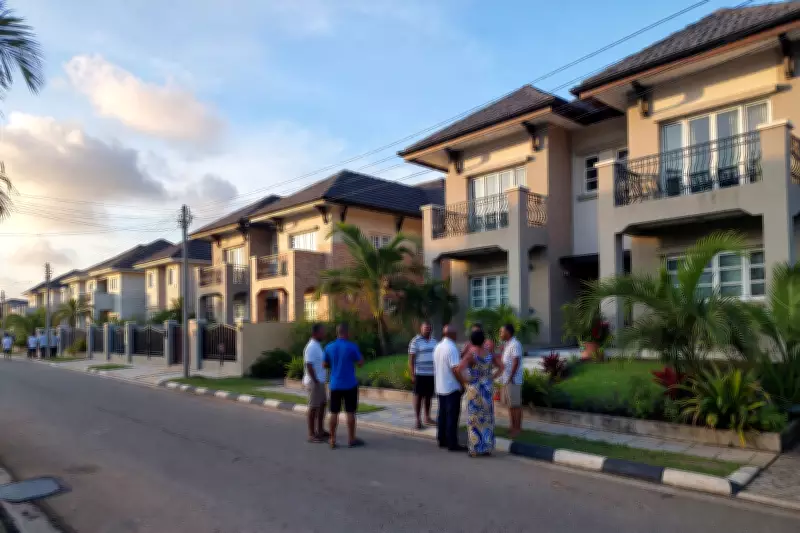
Understanding Nigerian Homes: A Journey Through Diversity and Culture
Nigerian homes are far more than mere structures of brick and mortar; they are living testimonies to the nation's 371 ethnic groups, climate challenges, economic realities, and profound sense of community. This article, based on extensive research across all six geopolitical zones, explores the fascinating diversity of Nigerian housing, from Lagos Island penthouses to rural Kano compounds, offering insights into what makes these homes uniquely Nigerian.
The Variety of Housing Types Across Nigeria
The housing landscape in Nigeria reflects geographical diversity, ethnic traditions, and economic stratification. In urban centers like Lagos, Abuja, Port Harcourt, and Kano, apartment buildings, commonly called "flats," dominate. These range from modest self-contained rooms to sprawling four-bedroom flats in gated estates. The Federal Ministry of Housing and Urban Development reports that approximately 15.2 million housing units across Nigeria are structurally inadequate, highlighting ongoing challenges in urban housing provision.
Lagos exemplifies this urban spectrum, with luxury apartments in Ikoyi and Victoria Island where monthly rents can exceed ₦5 million, middle-class suburbs like Surulere with annual rents of ₦800,000 to ₦1.5 million for two-bedroom flats, and densely populated areas like Ajegunle featuring "face-me-I-face-you" compounds. Traditional compound systems remain prevalent in rural areas and among families maintaining ancestral homes, with distinct architectural styles among Yoruba, Igbo, and Northern communities.
Regional Housing Characteristics
Housing varies significantly across Nigeria's geopolitical zones. In the South West, bungalows and flats made of concrete blocks and corrugated iron are common, often featuring compound courtyards. The South East favors bungalows and compounds with concrete and zinc roofing, including the obi system for family heads. The South South includes elevated structures on stilts in Delta areas, using wood and concrete. Northern zones like the North West have gidas (compounds) with mud bricks and high privacy walls, while the North East uses adobe and cement blocks for thick-walled homes that provide cooling.
Data reveals regional patterns: Northern homes typically have more rooms to accommodate larger household sizes, averaging 6.0 people in rural areas compared to 4.9 in urban zones, while southern regions show more architectural diversity influenced by colonial and modern designs.
Challenges and Realities of Living in Nigeria
Nigeria faces infrastructure deficits that impact daily living, including unreliable electricity and water supply. Many households spend ₦100,000 to ₦300,000 monthly on generators, and boreholes costing ₦500,000 to ₦1.5 million are common for water access. Traffic congestion in cities like Lagos and Abuja can extend commutes to hours, and security concerns vary by location, with gated estates investing in private security.
Despite these challenges, Nigeria offers a vibrant sense of community, legendary hospitality, and rich cultural experiences. The cost of living allows for affordable household help, with live-in housekeepers earning ₦40,000 to ₦80,000 monthly, and extended family networks provide support systems. Entrepreneurial energy thrives, from tech startups in Yaba to market traders, creating opportunities for those willing to work hard.
Building a House in Nigeria: Costs and Strategies
With a housing deficit of 14.925 million units, homeownership is a common dream. Building a house with ₦2 million is possible but depends on location and expectations. In rural areas, this budget can construct a basic one-bedroom structure using locally sourced materials, with land costs of ₦100,000 to ₦300,000. A realistic breakdown includes:
- Land acquisition: ₦200,000
- Foundation and damp-proof course: ₦300,000
- Block work: ₦400,000
- Roofing: ₦350,000
- Windows and doors: ₦200,000
- Plastering and rendering: ₦250,000
- Floor tiles: ₦150,000
- Painting: ₦100,000
- Plumbing and electrical: ₦250,000
In urban areas, land prices are higher, making progressive building over years a common strategy. Material choices, such as using zinc roofing instead of aluminium, can stretch budgets, and professional guidance is crucial to avoid costly mistakes.
Practical Steps to Experience Nigerian Homes
To truly understand Nigerian housing, consider these steps:
- Visit contrasting neighborhoods in sequence, from high-end areas to middle-class suburbs and densely populated zones.
- Attend traditional ceremonies in family compounds to see how homes function as social institutions.
- Engage with local builders and artisans at materials markets to learn about construction costs and challenges.
- Experience different housing models through accommodation, such as renting apartments or staying in family compounds.
- Study regional architectural variations by traveling to different geopolitical zones.
- Consult housing reports from the National Bureau of Statistics for quantitative insights.
- Interview real estate professionals and housing activists to understand market dynamics and social issues.
Key Takeaways on Nigerian Homes
Nigerian homes vary dramatically across regions and economic classes, reflecting local culture, climate, and realities. The housing deficit creates pressure on families, leading to strategies like progressive building and shared accommodation. Successfully navigating Nigerian housing requires understanding infrastructure challenges, budgeting for backup systems, and appreciating the prioritization of community over individual privacy. Despite imperfections, these homes remain centers of family life, tradition, and resilience, embodying the Nigerian spirit.