
Africa's Religious Landscape: A Complex Tapestry of Faiths
When exploring the bustling streets of Lagos, Nairobi, or Cairo, one immediately notices the profound role religion plays in daily African life. From minarets echoing calls to prayer to church bells ringing on Sundays and quiet reverence at traditional shrines, faith is deeply woven into the continent's fabric. The question of Africa's largest religion reveals a fascinating story of cultural exchange, colonial influence, and enduring indigenous spirituality.
The Dominant Faiths: Christianity and Islam in Africa
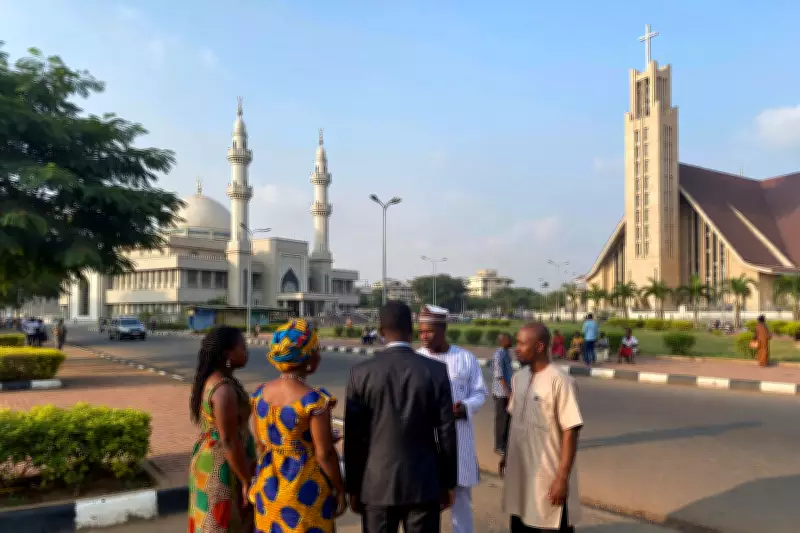
Africa does not have a single main religion. Instead, Christianity and Islam each claim approximately 40 to 45 percent of the continent's population, making them the two dominant faiths. Their distribution varies dramatically by region, with North Africa predominantly Muslim, Southern and East Africa largely Christian, and West Africa showing significant diversity where both religions thrive alongside traditional African beliefs.
The National Human Rights Commission of Nigeria acknowledges this profound religious diversity, noting that Nigeria mirrors broader African patterns. Significant Christian populations reside in the south, while Muslim communities predominate in the north. This geographic division reflects historical trade routes, missionary activities, and pre-colonial political structures that shaped how these religions spread across the continent.
Traditional African Religions: The Underestimated Influence
Traditional African religions, while often undercounted in official statistics, remain vibrant forces in many communities. In Nigeria alone, indigenous practices continue to influence daily life even among those who identify as Christian or Muslim. The Yoruba still revere Ogun, god of iron and war, while the Igbo invoke Chukwu, the supreme creator. These are not relics of the past but living traditions that coexist with, and sometimes blend into, imported faiths.
According to the Ministry of Foreign Affairs, in Nigeria's 13 northern states, the vast majority of people are Muslim, having been converted by Arab traders and merchants from the 10th century onwards. Meanwhile, in the southern states, the majority are Christian, though some groups continue to practice indigenous beliefs. This historical context highlights centuries of adaptation and resilience.
Nigeria: A Microcosm of Africa's Religious Diversity
Nigeria perfectly encapsulates Africa's religious complexity. The country is nearly evenly split between Islam and Christianity, with Muslims comprising approximately 50 percent of the population and Christians around 48 percent, while traditional religions and other faiths account for the remaining 2 percent. This balance creates unique dynamics where both religions significantly influence national politics, education, and social life.
The geographic divide is stark and significant. Government demographic data indicates that the Hausa-Fulani of the north have been Muslim for nearly a millennium. The Igbo of the southeast are predominantly Christian, converted largely by Roman Catholic missionaries. The Yoruba of the southwest practice both religions in roughly equal numbers, creating communities where Muslim and Christian siblings share family compounds.
Christianity's African Journey: From Ancient Roots to Modern Growth
Christianity's African story is far more complex and ancient than many realize. The Ethiopian Orthodox Church, established in the 4th century CE, represents one of Christianity's oldest continuous traditions. However, for most sub-Saharan African countries, Christianity arrived through European colonial expansion in the 19th and 20th centuries.
In Nigeria specifically, Christianity came through multiple channels. Portuguese explorers brought Catholicism to the coast in the 15th century, but the real transformation came with 19th-century British colonialism. Anglican, Methodist, Baptist, and Presbyterian missionaries established churches, schools, and hospitals across southern Nigeria, creating infrastructure that accelerated conversion.
Nigerian Christianity has evolved beyond its missionary roots. The 1970s and 1980s saw explosive growth of Pentecostal churches led by charismatic Nigerian pastors who indigenized Christianity. These churches conduct services in local languages, incorporate African musical styles, and address concerns about spiritual warfare that resonate with traditional African worldviews.
Islam's Spread in Africa: Trade, Scholarship, and Adaptation
Islam's African journey began earlier, spreading across North Africa in the 7th century following the death of Prophet Muhammad. By the 11th century, Islamic scholars and traders had established vibrant Muslim communities in West Africa, particularly in what is now northern Nigeria, Mali, and Senegal. The famous Timbuktu manuscripts stand as testimony to Islam's deep intellectual roots in Africa.
Arab traders and scholars introduced Islam to northern Nigeria from the 11th century onwards. The Kanem-Borno Empire's rulers were among the first to embrace Islam around 1085 CE, having encountered the religion through trans-Saharan trade networks. The Sokoto Caliphate, established in 1804 by Usman dan Fodio, represents the most significant Islamic movement in Nigerian history, creating a vast Islamic state that influenced the region's political and religious landscape.
The Economic Impact of Religion in Africa
Religion is not just about spiritual matters; it is big business in Africa. Nigerian churches collectively own property worth trillions of Naira. The Redeemed Christian Church of God's Redemption Camp occupies 530 hectares along the Lagos-Ibadan Expressway, functioning as a small city with its own infrastructure. Living Faith Church seats 50,000 people in its main auditorium and operates various commercial enterprises.
Nigerians spend billions on religious activities annually, from church tithes to pilgrimage trips to Jerusalem and Mecca. The prosperity gospel preached by many Pentecostal churches emphasizes material wealth as evidence of divine favour, encouraging congregants to give generously. Islamic economics operates differently but no less significantly, with the Halal market in Nigeria estimated at several trillion Naira annually.
Religious Tolerance and Conflict: A Nuanced Reality
Despite headlines about religious violence, most African Christians and Muslims coexist peacefully. In Lagos, for example, mixed communities celebrate each other's holidays and share meals during religious festivals. Guardian Nigeria's examination of religious intolerance acknowledges that while incidents occur, they often stem from political manipulation or economic competition rather than inherent religious conflict.
However, religious violence does occur and should not be minimized. Boko Haram's insurgency in northeastern Nigeria has killed tens of thousands and displaced millions. Periodic clashes in Plateau State involve complex factors including land access. Education, urbanization, and interfaith dialogue initiatives help promote tolerance, while government responses play a crucial role in managing tensions.
Key Takeaways and Future Trends
Christianity and Islam each claim approximately 40 to 45 percent of Africa's population, making them roughly equal in size. Traditional African religions remain influential despite low official statistics. Geographic patterns matter more than overall numbers, with regional variations shaping religious identities.
African religious expression involves creative adaptation rather than simple imitation. Nigerian Pentecostalism, West African Sufi brotherhoods, and syncretized traditions represent genuinely African religious innovations that are reshaping global Christianity and Islam. The future looks religious, with Africa's population projected to double by 2050, and African Christianity and Islam increasingly influencing these faiths worldwide.
For Nigeria specifically, the religious balance between Christianity and Islam creates both challenges and opportunities. The challenge is managing religious tensions to prevent violence while respecting both faiths. The opportunity lies in leveraging religious institutions' social capital to address development challenges that government struggles to solve.