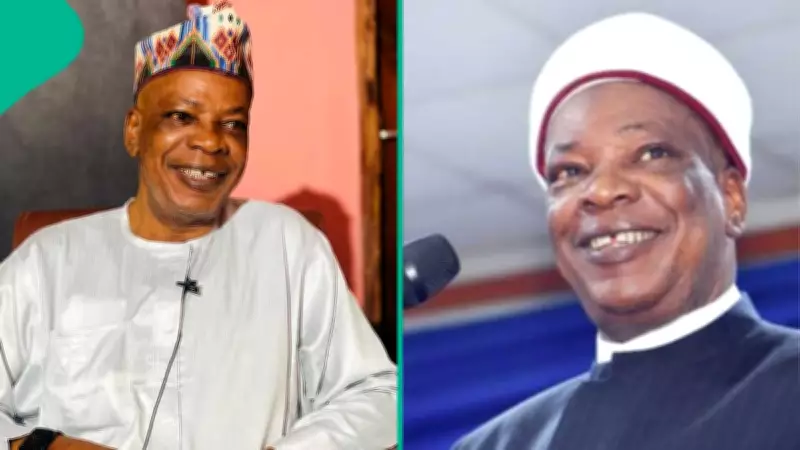
Nigeria's Eid al-Fitr 2026 Date Officially Announced by Mudir Markaz
As the holy month of Ramadan 2026 approaches its conclusion, Muslims worldwide are preparing for the celebration of Eid al-Fitr, which marks the end of fasting. In Nigeria, the date for this significant Islamic festival has been officially declared by Mudir Markaz Sheikh Habibullah Adam, bringing clarity to discussions about the moon sighting that determines the celebration.
Official Declaration: 30-Day Ramadan and March 20 Eid
Mudir Markaz Sheikh Habibullah Adam has announced that Ramadan 2026 will span 30 days, with Eid al-Fitr celebrations scheduled for Friday, March 20, 2026. The Islamic scholar made this declaration during the institution's Lailatul Qadr program, which took place on the night of Sunday, March 15, extending into the early morning of Monday, March 16.
The announcement comes amid global variations in moon sighting reports that sometimes lead to different countries celebrating Eid on consecutive days. By providing this clear timeline, Nigerian Muslims can now make definitive preparations for the festivities that follow a month of spiritual reflection and fasting.
Understanding Ramadan and Eid al-Fitr
Ramadan represents the ninth month of the Islamic lunar calendar and is considered the holiest period for Muslims worldwide. During this month, believers observe fasting from dawn until sunset, abstaining from food, drink, and other physical needs as an act of worship and self-discipline.
The daily fasting routine begins with suhoor, a pre-dawn meal, and concludes with iftar, the meal that breaks the fast at sunset. Between these meals, participants refrain from consuming anything, including water. This practice is compulsory for all adult Muslims who are physically able, serving as a time for spiritual purification and heightened devotion.
Eid al-Fitr, which translates to "Festival of Breaking the Fast," celebrates the completion of Ramadan. The exact date depends on the sighting of the crescent moon that marks the beginning of Shawwal, the Islamic month following Ramadan. Because the Islamic calendar follows lunar cycles that are approximately 10-11 days shorter than the Gregorian calendar, Ramadan and Eid shift earlier each year.
Public Reactions to the Announcement
The video of Sheikh Habibullah Adam's announcement, shared on the Markaz Facebook page, has generated significant engagement from Nigerian Muslims. Various comments reflect both religious scholarship and celebratory anticipation.
- Abiola Sanni referenced a prophetic hadith: "Fast when you see it (the new moon) and break your fast when you see it (the new moon). If the sky is cloudy for you, then complete the month as thirty days."
- Ajiboye Thomas offered advance congratulations: "Good, our own Baba Islam, Happy Eid Day celebration in advance."
- Proff Abdullahi provided additional explanation about moon sighting procedures and why Eid might fall on a Friday.
- Oke Moses Adewale praised the cleric: "Proud of you, Baba lagege."
Determining the Eid Date Through Moon Sighting
The confirmation of Shawwal's crescent moon sighting is essential for establishing the Eid al-Fitr date. This observation can be verified through several methods:
- Local moon sighting committees that physically observe the new crescent
- Official announcements from mosques and Islamic authorities
- Astronomical calculations that predict lunar visibility
Different nations may announce slightly varying Eid dates based on regional sightings, though Nigeria now has an official declaration from a respected Islamic authority. The March 20 date provides certainty for planning religious observances, family gatherings, and community celebrations that characterize Eid al-Fitr in Nigeria.