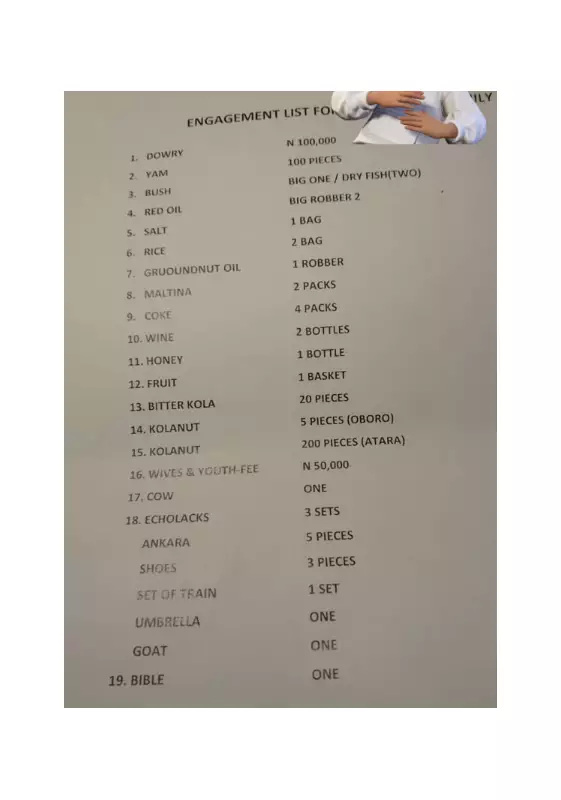
A social media post by a Kogi State woman, Blessing Ahuoyiza, has ignited a fiery national conversation about the financial demands of traditional marriage ceremonies. The focus of the debate is a detailed Ebira wedding engagement list presented to her uncle by his prospective wife's family.
The Viral Ebira Marriage List
Blessing Ahuoyiza took to her social media platform to share the comprehensive list of items required from the groom's family as part of the pre-wedding rites. Accompanying the list was her candid appeal: "Dear Some Ebira people, Make una take it easy na." This plea clearly indicated her view that the listed items represented a significant financial burden.
The list meticulously outlines various cultural requirements expected before the union can be solemnized. While the exact contents of the list were not itemized in her post, the reaction it provoked suggests it includes traditional goods, food items, clothing, and other symbolic elements central to Ebira nuptial customs.
Mixed Reactions from the Public
The publication of the list has led to widespread and divided opinions across social media and among Nigerians discussing the topic. A considerable number of commenters aligned with Blessing's sentiment, arguing that the requirements are excessively costly and place an undue strain on the groom and his family.
Conversely, another school of thought has defended the list, deeming it fair and an integral part of preserving the rich Ebira cultural heritage. Proponents of this view argue that such traditions are non-negotiable and form the bedrock of a proper marriage according to their customs. The debate highlights the ongoing tension between upholding cultural practices and adapting to modern economic realities.
Broader Implications for Marriage Customs
This incident is not isolated but taps into a recurring national discourse about the monetization and potential inflation of Nigerian traditional marriage requirements across various ethnic groups. Similar debates have emerged concerning lists from the Igbo, Yoruba, and other ethnic nations, where families sometimes demand extravagant items.
The core question remains: where is the line between honoring meaningful tradition and imposing financial hardship? Blessing Ahuoyiza's post, shared on January 8, 2026, has successfully brought this question back to the forefront, encouraging people to examine the purpose and sustainability of such practices in contemporary society.
As the conversation continues, it underscores a crucial societal reflection on the value of culture, the economics of marriage, and the need for possible moderation to ensure traditions empower rather than impoverish families embarking on a new life together.