Man Marries Three Women Simultaneously in Ilorin Ceremony
A man in Ilorin, the capital of Kwara State, has conducted a highly unusual wedding ceremony by marrying three women at the same time. The event, which took place recently, has captured significant public attention after videos and photographs from the occasion began circulating widely across various social media platforms.
Details of the Unconventional Wedding
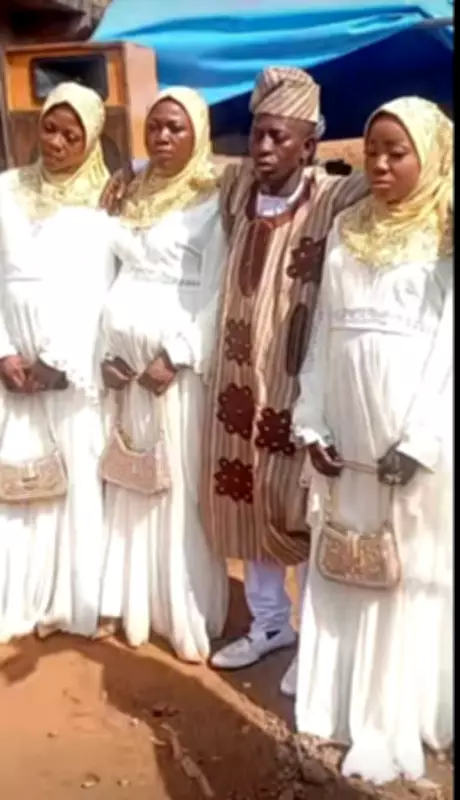
The viral video footage from the wedding clearly shows the groom positioned centrally, flanked on both sides by his three brides. In a striking visual display, all three women were dressed identically for the ceremony. They wore matching white dresses, coordinated hijabs, similar pairs of shoes, and each carried the same style of purse, creating a synchronized and uniform appearance.
Observers and online commentators have also noted that all three brides appeared to be in various stages of pregnancy during the wedding. One of the women was visibly heavily pregnant, adding another layer of discussion to the already remarkable event. The simultaneous pregnancies have fueled further speculation and conversation among netizens regarding the timing and circumstances of the marriages.
Public Reaction and Online Virality
The video and photographic evidence from this polygamous wedding have rapidly gained traction online, becoming a major topic of discussion on platforms like Instagram, Twitter, and Facebook. Users are sharing the content extensively, with many expressing astonishment, curiosity, and a range of opinions about the man's decision to marry three women concurrently.
Some social media users have questioned the cultural, religious, and personal motivations behind such a union, while others have focused on the logistical and emotional dynamics of managing a marriage with multiple spouses from the outset. The story was notably highlighted on the popular blog run by Linda Ikeji, which helped amplify its reach to a broader audience.
This event underscores the diverse marital practices and social norms present within Nigerian society, particularly in regions where polygamy is legally and culturally permitted under certain conditions. It also highlights the power of social media in bringing local events to national and even international attention, sparking debates on tradition, modernity, and personal choice.