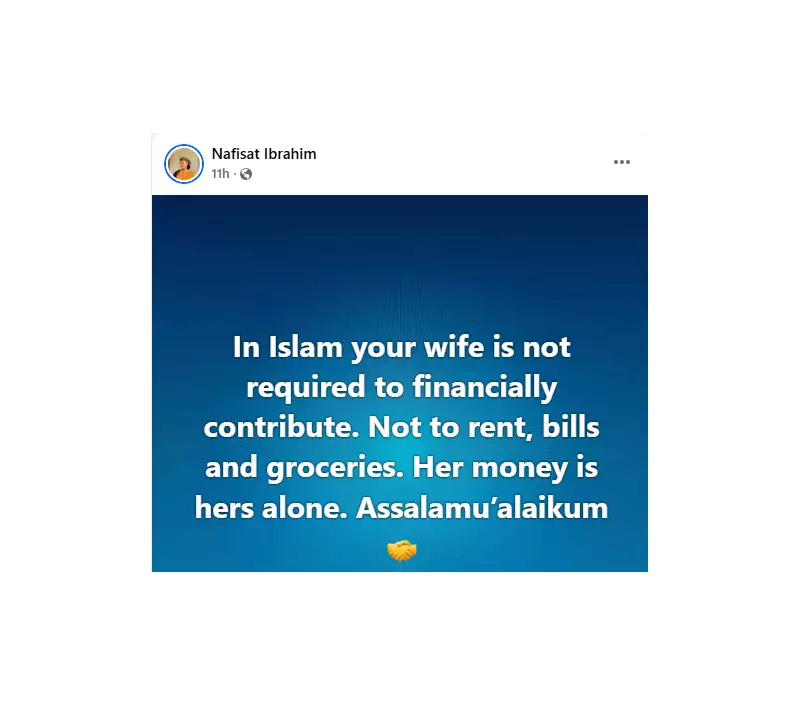
A recent social media post by a Nigerian Muslim woman, Nafisat Ibrahim, has ignited a significant conversation online about the rights and responsibilities of wives within an Islamic marriage framework.
Clarifying Spousal Roles in Islam
In a detailed Facebook post made on Monday, January 5, Nafisat Ibrahim presented a perspective on marital duties that has challenged conventional expectations for many. She asserted that, according to her understanding of Islamic teachings, a wife is under no obligation to handle domestic chores like cooking or to contribute financially to household expenses.
"In Islam your wife is not required to financially contribute. Not to rent, bills and groceries. Her money is hers alone. Assalamu’alaikum," she wrote. Elaborating further in an earlier statement, she added, "In Islam a woman is not required to cook. There is no obligation in Islam for a woman to prepare meals. Anything she does is kindness not duty."
Online Reactions and Further Interpretation
The post quickly drew reactions from other Nigerian Muslims, contributing diverse viewpoints to the discussion. One respondent, Kasim Yusuf, offered an additional layer to the discourse on financial independence.
Yusuf reacted by stating that in Islam, a married woman who is under her husband's full care and protection may not even be permitted to engage in money-making activities without his explicit consent. "I believe by this, you know that, a married woman won't even have that almighty 'her own money' you people make noise about, if the husband doesn't permit," he added, highlighting a more conservative interpretation of financial agency within the marital structure.
Broader Implications for Modern Marriages
This online exchange has brought to the forefront the ongoing negotiation between traditional religious interpretations and contemporary marital expectations in Nigeria. The discussion underscores several key points often debated within Muslim communities:
- The husband's primary financial responsibility (Naafaqah) for providing shelter, food, clothing, and general welfare.
- The wife's right to own and manage her personal wealth and property independently.
- The distinction between obligatory duties (Fard) and voluntary acts of kindness (Sadaqah) within a marriage.
While Nafisat Ibrahim's statements focus on the absence of obligation, they do not diminish the value of partnership and mutual support, which are also highly encouraged in Islamic teachings. The viral nature of her post indicates a strong public interest in understanding the balance between religious doctrine, cultural practices, and evolving gender roles in modern Nigerian society.