While December 25th is a global day of festivity for billions of Christians marking the birth of Jesus Christ, a notable segment of the faithful in Nigeria consciously abstains from the celebrations. Their decision is rooted not in a lack of faith, but in deep-seated doctrinal convictions concerning the holiday's historical origins and biblical mandate.
Doctrinal Foundations for Abstaining
The central argument shared by these churches hinges on the belief that Christmas has its roots in pre-Christian, pagan festivals, particularly Roman celebrations like Saturnalia and the worship of the sun god. They also emphasize that the Bible does not command the commemoration of Christ's birth, nor does it specify December 25th as the date. For them, participating would mean endorsing traditions they view as divorced from pure Christian practice.
Jehovah's Witnesses: A Clear Doctrinal Stance
One of the most widely recognized groups in this category is the Jehovah's Witnesses. Their teachings hold that Christmas originated from "false religious beliefs or activities." This understanding led the organization to officially cease observance of the holiday in 1928, a position detailed in their 1993 publication, Jehovah's Witnesses: Proclaimers of God's Kingdom. For Witnesses, the celebration is incompatible with their form of worship.
Seventh-Day Adventist Church: A Matter of Personal Conscience
The Seventh-day Adventist Church teaches that Jesus was not born in December and notes the absence of a biblical command to celebrate his nativity. They view modern Christmas as heavily commercialized and tainted by pagan roots. Consequently, the church advises its members to focus on their personal faith and relationship with Christ, treating the observance of Christmas as a matter of individual preference rather than a religious obligation.
Deeper Life Bible Church and the October Alternative
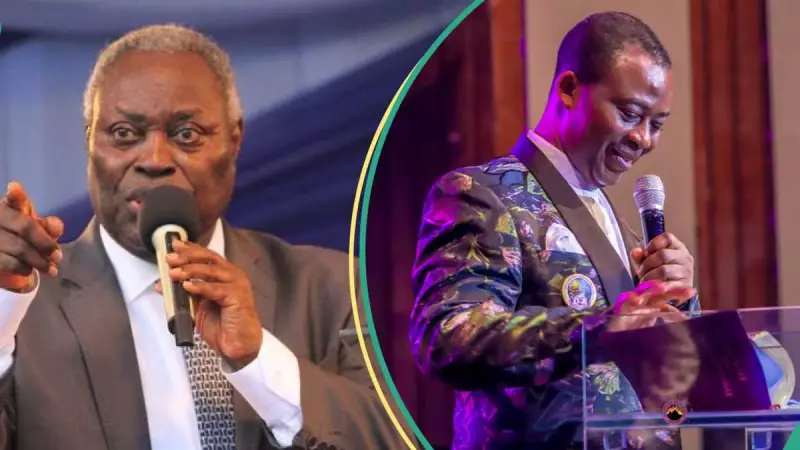
The Deeper Life Bible Church, under the leadership of General Overseer Pastor W.F. Kumuyi, is explicit in its non-observance. During a church retreat in December 2013, Pastor Kumuyi explained their stance, stating, "We don't celebrate Christmas. In actuality, it had an idolatrous origin." The church points out that Christmas songs and customs are absent from biblical and early church records. Instead, Deeper Life holds an event called "Freedom Day" in October, which they believe aligns more accurately with historical and biblical interpretation to honor Jesus's birth.
God's Kingdom Society (GKS) Aligns with Historical Interpretation
Similarly, The God's Kingdom Society (GKS) rejects Christmas due to its perceived connection to Roman pagan customs like Saturnalia. Mirroring the practice of Deeper Life, GKS also commemorates the birth of Christ with its own "Freedom Day" observance in October, asserting that this timeframe is more consistent with a proper historical and biblical understanding.
Mountain of Fire and Miracles Ministries (MFM) on Biblical Basis
The Mountain of Fire and Miracles Ministries (MFM) is another prominent Nigerian church that does not endorse Christmas celebrations. The ministry's founder, Dr. Daniel Olukoya, has stated that the holiday lacks a biblical basis and is instead grounded in pagan customs and the Roman Saturnalia festival. This position was reaffirmed as recently as 2019.
Context of Religious Freedom in Nigeria
This diversity of practice occurs within a national context where religious freedom is a prominent topic. In his Christmas message on December 24, 2024, President Bola Tinubu renewed his commitment to protecting this freedom. He pledged to "enshrine religious freedom in Nigeria and to protect all people of different faiths from violence," as communicated by his Special Adviser on Information and Strategy, Bayo Onanuga.
The stance of these five churches underscores the rich theological diversity within Nigerian Christianity. It highlights a significant, doctrinally driven choice to step away from a nearly universal cultural tradition, favoring practices they believe are more authentically aligned with scripture and early Christian history.